Mars
85 images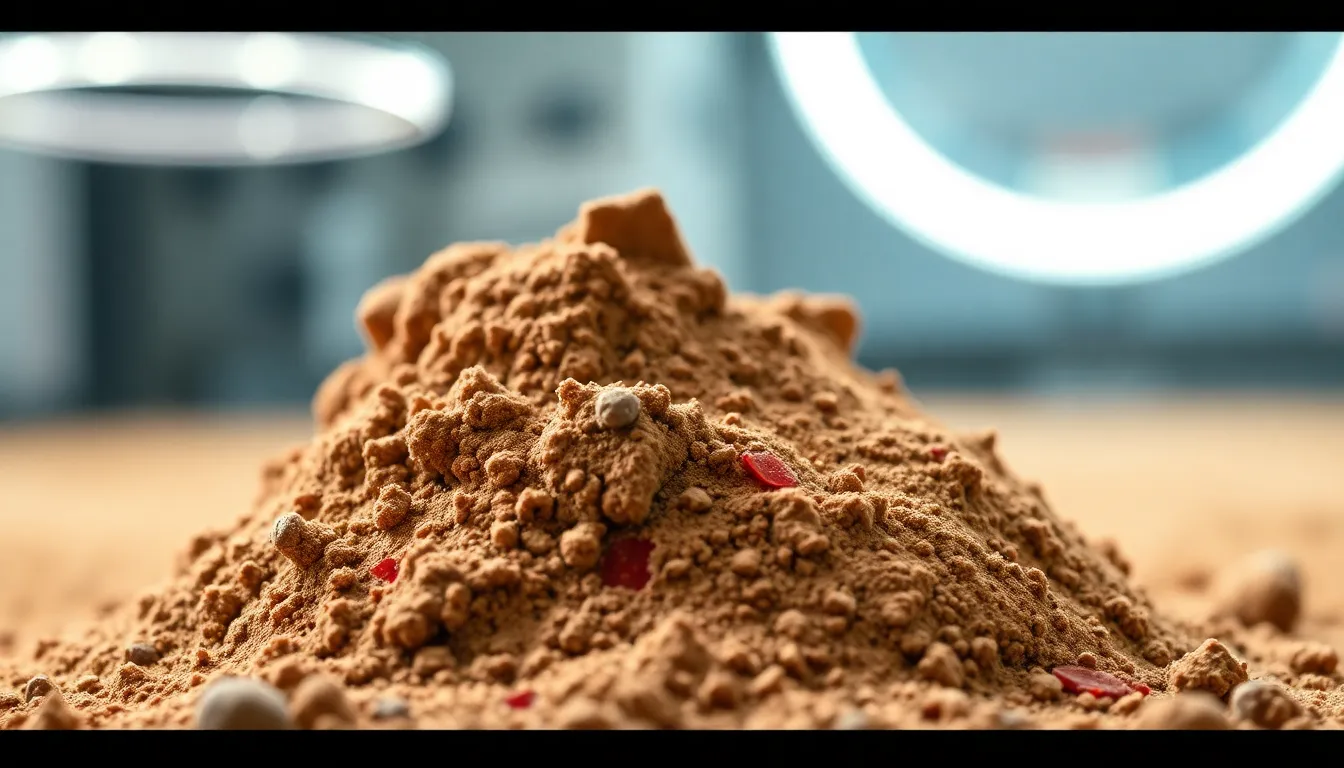
shot on Fujifilm GFX 100S, 110mm f/2 macro, depicts a Martian soil sample in a lab setting, showcasing fine textures and subtle colors. Ring lights illuminate the sample, revealing its dusty surface and intricate mineral details. Selective focus on the soil’s texture with a creamy bokeh background creates an intimate exploration of the Martian soil. The color palette consists of soft browns and grays, with vivid flecks of red. The composition is centered, drawing attention to the sample as the main subject of study.
16:9
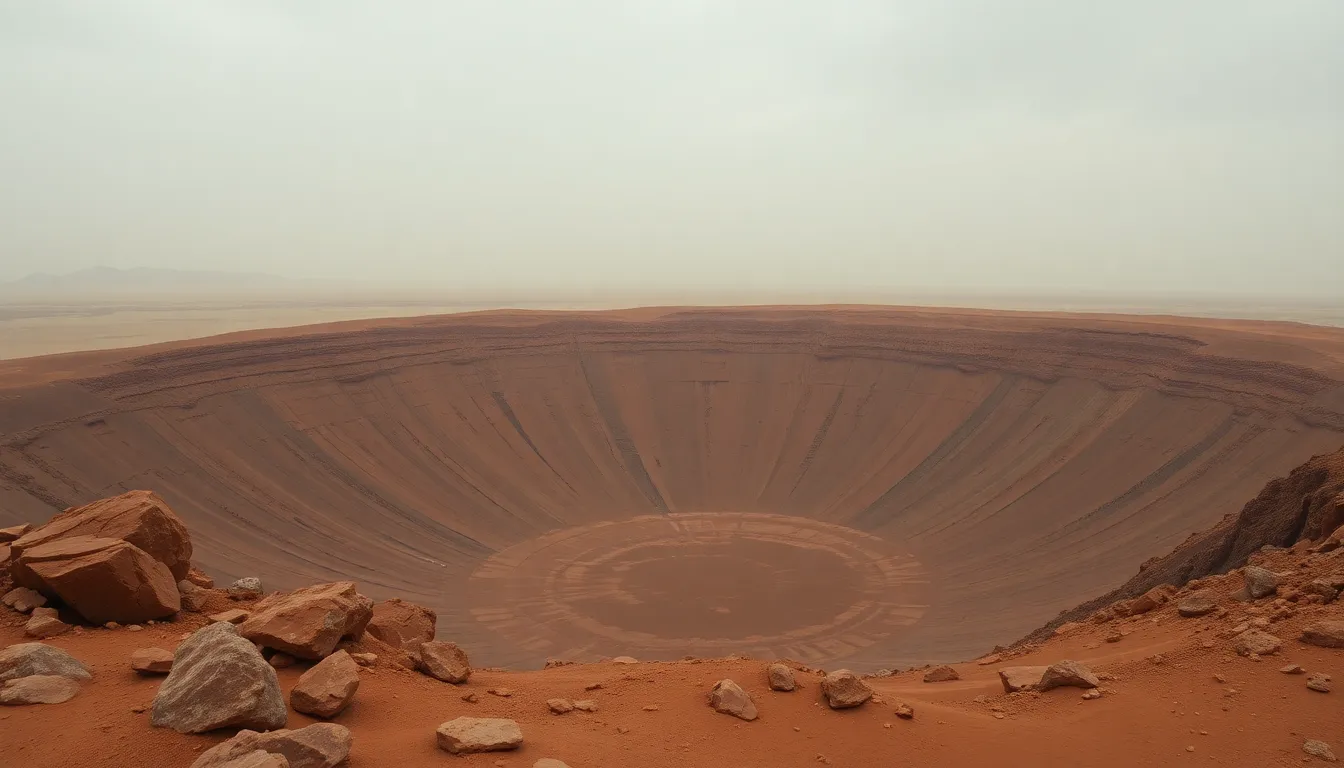
captured using Hasselblad X2D 100C, 90mm f/2.5 medium format, showcasing a large Martian crater under soft, overcast daylight. The crater's steep walls create a dramatic contrast against the flat plains surrounding it. Hyperfocal distance ensures everything from the foreground rocks to the crater’s rim remains sharp at f/8. The color palette features muted reds and browns with subtle gradients. Leading lines of the crater’s edge guide the viewer's eye into the depth of the landscape, highlighting the vastness of Mars.
16:9
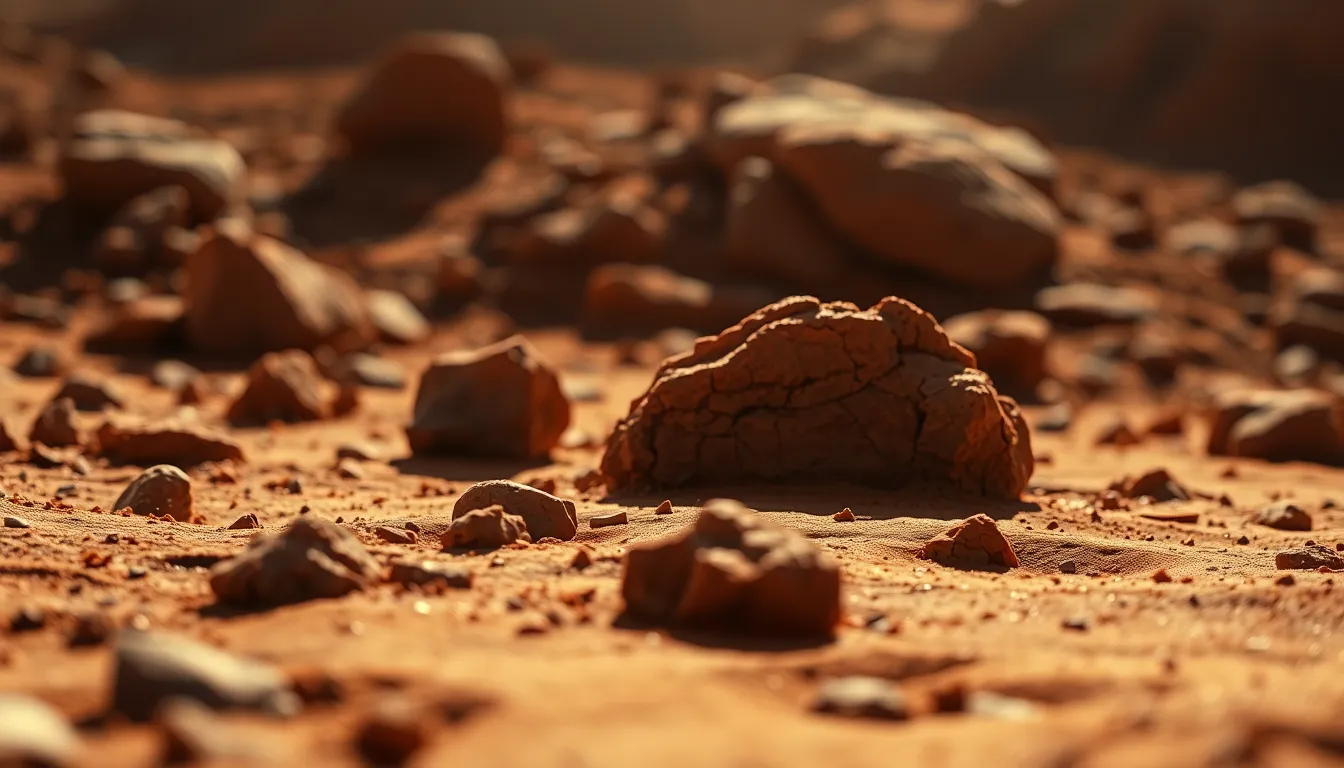
shot on Sony A7R V with 85mm f/1.4 GM lens, this image captures a close-up view of Mars’ surface showing intricate patterns of dust and rock formations. Dramatic, directional light creates deep shadows and highlights, enhancing the texture details of the rugged landscape. A shallow depth of field at f/1.4 isolates the foreground rocks, with a soft bokeh background. The color palette features earthy reds and browns with subtle hints of orange, creating a warm and striking effect. Compositionally, the rocks are placed according to the rule of thirds, drawing the viewer’s eye along the surface.
16:9
captured with Canon EOS R5, 24-70mm f/2.8L at 35mm, depicts a futuristic Mars colony with sleek domes and solar panels against the stark red landscape. The scene is illuminated by soft, diffused daylight passing through the transparent domes, creating a warm atmosphere. Hyperfocal distance keeps both foreground and background sharp at f/8, while natural muted tones enhance the realism of the colony. Rule of thirds composition guides the viewer’s eye through the scene, showcasing advanced technology nestled in the Martian environment.
16:9
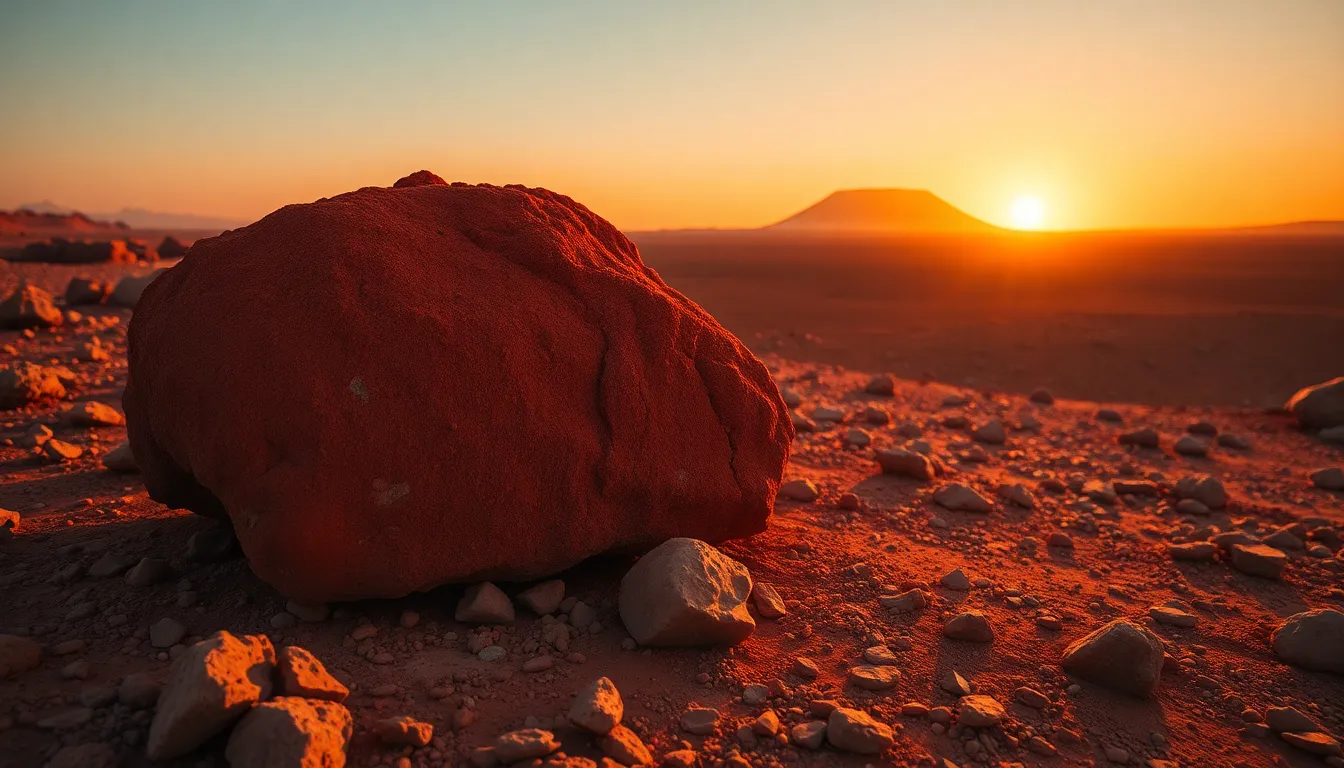
shot on Nikon Z9, 70-200mm f/2.8 telephoto at 135mm, capturing a stunning Martian sunset with golden hues blending into deep oranges and reds. The rocky surface of Mars is in sharp focus with a shallow depth of field at f/2.8, creating a dreamy background. Natural muted tones add to the otherworldly atmosphere, with the rugged terrain visible in intricate detail. Centered composition emphasizes the dramatic sky and the silhouette of distant hills, while fine dust particles suspended in the thin atmosphere catch the last rays of sunlight.
16:9
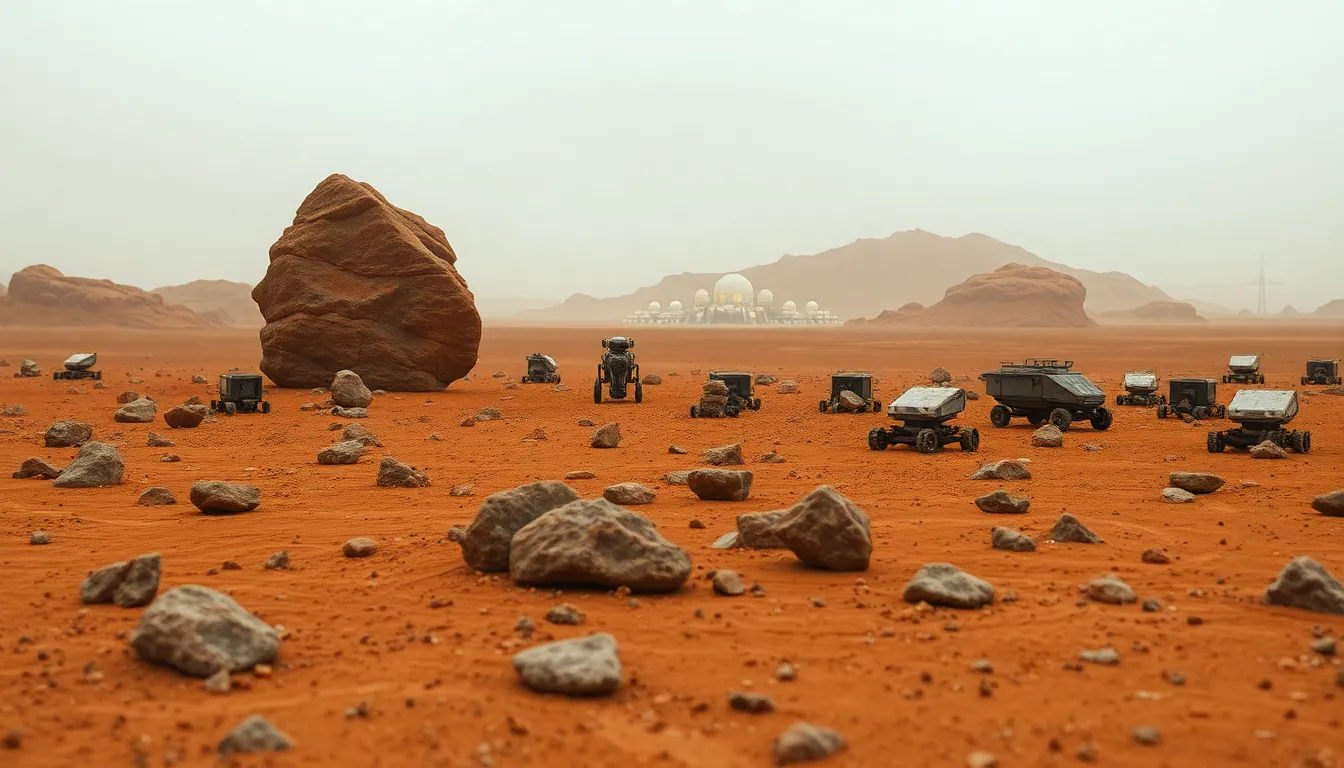
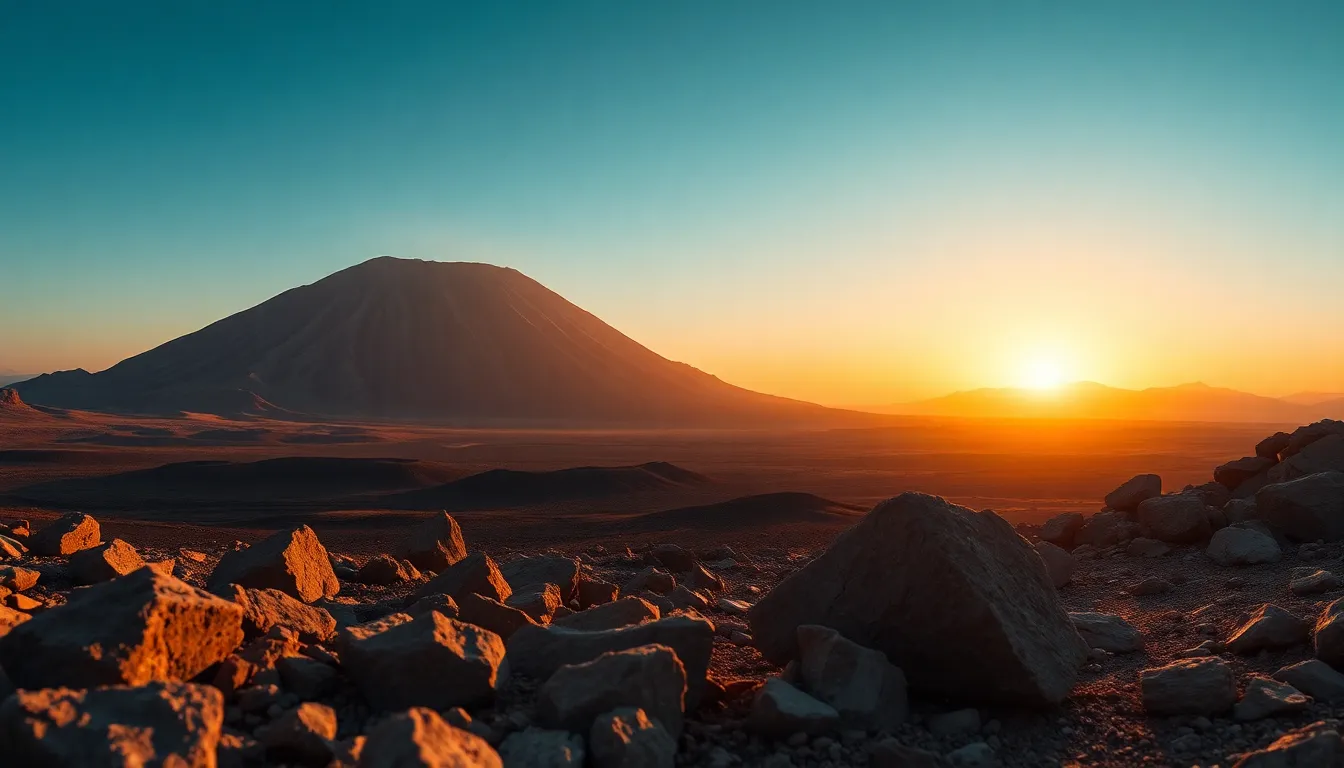
captured with Hasselblad X2D 100C, 90mm f/2.5 medium format, portraying a breathtaking Martian sunset over distant hills. The warm, golden hour backlighting creates a stunning silhouette effect on the foreground rocks, with soft fill light from the horizon. The depth of field is hyperfocal, maintaining sharpness from the nearest rocks to the far-off hills. The color palette features a cinematic teal and orange grading, enhancing the dramatic interplay of colors in the sky. The composition follows the rule of thirds, with the horizon positioned along the upper third, emphasizing the vastness of the Martian sky.
16:9
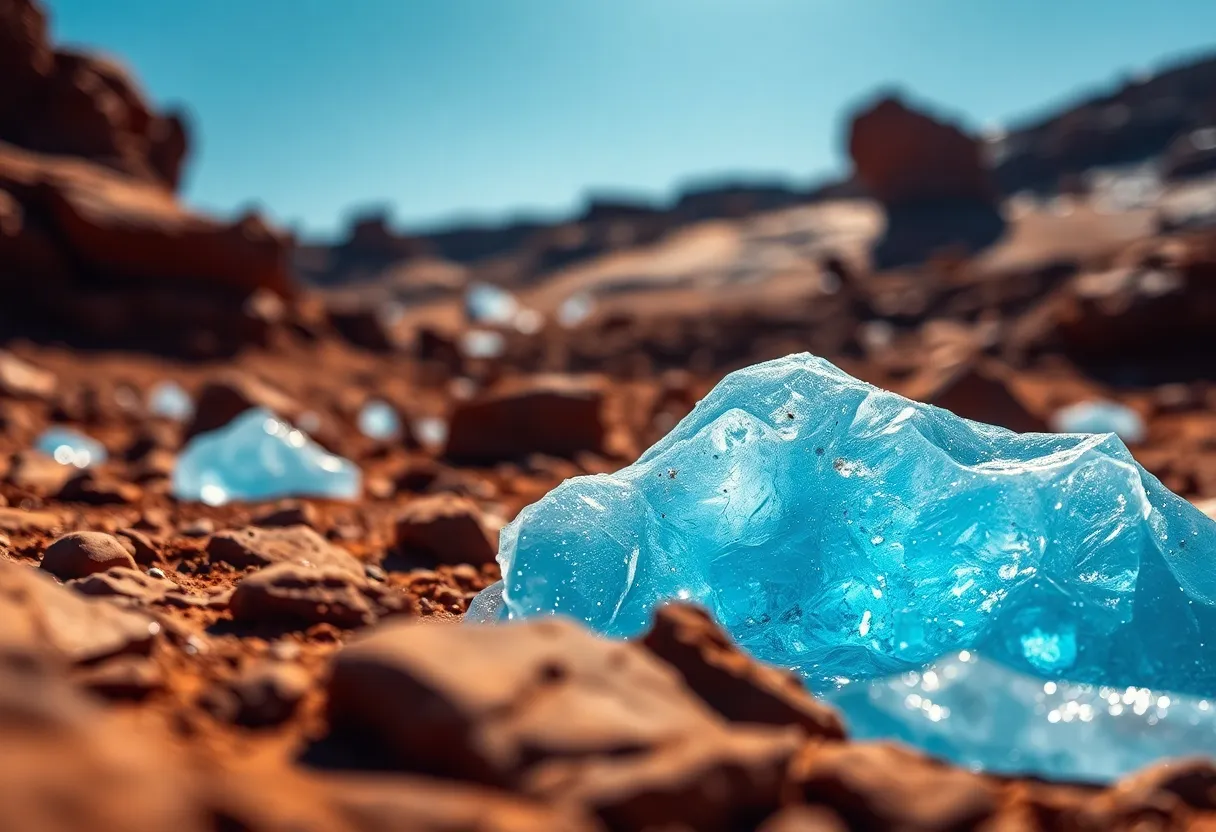
shot with Fujifilm GFX 100S, 110mm f/2 macro, capturing a stunning view of Mars' polar ice caps glistening under bright sunlight. The natural lighting creates sharp shadows and highlights, revealing the texture of the ice. The shallow depth of field focuses on the shimmering ice, with a dreamy bokeh of surrounding rock formations. The image utilizes a vibrant, saturated color palette with deep blues contrasting against the rusty Mars landscape. The composition is centered, showcasing the ice caps as the main subject against an expansive rocky terrain.
3:2
captured with Canon EOS R5, 24-70mm f/2.8L at 35mm, depicting a futuristic rover exploring Mars under a dramatic sky filled with swirling clouds. The scene is illuminated with overcast diffused daylight creating a cool atmosphere. A hyperfocal depth of field ensures everything is in focus, from the rover in the foreground to the distant valleys. The color palette is inspired by desaturated earth tones, highlighting the browns and grays of the Martian landscape. The composition utilizes rule of thirds, placing the rover on the left power point as it traverses the terrain.
16:9
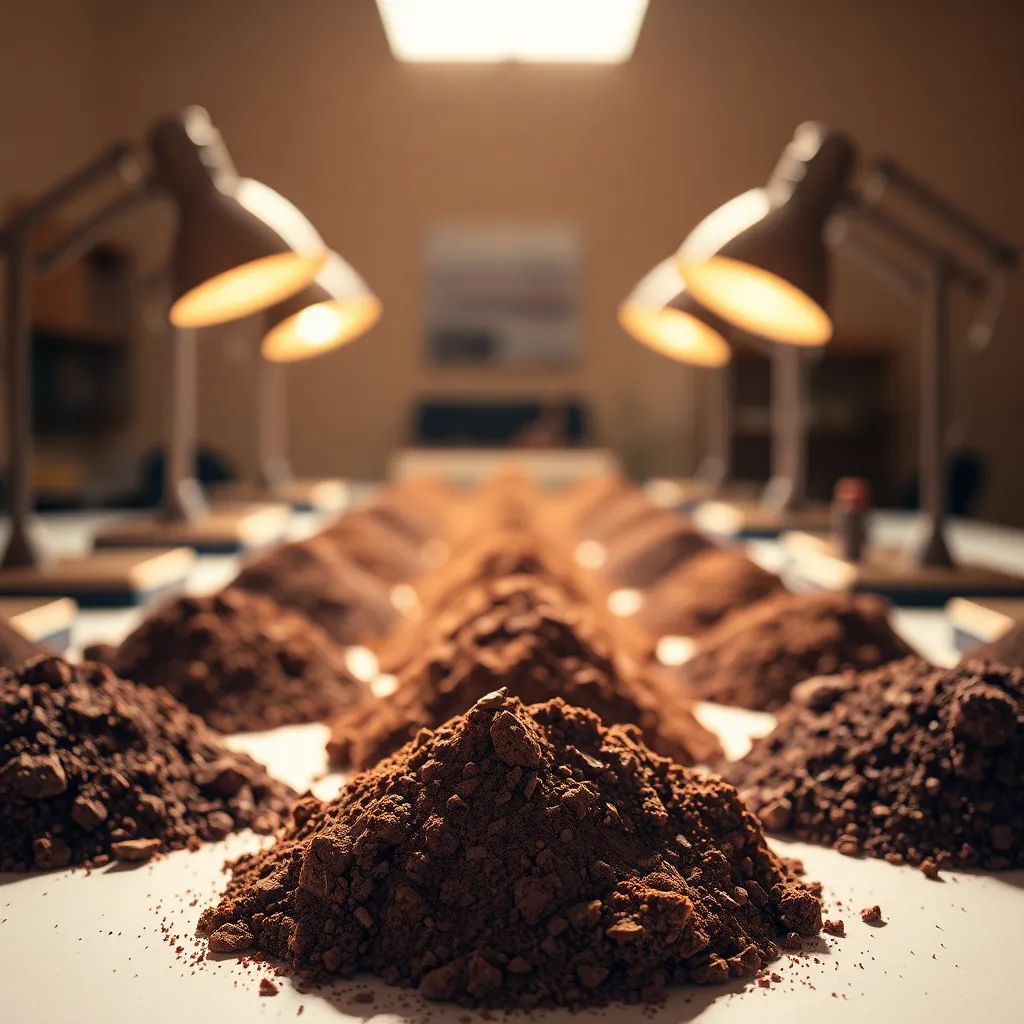
shot on Sony A7R V with 85mm f/1.4 GM lens, featuring a close-up of Mars's surface with fine details of dust and small rocks. Natural morning light creates soft, diffused illumination, revealing textures of the Martian soil. The shallow depth of field at f/1.4 gives an ethereal quality, with the background gently blurring into soft bokeh. The color science utilizes the Kodak Portra 400 palette, emphasizing warm browns and subtle golds. The composition is centered, focusing on the intricate textures of the surface materials, showcasing the planet’s desolate beauty.
1:1
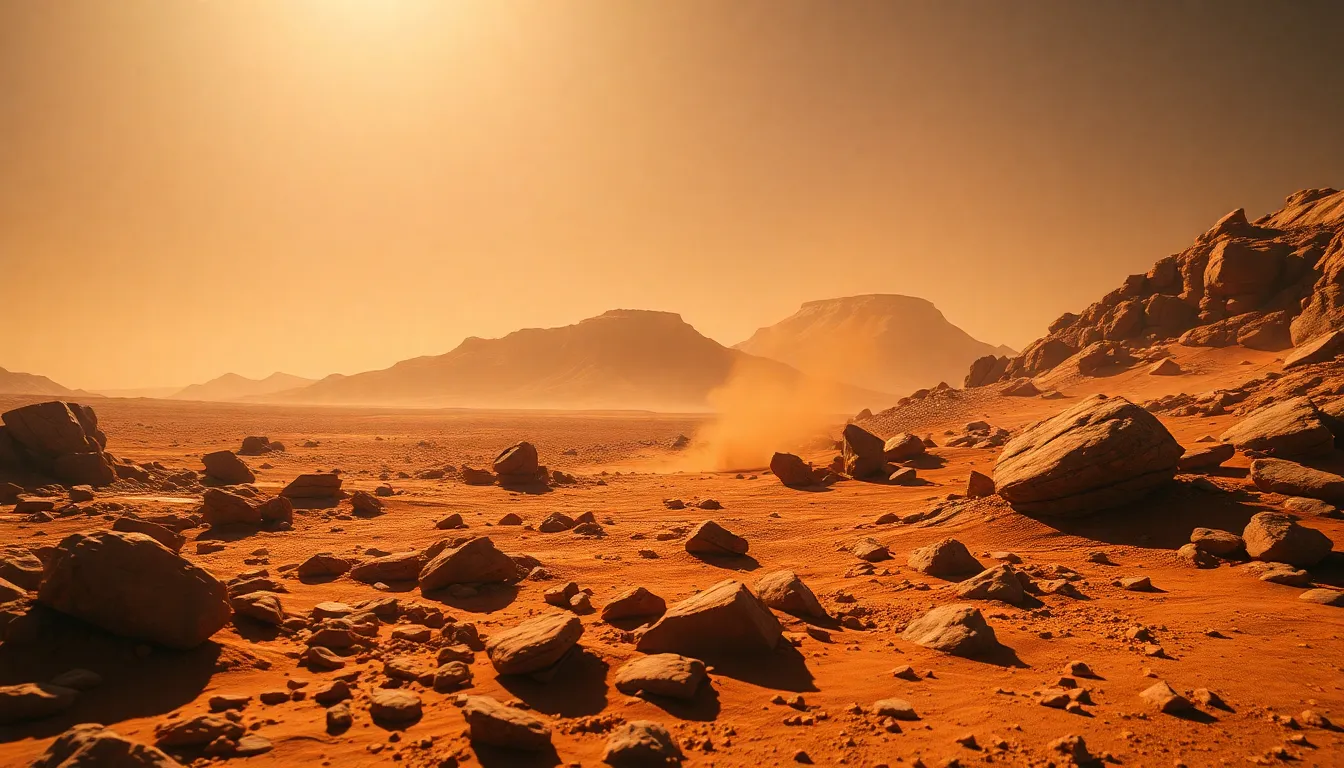
captured with Nikon Z9, 70-200mm f/2.8 telephoto at 135mm, showcasing a panoramic view of the Martian landscape under a dusky sky. Harsh shadows and deep contrasts accentuate the red rock formations, while the sun sets on the horizon, casting a warm, golden light. The depth of field is hyperfocal, keeping sharp focus from the foreground rocks to the distant hills. The color palette draws from natural muted tones, highlighting the rusty reds and browns of Mars. The composition features leading lines formed by the rocky terrain directing the eye towards the vast open space above.
16:9
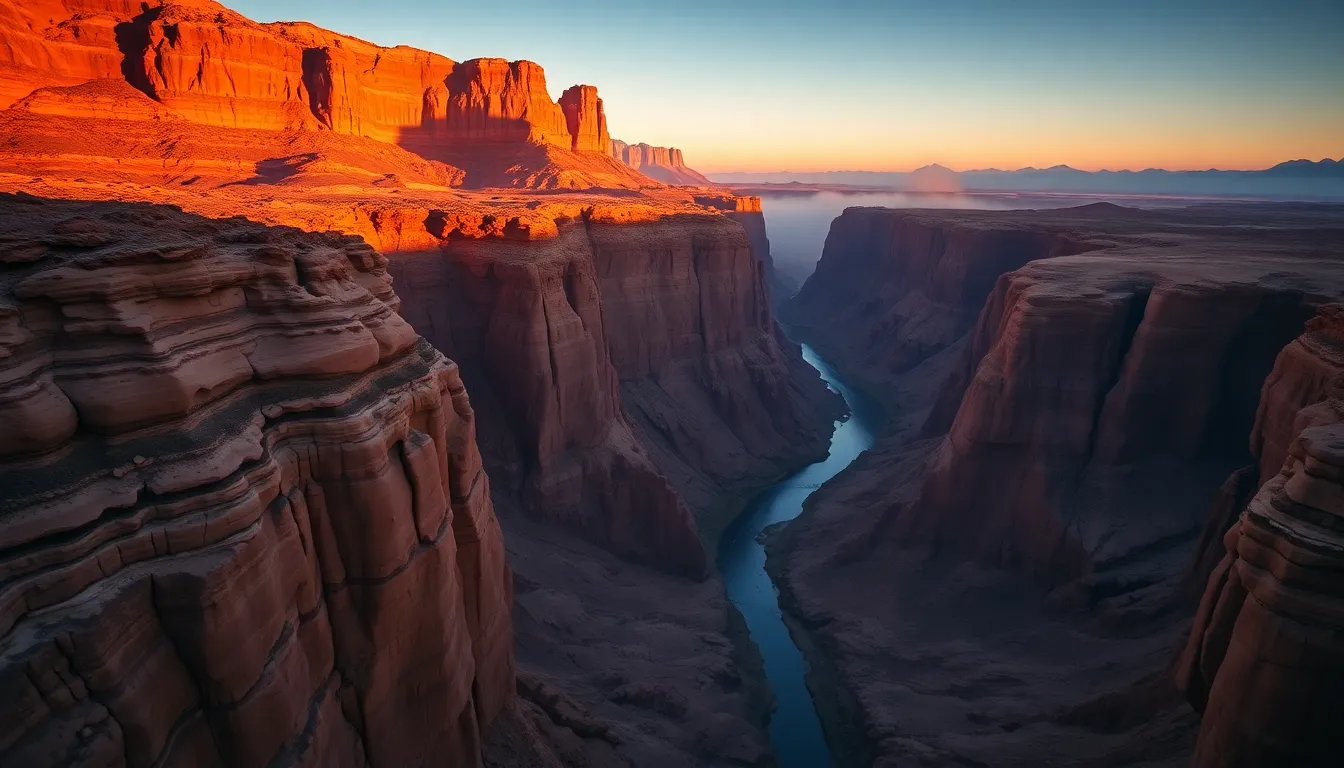
shot on Hasselblad X2D 100C, 90mm f/2.5 medium format, this image captures a stunning aerial view of a Martian canyon at dawn, with golden light illuminating the rugged cliffs and deep shadows in the valley. The color palette features warm oranges and cool blues, creating a dramatic contrast that emphasizes the canyon’s depth. The composition uses the rule of thirds, with a winding river snaking through the canyon, enhancing the sense of scale and adventure. Atmospheric perspective adds mystery, with subtle fog rolling in from the horizon.
16:9
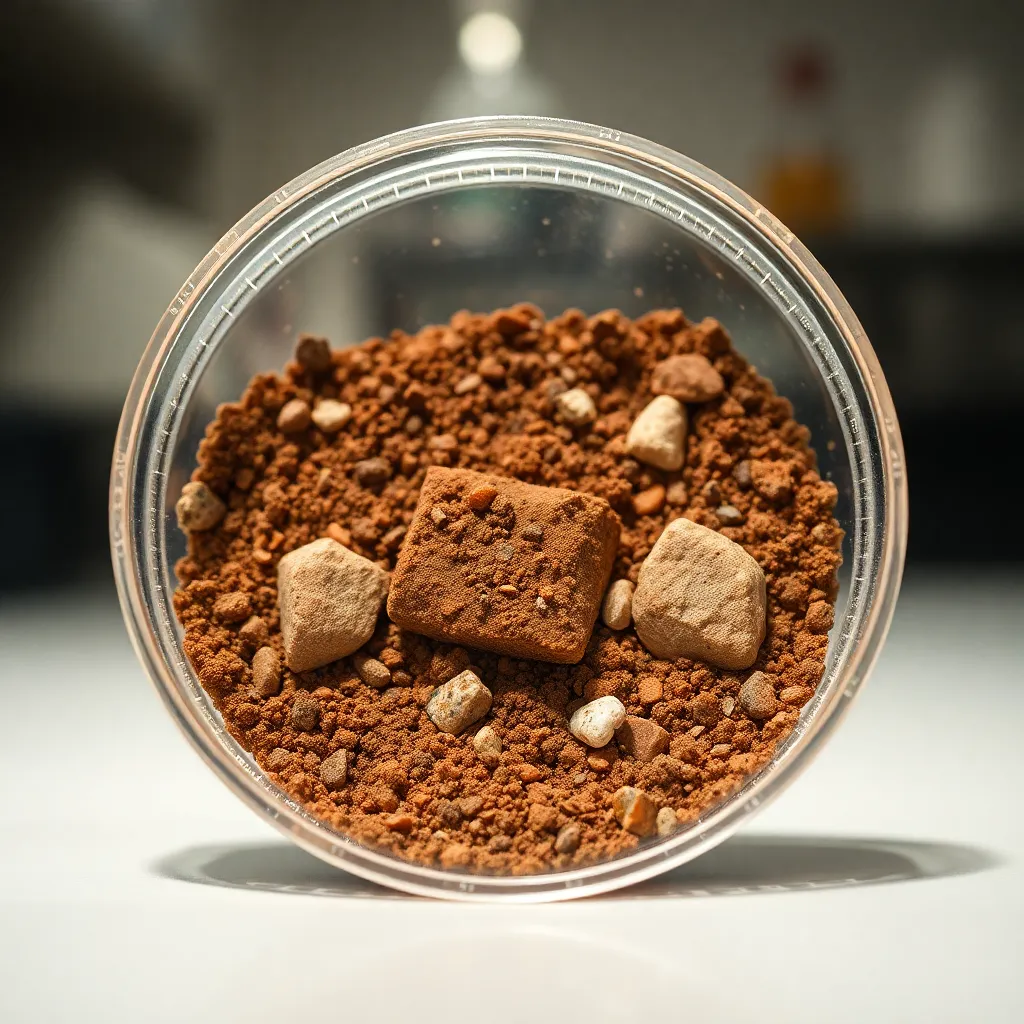
Fujifilm GFX 100S, 110mm f/2 macro captures a detailed shot of Martian soil samples in a petri dish, with bright studio lighting creating soft highlights on the surfaces. The color science employs muted, desaturated earth tones, accentuating the various minerals within the samples. The shallow depth of field at f/2 isolates the samples sharply against a blurred lab background. The composition is centered, emphasizing the samples as the focal point, with visible texture in the soil grains and small pebbles enhancing the realism.
1:1
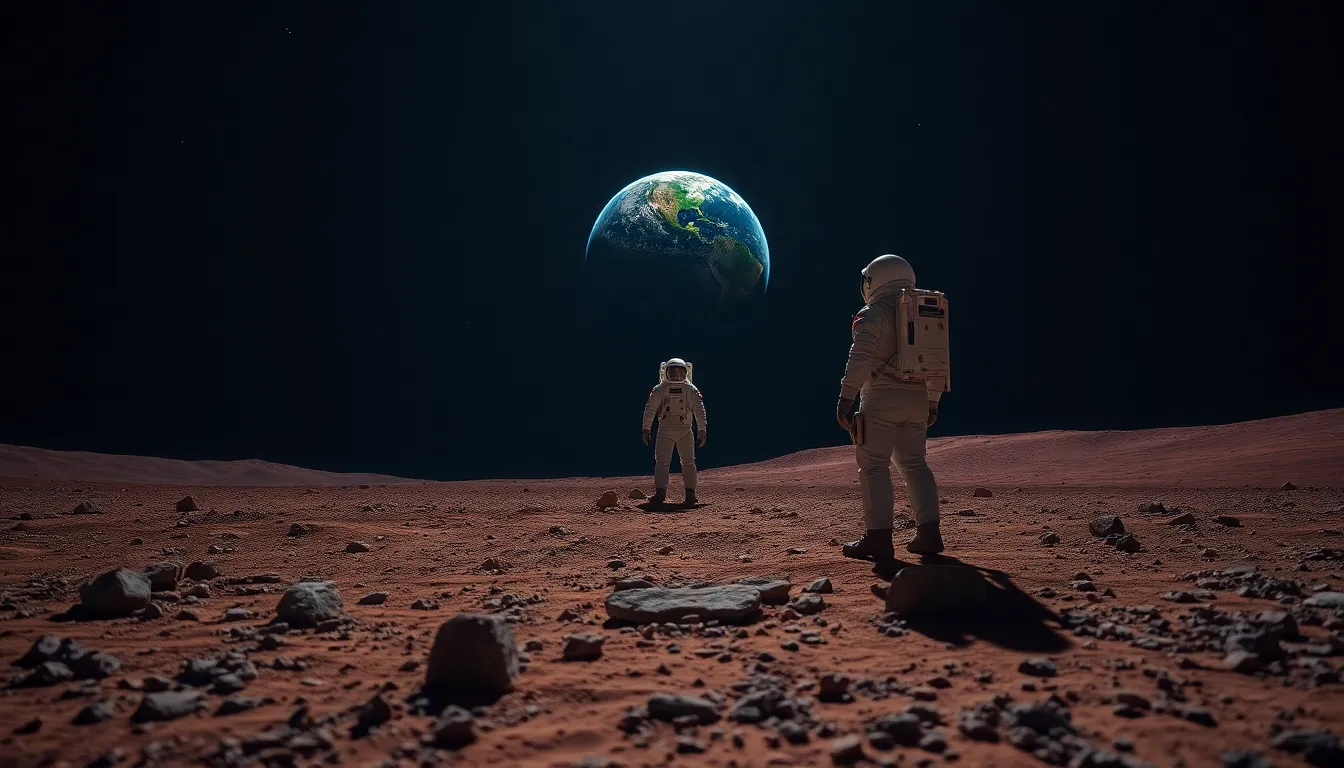
captured with Canon EOS R5, 24-70mm f/2.8L at 35mm, this scene features an astronaut exploring the Martian surface during a dramatic sunset. The composition includes leading lines formed by rock formations and tracks left by the astronaut's boots, guiding the viewer's eye across the frame. The lighting is dynamic, with the fading sunlight casting long shadows and enhancing the red and purple hues of the Martian sky. Selective focus on the astronaut's helmet highlights the reflective visor, revealing the vibrant colors of the atmosphere.
16:9
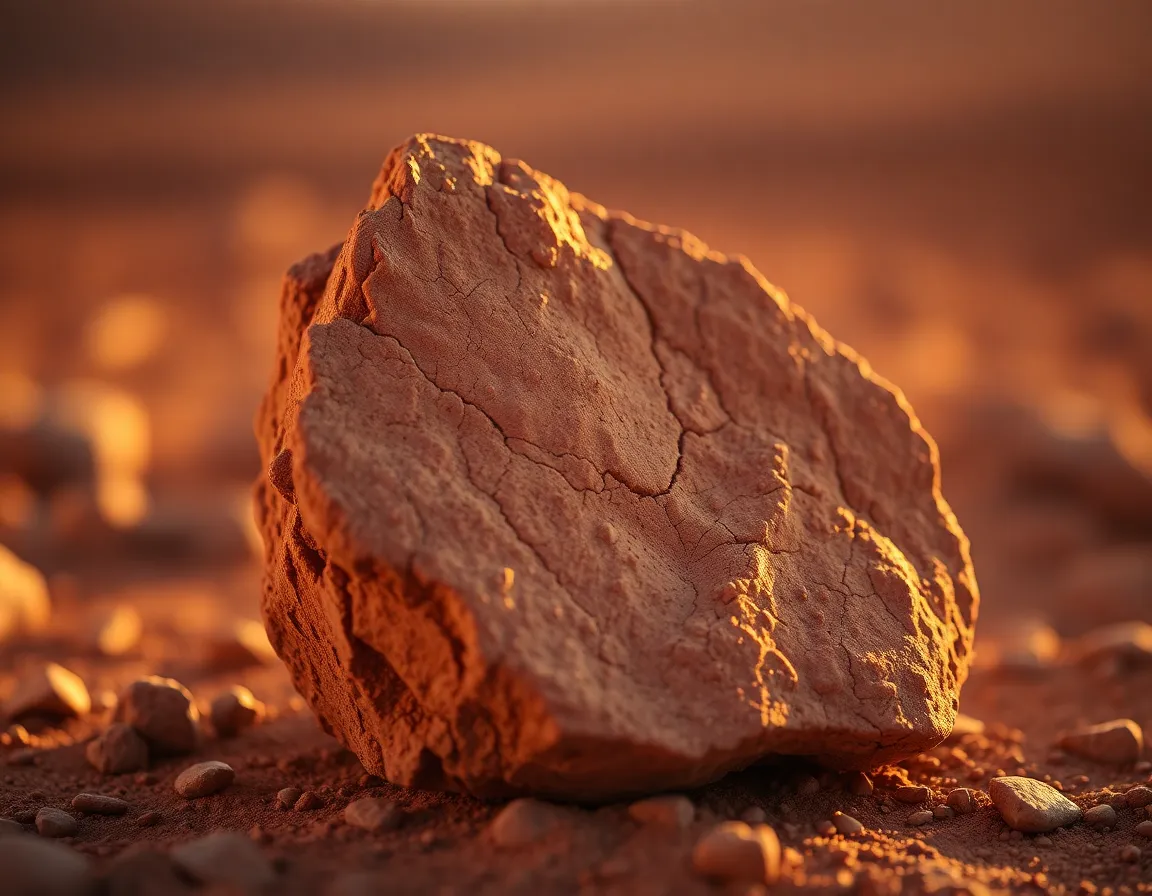
shot on Sony A7R V with 85mm f/1.4 GM lens, this composition features a close-up of a Martian rock with intricate textures illuminated by soft golden hour light, creating a warm aura around the subject. The depth of field is shallow at f/1.4, producing creamy bokeh that accentuates the rock's details while blurring the barren landscape behind. The color palette includes subtle burnt orange and muted tan tones. Rule of thirds positioning places the rock at the right power point, enhancing visual interest and focus on its patterns.
4:3
captured with Nikon Z9, 70-200mm f/2.8 telephoto at 135mm, showcasing the dusty surface of Mars with intricate rock formations illuminated by harsh midday sunlight, hyperfocal distance keeping everything from foreground to infinity tack-sharp at f/8. The color palette is dominated by warm reds and browns reminiscent of rusted metal, while a dust storm brews in the distance, adding dynamic elements to the composition. Leading lines of the rocky terrain draw the eye towards a distant Martian hill, with fine dust particles visible in the harsh light, enhancing depth and realism.
16:9
shot on Hasselblad X2D 100C, 90mm f/2.5 medium format, presenting a Martian valley illuminated by vibrant mid-day sunlight. The scene is rich with color, showcasing deep reds and oranges of the surrounding cliffs, while the valley floor is dotted with small rocks glistening under the sun. A selective focus on a nearby boulder highlights its rough texture and surface details, while the background gradually melts into a soft painterly bokeh. The composition is characterized by leading lines of the valley walls guiding the viewer's eye through the scene, creating a sense of depth and scale.
16:9
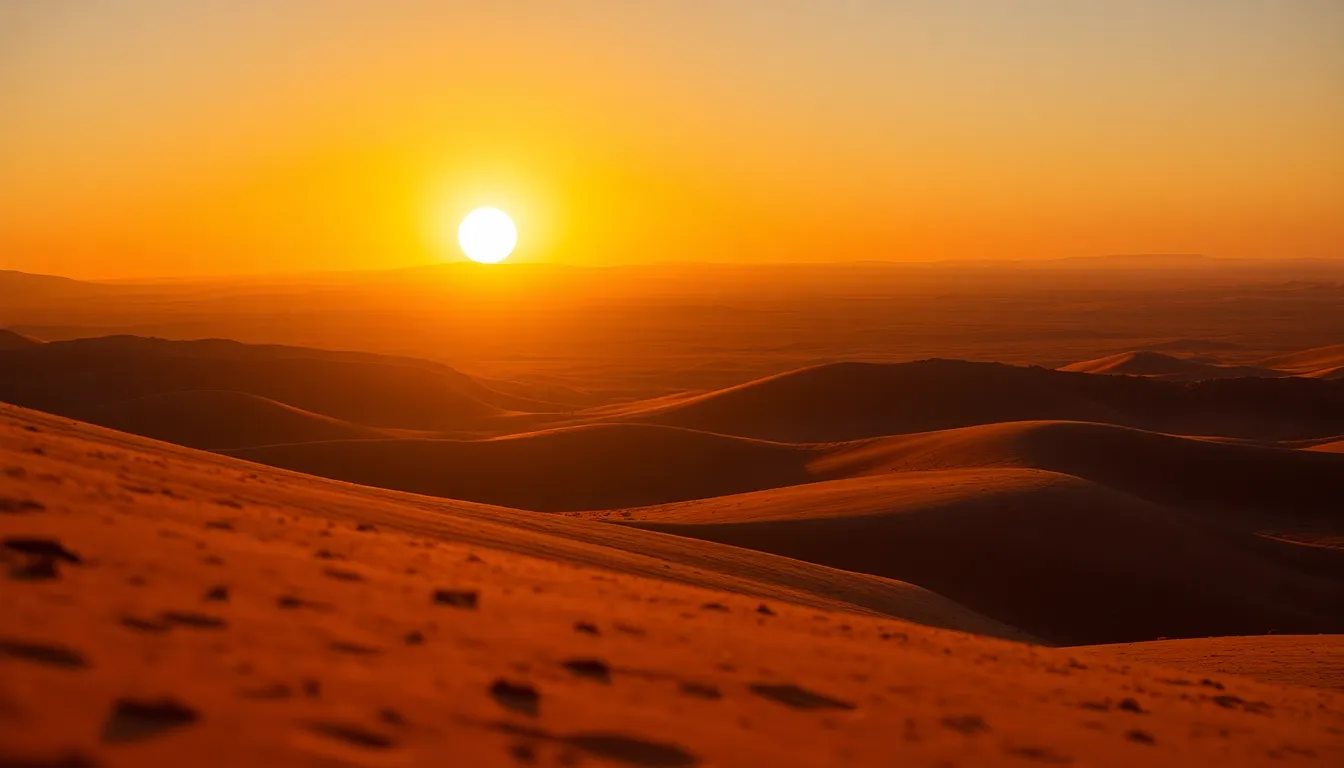
captured with Fujifilm GFX 100S, 110mm f/2 macro, featuring a Martian sunrise over the horizon with rolling hills in the foreground. The golden hour backlighting creates a vibrant silhouette of the hills, while warm light spills over the landscape, revealing subtle textures of the Martian soil. Hyperfocal distance allows for a tack-sharp focus from the foreground to the distant horizon, with a color palette reminiscent of Kodak Portra 400, highlighting warm yellows and soft oranges. The composition utilizes the rule of thirds, placing the sun on a power point, enhancing the dramatic feel of dawn on Mars.
16:9

shot on Sony A7R V with 85mm f/1.4 GM lens, capturing a detailed close-up of Martian soil samples in a laboratory setting. The harsh, artificial fluorescent lighting accentuates the textures and granularity of the soil, creating subtle reflections and shadows. A shallow depth of field at f/1.4 isolates the soil from a softly blurred background of scientific instruments. The image uses a natural muted tones color palette, emphasizing earthy browns and reds, showcasing the Martian soil's complexity. Composition follows a centered symmetrical approach, drawing immediate focus to the sample in the lab.
1:1
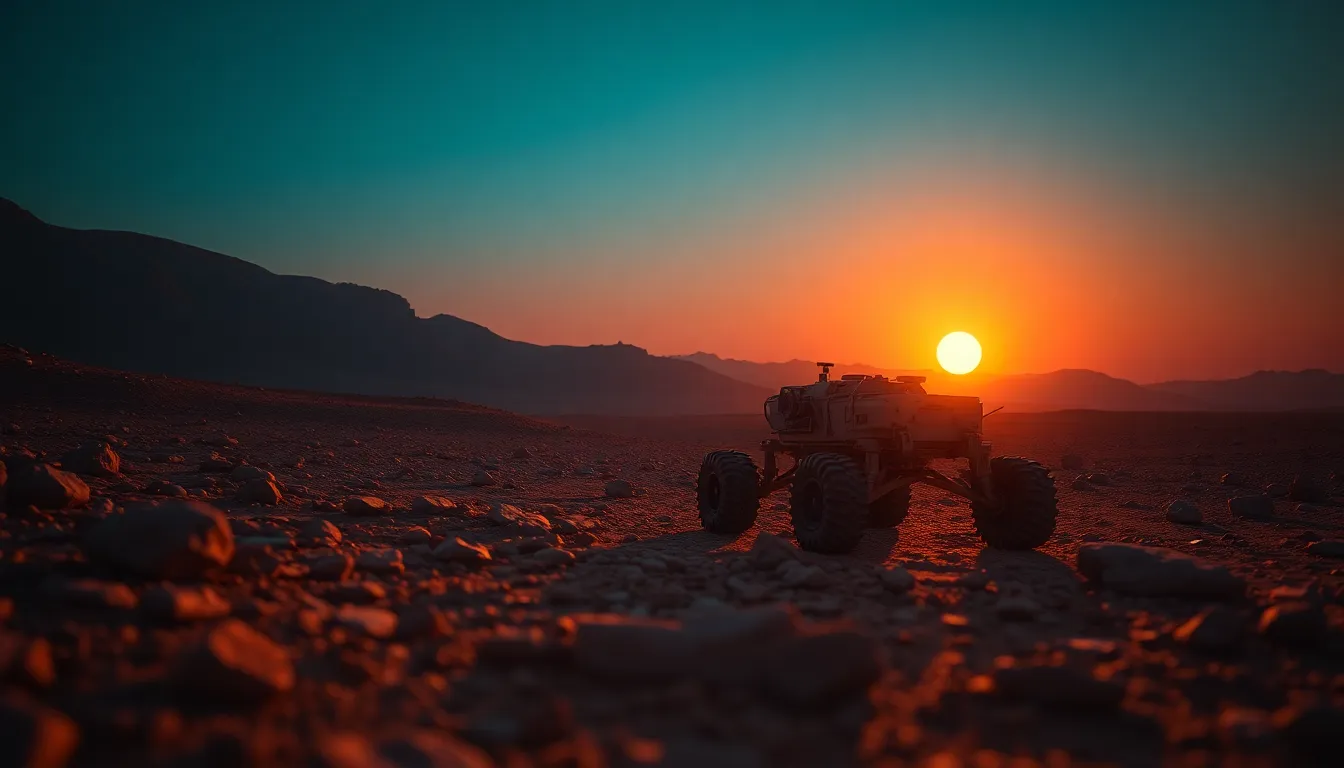
captured with Canon EOS R5, 24-70mm f/2.8L at 35mm, featuring a Martian rover exploring the rocky surface during twilight. The scene is dramatically lit by the soft glow of the setting sun, casting long shadows and warm orange light on the rover. A shallow depth of field at f/2.8 focuses on the rover's intricate details, while the distant hills fade into a deep blue twilight, creating a cinematic teal and orange color grading. Composition employs leading lines from the terrain leading towards the rover, giving a sense of movement and exploration.
16:9
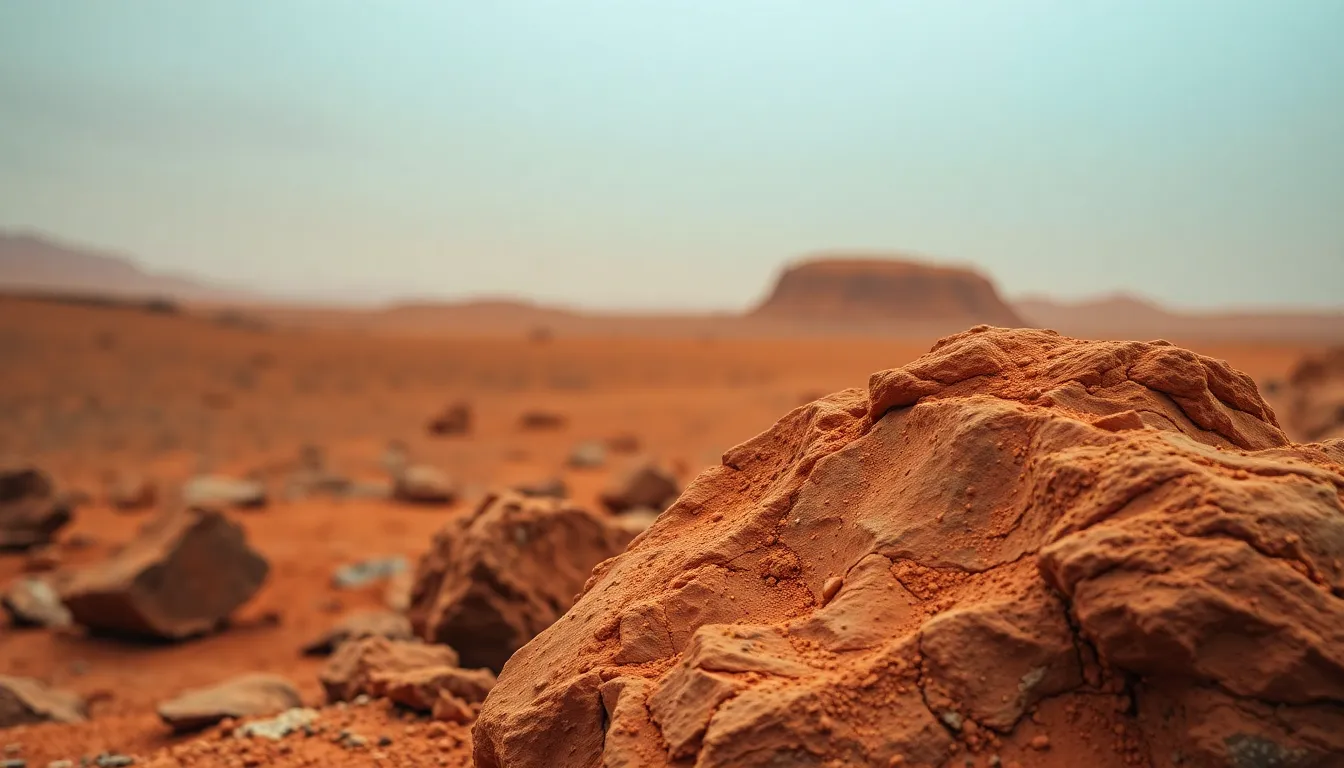
shot on Nikon Z9, 70-200mm f/2.8 telephoto at 135mm, with overcast diffused daylight illuminating the red Martian landscape. A shallow depth of field at f/2.8 highlights the rugged surface rocks in the foreground, while the backdrop fades into soft, atmospheric hues of rust and orange. The color palette features natural muted tones with desaturated earth colors, enhancing the Martian terrain's stark beauty. Composition follows the rule of thirds, placing a distant crater at one of the power points, while textured surfaces of the rocks provide detail, showing grooves and dust particles settling on them.
16:9
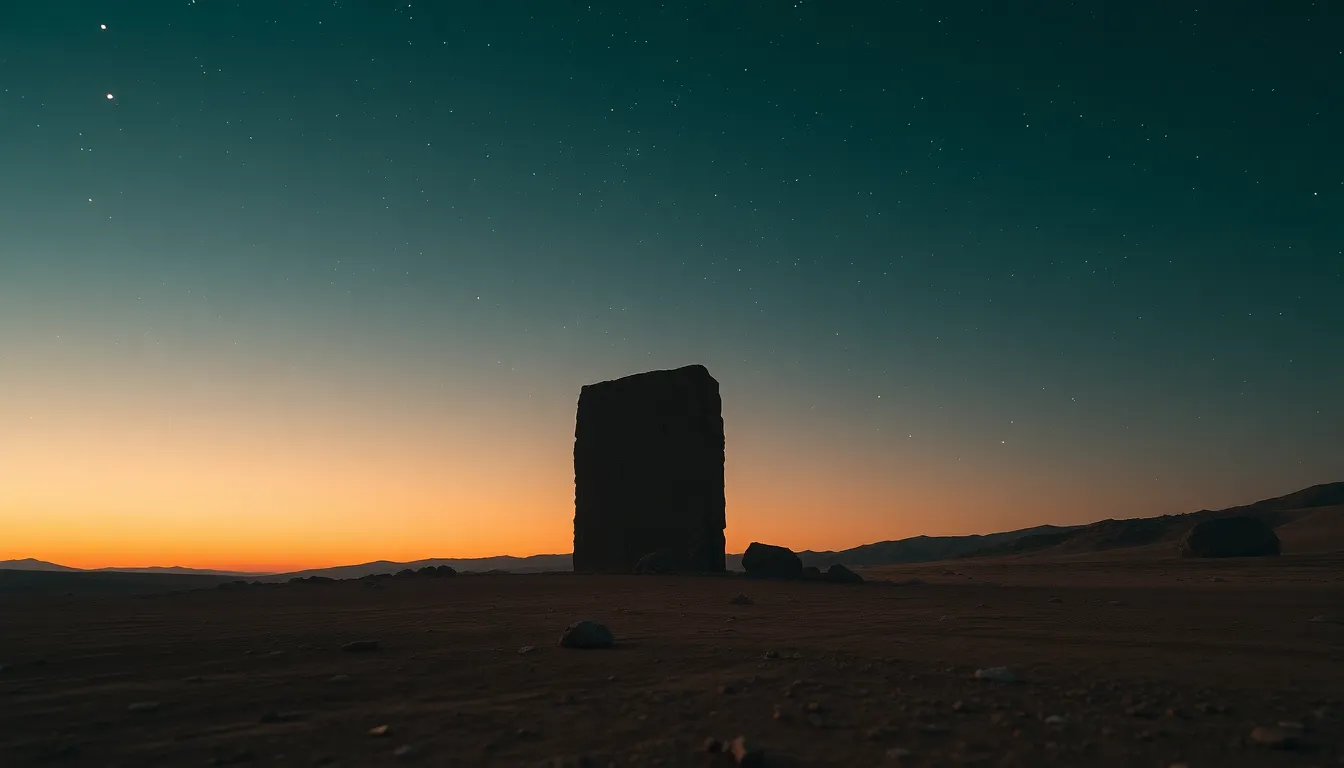
captured with Leica Q3, 28mm f/1.7 Summilux, dramatic twilight lighting casting deep shadows across the Martian surface, shallow depth of field at f/1.7, focusing on an ancient Martian monolith with a blurred starry sky background, cinematic teal and orange color grading enhancing the mystery of the scene, composition using rule of thirds to frame the monolith slightly off-center against the vastness of space, showcasing the texture and age of the rock against the velvety night sky.
16:9
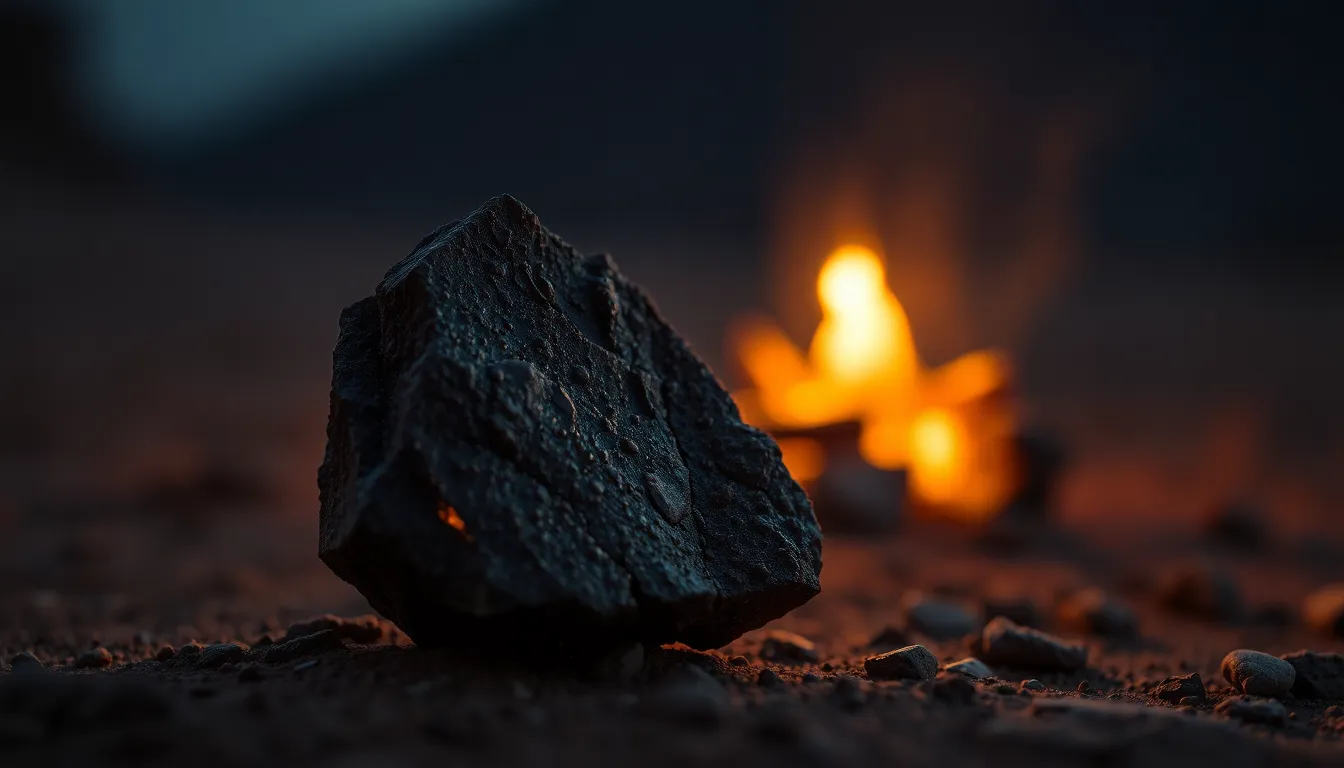
shot on Fujifilm GFX 100S, 110mm f/2 macro, warm tungsten light from a small campfire glowing against the cold Martian night, selective focus on the intricate textures of a Martian mineral specimen with the background fading into soft painterly bokeh, natural muted tones with earthy browns and reds reflecting the mineral's surface, composition grounded with the mineral in the foreground and the flickering campfire providing ambient light, enhancing the sense of isolation and exploration.
16:9
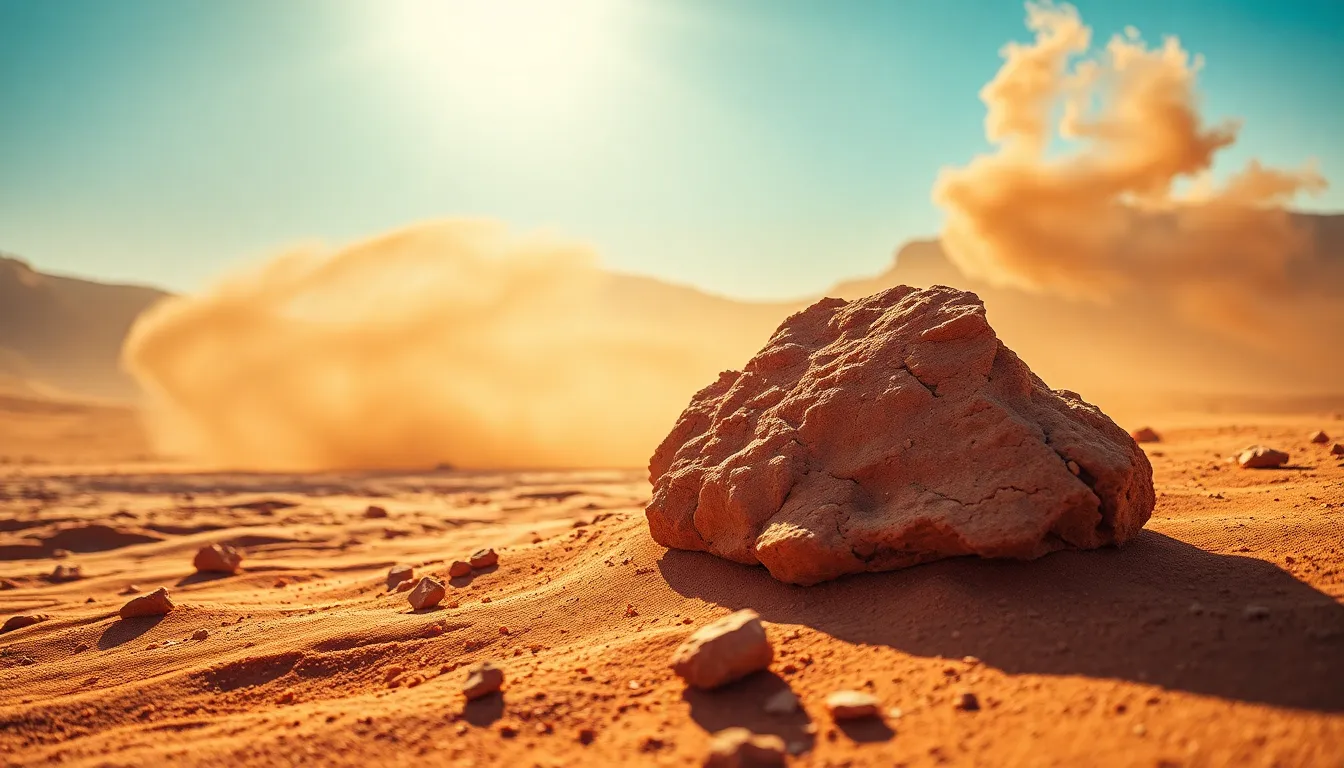
captured with Canon EOS R5, 24-70mm f/2.8L at 35mm, dappled sunlight filtering through a Martian dust storm, creating a surreal atmosphere with soft shadows, shallow depth of field at f/2.8 focusing tightly on a weathered Martian rock with fine detail, Fujifilm Velvia-inspired saturated colors enhancing the vivid reds and oranges of the surface, composition using a Dutch angle for dramatic impact, with blurred vortex of dust swirling in the background.
16:9
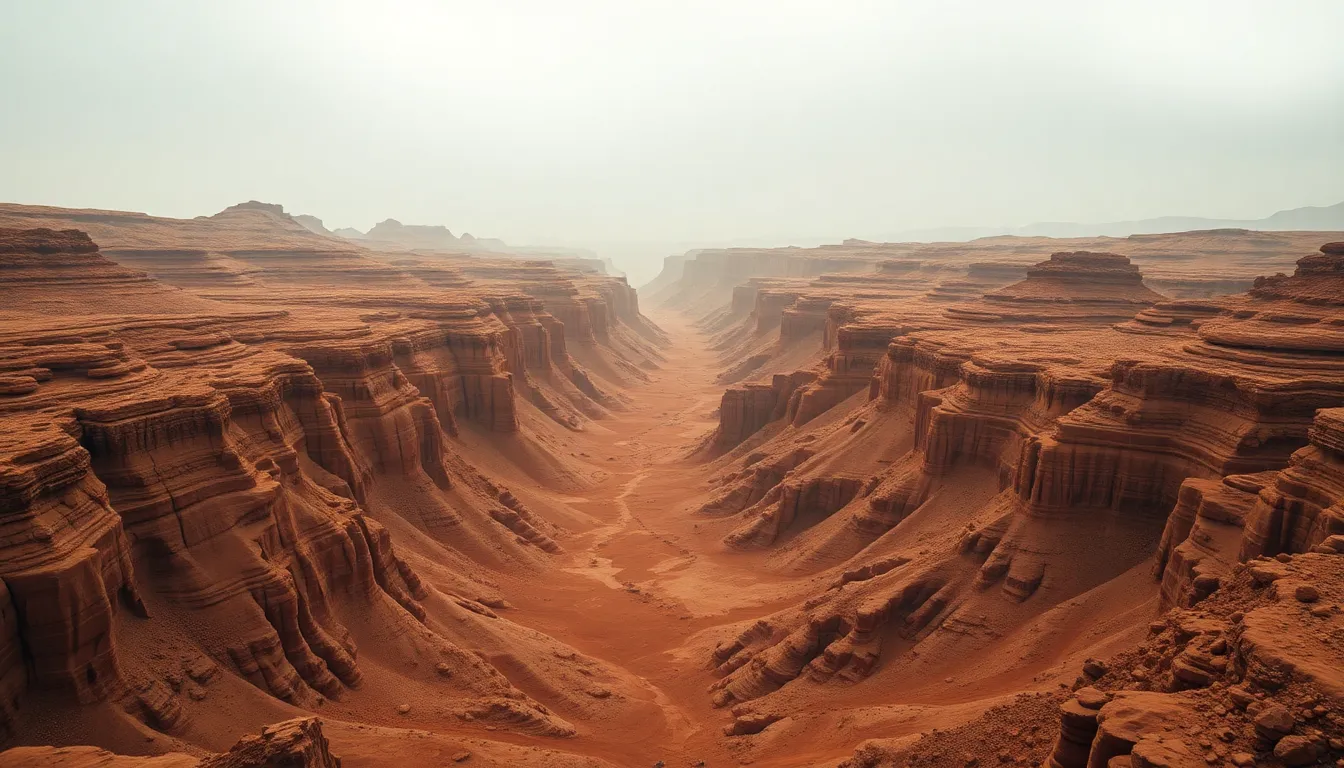
shot on Sony A7R V with 85mm f/1.4 GM lens, overcast diffused daylight softening shadows on the Mars rover parked on the rocky surface, hyperfocal distance ensuring everything from the rover to the Martian horizon is tack-sharp at f/8, natural muted tones with desaturated earth colors accentuating the rugged terrain, composition highlights the rover centered against the vast Martian landscape with a dramatic sky above, capturing the fine textures of the dusty ground and metallic surfaces of the rover.
16:9
captured with Nikon Z9, 70-200mm f/2.8 telephoto at 135mm, golden hour lighting casting warm hues over the Martian landscape, shallow depth of field at f/2.8 with the foreground rock in sharp focus and the distant canyon melting into soft bokeh, cinematic teal and orange color grading highlighting the stark contrast of reds and blues, composition featuring leading lines of the rock formation drawing the eye toward the expansive canyon vista, with fine dust particles suspended in the air catching the warm light.
16:9
shot on Hasselblad X2D 100C, 90mm f/2.5 medium format, presenting a Martian rover navigating through a dusty canyon under dramatic overcast conditions. The soft, diffused lighting minimizes harsh shadows, creating a moody atmosphere with desaturated earth colors. The composition centers on the rover, framed by the canyon walls that lead the viewer's eye into the scene. Depth of field is shallow, ensuring the rover stands out against the blurred, textured canyon. Textures include the rough, dusty rock formations and the metallic surface of the rover, reflecting subtle highlights.
16:9
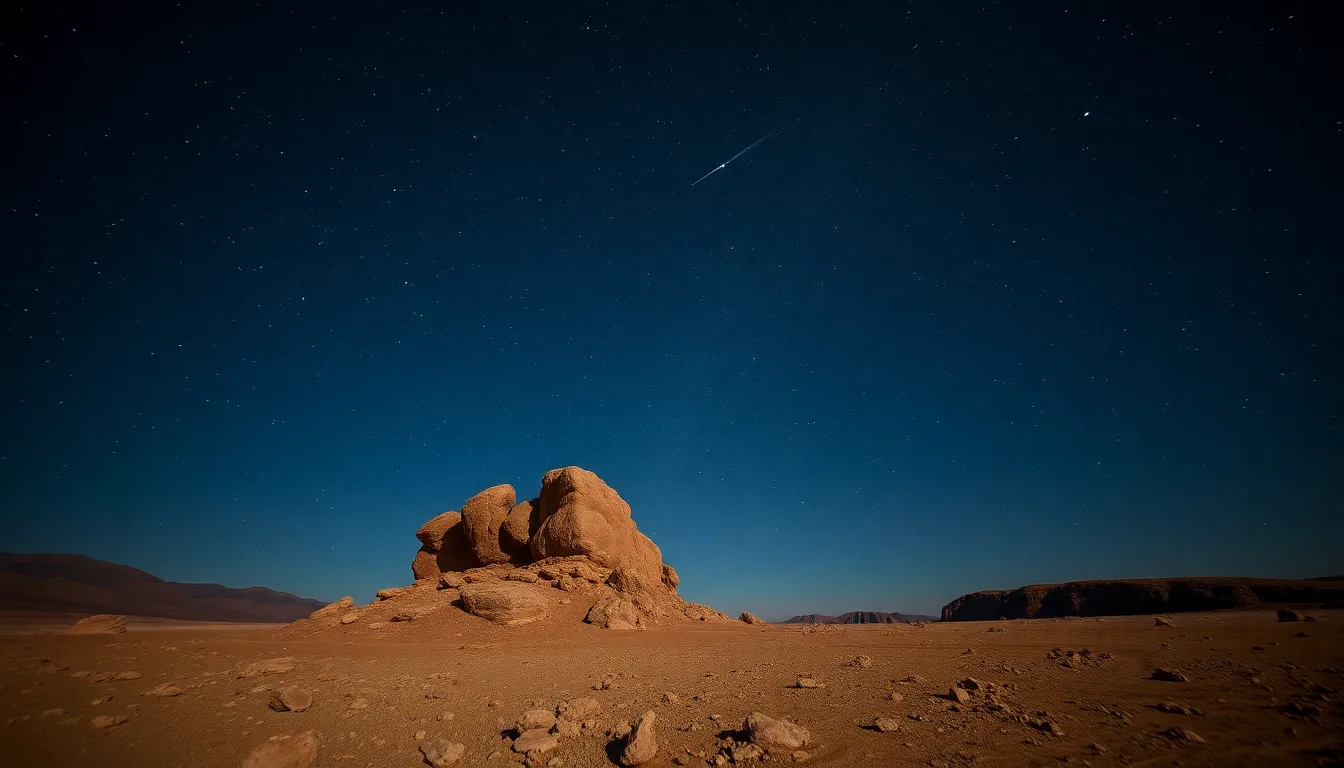
captured with Leica Q3, 28mm f/1.7 Summilux, showcasing a Martian landscape under a starry sky filled with visible constellations and a shooting star. The scene is illuminated by the soft light of the Milky Way, with varying shades of dark blue and indigo creating a cosmic backdrop. The composition uses a rule of thirds, positioning the rocky outcrop in the foreground and the expansive sky above, leading the eye upward. Textures include the rough, cratered surface of the Martian rocks contrasted against the smoothness of the starry night. This is shot with a long exposure to catch the celestial motion and highlight the stars' brilliance.
16:9

shot on Fujifilm GFX 100S, 110mm f/2 macro with a focus on a small Martian rock covered in lichen-like organisms, illuminated by soft diffused daylight filtering through a translucent Martian dust cloud. The shallow depth of field creates creamy bokeh that isolates the rock, while the earthy hues of green and brown contrast with the soft pinkish-red background. The composition frames the rock centrally, emphasizing its unique texture and the subtle details of the organisms. Textures include the rough surface of the rock and the delicate, velvety appearance of the organisms.
1:1
captured with Canon EOS R5, 24-70mm f/2.8L at 35mm, depicting a Martian crater filled with vibrant blue ice under direct high noon sunlight. Hyperfocal distance at f/8 ensures everything from the foreground rocks to the distant horizon is sharp, revealing intricate details of the crater's walls. The color palette is dominated by vivid blues and stark whites of the ice, contrasted against the reddish-brown Martian soil. The composition centers on the crater, showcasing its circular form, while scattered rocks create interest in the foreground. Textures include the smooth surface of the ice juxtaposed with rough, jagged rock formations.
16:9
shot on Nikon Z9, 70-200mm f/2.8 telephoto at 135mm, captured during the Martian sunset with golden hour light creating long shadows across the rocky landscape. Shallow depth of field at f/2.8 isolates a rugged boulder covered in fine red dust, with a backdrop of the rusty-orange horizon fading into darker shades. The color palette features warm reds and deep oranges reminiscent of a fiery sunset, evoking a sense of isolation and otherworldliness. The composition utilizes leading lines formed by the terrain to draw the eye towards the distant Olympus Mons, creating a dramatic focal point. Textures include coarse rock surfaces dotted with patches of dust and small craters.
16:9
captured with Hasselblad X2D 100C, 90mm f/2.5 medium format, featuring a futuristic Martian rover traversing the planet's rocky surface during twilight. The scene is dramatically lit by the soft glow of the rover's headlights, casting long shadows. The depth of field is selective, focusing on the rover while the Martian terrain blurs subtly in the background. The color palette incorporates natural muted tones alongside the cool twilight blues, creating a moody atmosphere. Compositionally, the rover is positioned in the lower third, allowing a sweeping view of the Martian horizon.
3:2
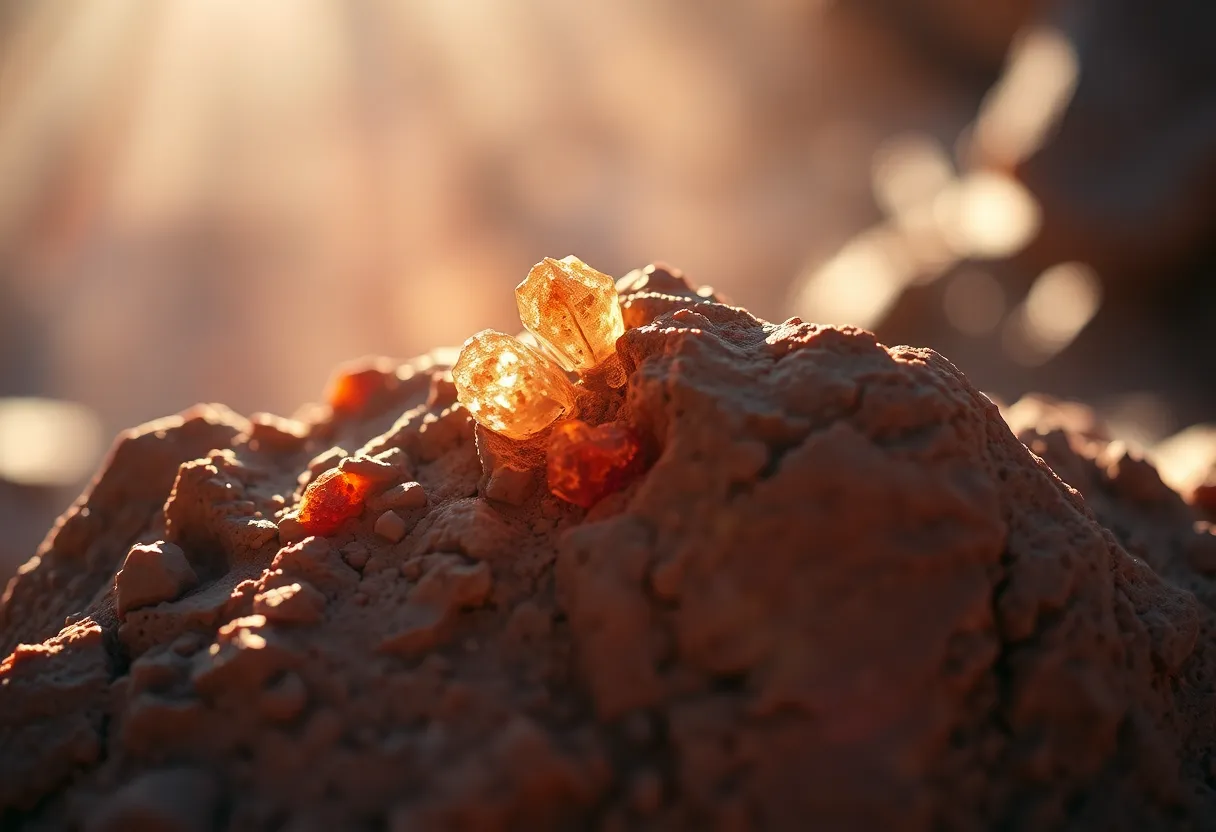
shot on Fujifilm GFX 100S, 110mm f/2 macro, capturing the intricate details of a Martian rock formation. The lighting consists of dappled sunlight filtering through a translucent atmosphere, enhancing the unique textures and mineral layers of the rock. Selective focus is applied to highlight the crystal structures within the rock, while the background transitions into soft painterly bokeh. The color palette resembles Fujifilm Velvia, with deep reds and subtle blues contributing to the vivid, alien presentation. Composition positions the rock off-center, creating a dynamic visual interest.
3:2
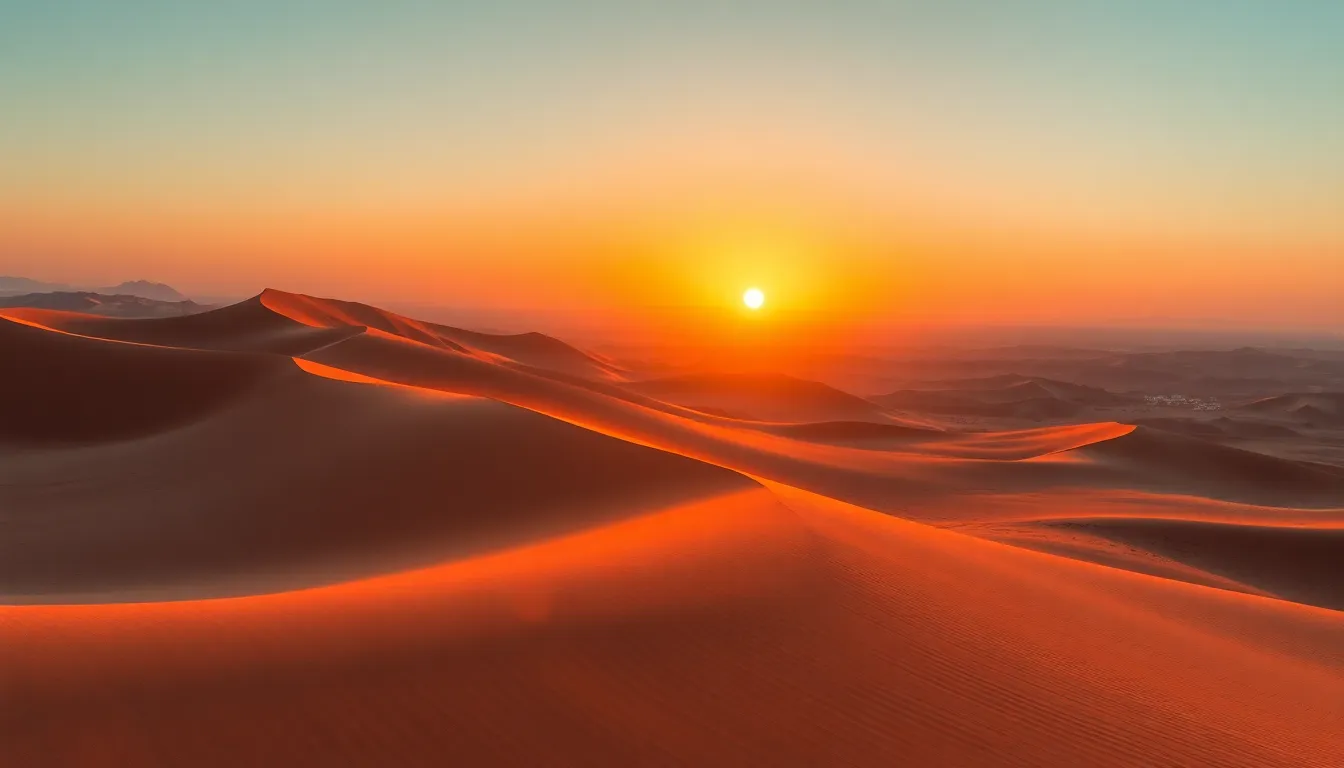
captured with Canon EOS R5, 24-70mm f/2.8L at 35mm, presenting a panoramic view of a Martian sunset over rolling dunes. The scene is bathed in golden hour backlighting, with warm rim light accentuating the dunes' curves and soft fill light creating depth. Depth of field is hyperfocal at f/8, keeping the foreground and distant horizon sharply in focus. Colors feature cinematic teal and orange grading, with the warm tones of the sunset contrasting against the cool shadows of the dunes. The composition employs leading lines, guiding the eye through the undulating landscape.
16:9
shot on Sony A7R V with 85mm f/1.4 GM lens, featuring a close-up of Martian soil samples arranged in a laboratory setting. The scene is illuminated by warm tungsten desk lamps casting a directional pool of light, enhancing the texture of each sample with soft shadows. A shallow depth of field at f/1.4 brings the foreground into sharp focus, while the background blurs into creamy bokeh. Color science is inspired by Kodak Portra 400, highlighting warm tones and maintaining natural skin-like textures on the soil grains.
1:1
captured with Nikon Z9, 70-200mm f/2.8 telephoto at 135mm, showcasing a Martian landscape under stunning overcast daylight filtering through an alien atmosphere. The scene is sharply focused utilizing hyperfocal distance, revealing detailed textures of red rocky terrain with fine grains and cracks. Colors reflect natural muted tones with desaturated earth hues resembling Mars' surface, with soft shadows adding depth. Composition follows the rule of thirds, positioning a distant volcano at the left-inflection point against a vast, cloudy sky.
16:9
captured with Hasselblad X2D 100C, 90mm f/2.5 medium format, portraying a futuristic Martian colony at dusk, with soft neon lights illuminating the structures. A backlit dome is surrounded by red dust, while the soft lighting creates a warm glow that contrasts against the cool blues of the twilight sky. The image is sharp throughout due to a hyperfocal depth of field, blending the colony seamlessly with the Martian landscape. The color grading features cinematic teal and orange for a modern feel. The composition uses leading lines from the dome and pathways toward the horizon, inviting viewers into the scene. Textural details reveal the smooth surfaces of the habitat and the rough Martian soil.
16:9
shot on Fujifilm GFX 100S, 110mm f/2 macro, capturing the intricate details of a Martian rock sample under controlled studio lighting. The softbox creates even illumination, revealing the rock's rough texture and subtle color variations from reds to browns. Focused on a shallow depth of field, the background is a smooth gradient, allowing the rock's details to take center stage. The color palette is natural with muted tones that emphasize the rock's characteristics. The composition is a centered symmetrical shot, highlighting the specimen's unique features. Textural details include the rough, weathered surface with fine mineral inclusions.
1:1
captured with Nikon Z9, 70-200mm f/2.8 telephoto at 135mm, showcasing a Martian sunset viewed from a high cliff, with vibrant oranges and purples painted across the sky. The soft, diffused lighting creates a serene atmosphere as shadows stretch across the rocky landscape below. The depth of field is hyperfocal, keeping both the foreground cliffs and the distant horizon perfectly sharp. The color grading emphasizes the warm hues of sunset reflecting off the Martian rocks. Compositionally, the image follows the rule of thirds, with the horizon positioned low, highlighting the majestic cliffs in the foreground. Natural surface textures reveal the roughness of the rock formations.
16:9
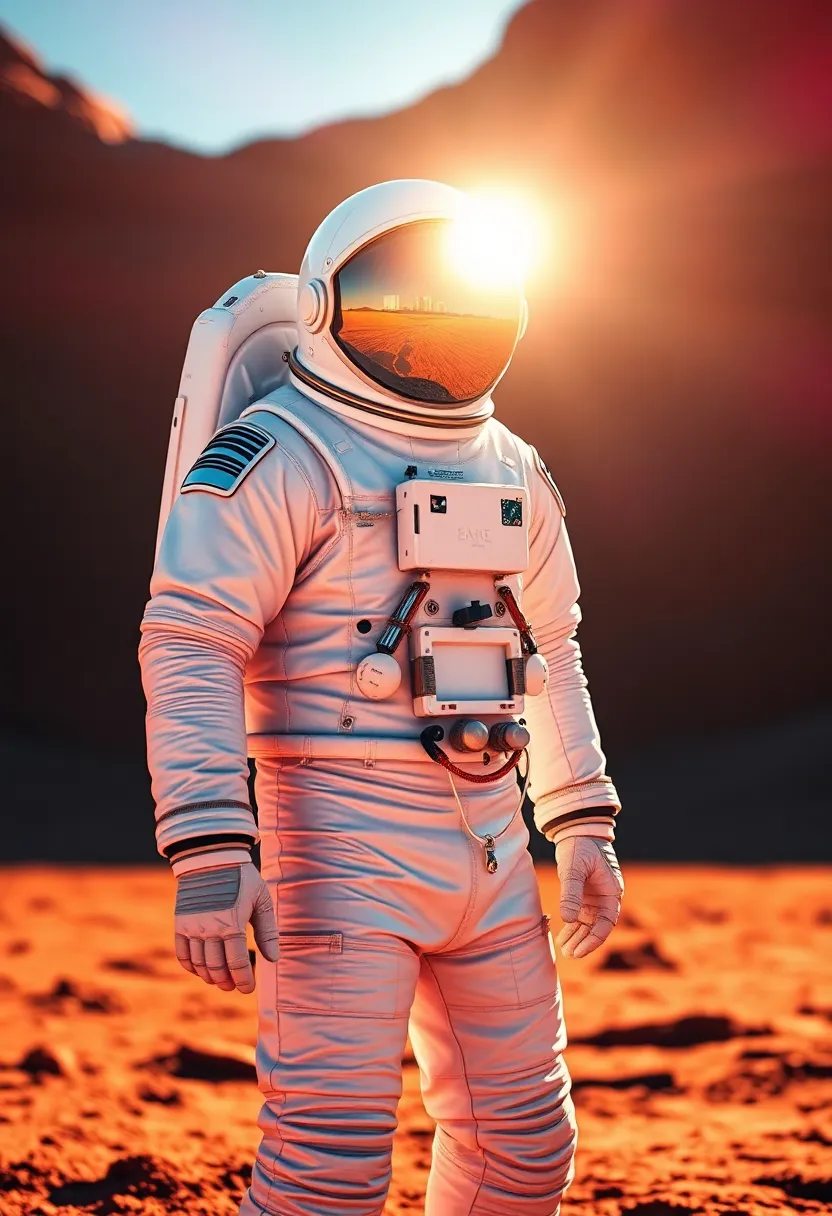
shot on Sony A7R V with 85mm f/1.4 GM lens, depicting an astronaut standing on the Martian surface, illuminated by the direct sunlight casting sharp shadows. The astronaut's suit is detailed, reflecting the bright sun with metallic surfaces, while the red Martian soil contrasts with the white suit. Shallow depth of field at f/1.4 blurs the background into a soft bokeh. The color palette features vibrant reds and whites, with the warm sun creating a golden hue on the suit. The composition centers the astronaut in the frame, emphasizing the vastness of space behind them. Texture details show fabric fibers and fine grains of Martian soil.
2:3
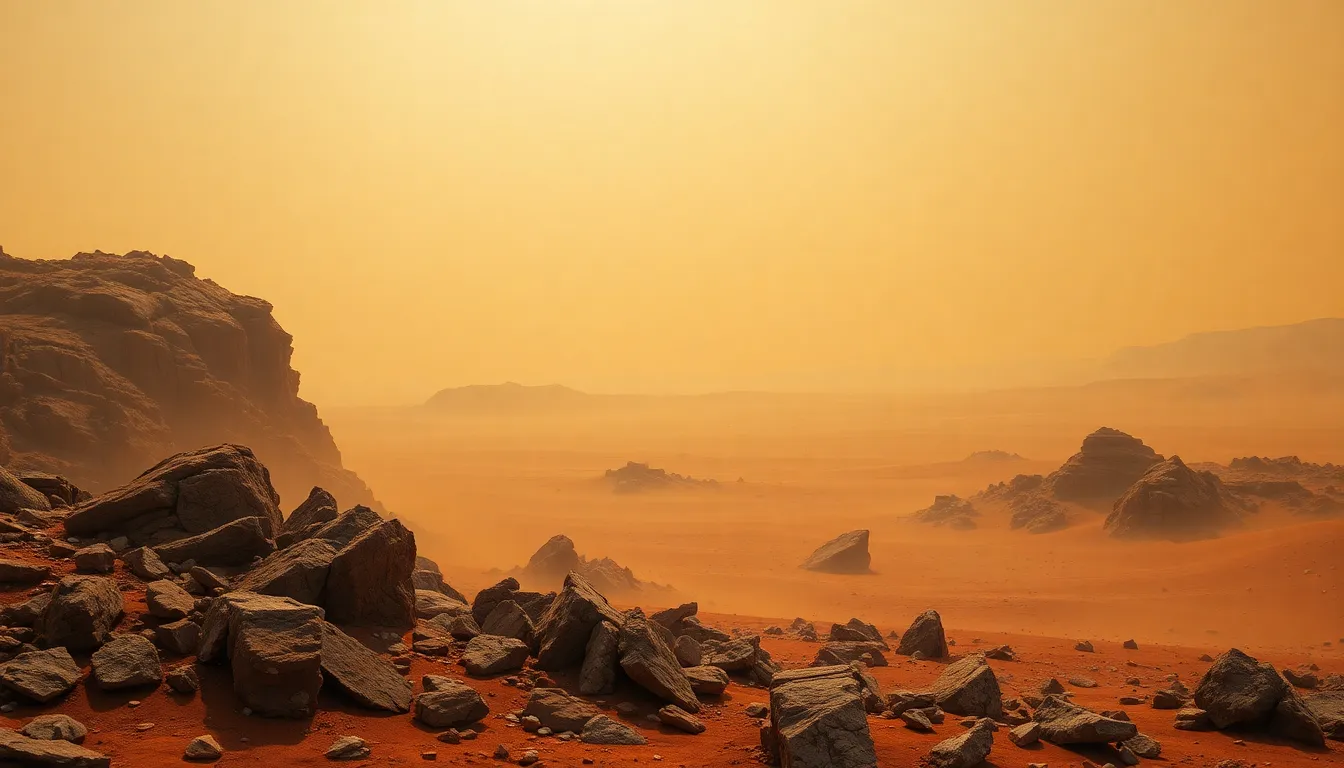
captured with Canon EOS R5, 24-70mm f/2.8L at 35mm, during a dust storm on Mars, with dramatic overcast lighting casting soft shadows on the red surface. The foreground features rugged Martian terrain with intricate rock formations, while the background fades into a hazy orange sky. The depth of field is hyperfocal, keeping everything sharp. Color science leans towards a desaturated palette with earthy reds and browns. The composition utilizes leading lines from the rocks guiding the eye towards a distant horizon dotted with craters. Texture details include rough stone surfaces and fine particulate matter swirling in the air.
16:9
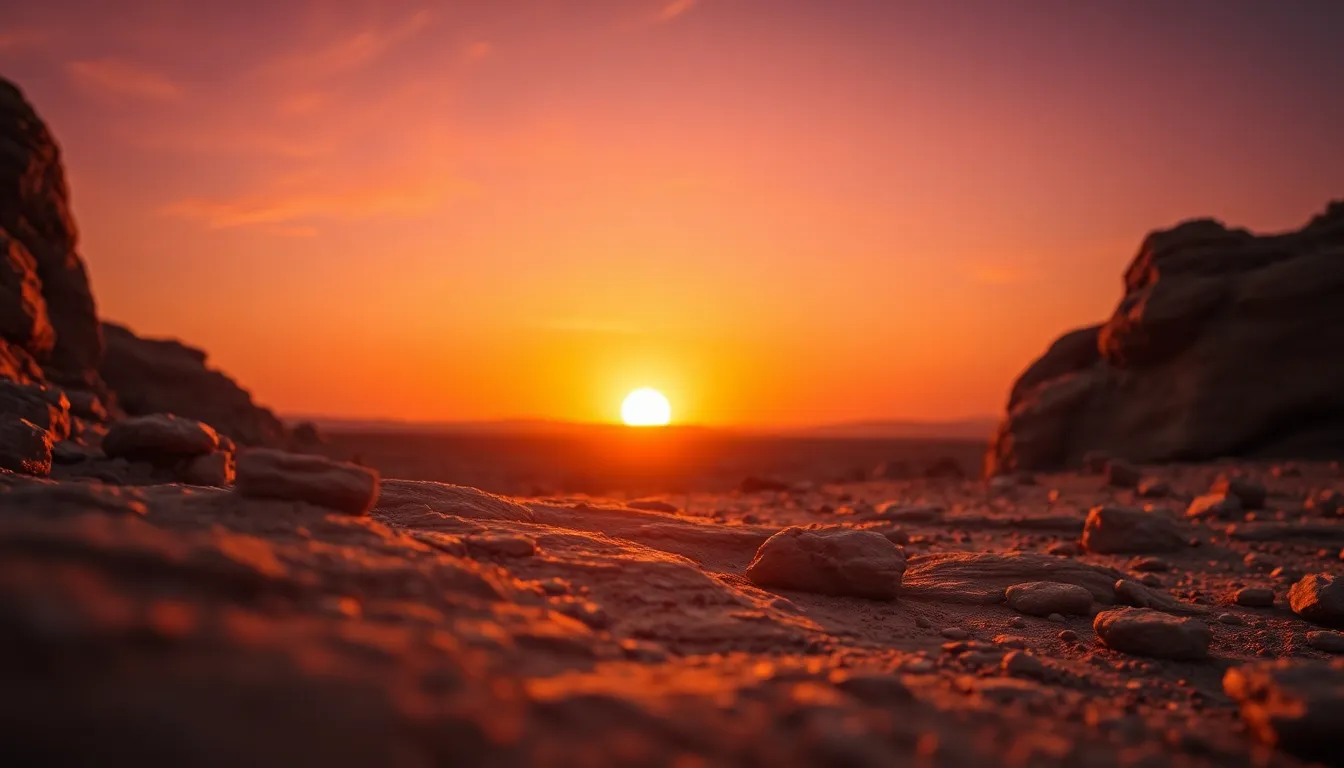
A wide shot of a Martian sunset, captured with Fujifilm GFX 100S, 110mm f/2 macro lens, showcasing a blend of orange and purple hues in the sky. The foreground features textured Martian rocks illuminated by the soft, warm light of the setting sun. The depth of field is set to a shallow f/2, creating a beautiful bokeh effect, while the colors are graded to a cinematic teal and orange palette. The composition centers on the horizon line where the sun is setting while using leading lines of the rocky outcrops to guide the viewer's gaze. The surface texture of the rocks is vividly detailed, emphasizing the alien environment.
16:9
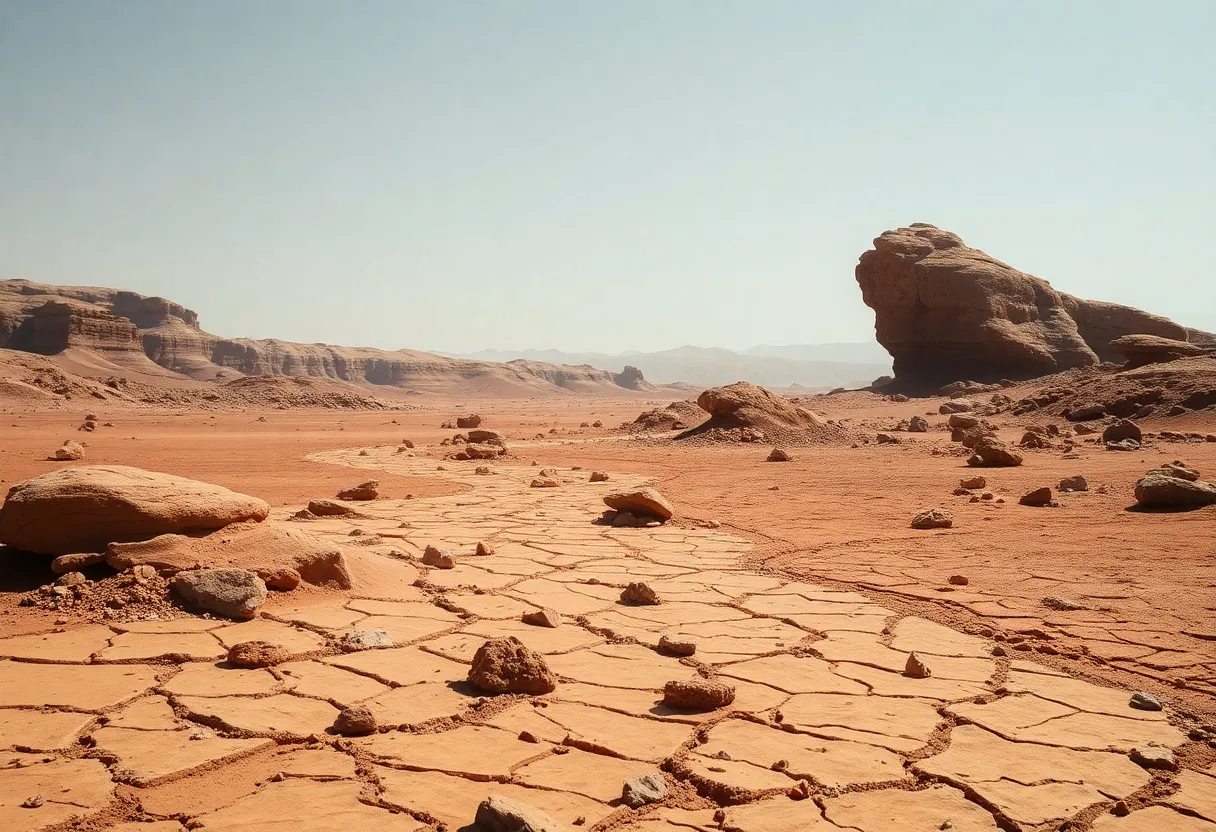
A Martian landscape with ancient riverbed formations, captured with Hasselblad X2D 100C, 90mm f/2.5 medium format, under a clear midday sky. The image showcases the intricate details of eroded rocks and dried mud patterns, with a shift in color grading to natural muted tones. The depth of field is set to hyperfocal distance at f/8, ensuring everything from the foreground to infinity is tack-sharp. The composition utilizes the rule of thirds, placing a prominent rock formation at a power point, while the dried riverbed leads the viewer's eye through the scene. Textures highlight the unique geological structures of Mars.
3:2

An astronaut exploring the surface of Mars, shot on Sony A7R V with 85mm f/1.4 GM lens, in the golden morning light casting long shadows. The astronaut, clad in a reflective spacesuit, raises their hand toward a distant horizon lined with red hills and scattered rocks. The focus is on the astronaut's visor, which reflects the Martian landscape, creating a dreamy bokeh effect in the background. The color palette is inspired by Kodak Portra 400 with warm skin tones and creamy highlights. A centered symmetrical composition emphasizes the isolation of the explorer in this alien terrain.
9:16
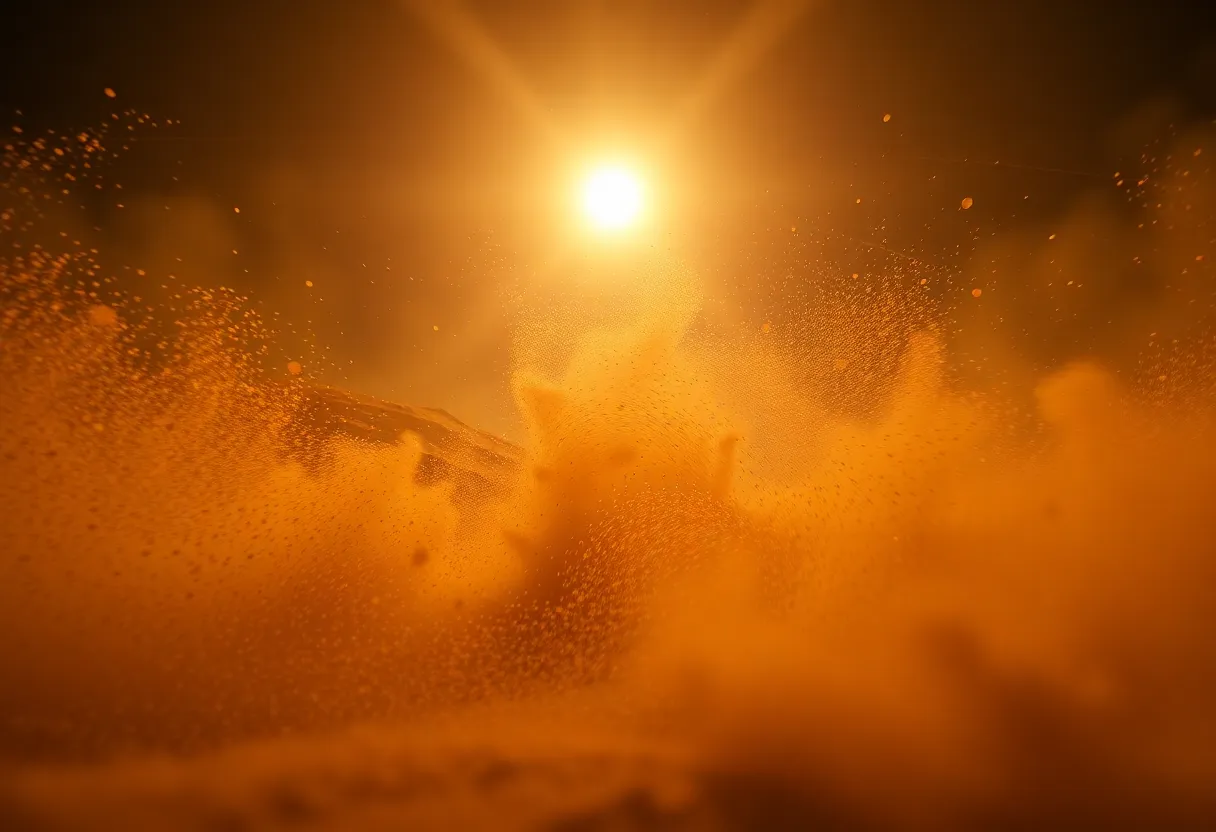
A close-up of a Martian dust storm, captured with Canon EOS R5, 24-70mm f/2.8L at 50mm, featuring dynamic swirling dust particles illuminated by a low-hanging sun. The image's color grading emphasizes earthy browns and oranges, with dappled sunlight creating a dramatic contrast. A shallow depth of field at f/2.8 makes the foreground dust particles sharp while the background fades into a soft haze. The composition captures the energy of the storm through a tilted angle, enhancing the sense of motion. The texture of the fine Martian dust is accentuated as it interacts with the light.
3:2
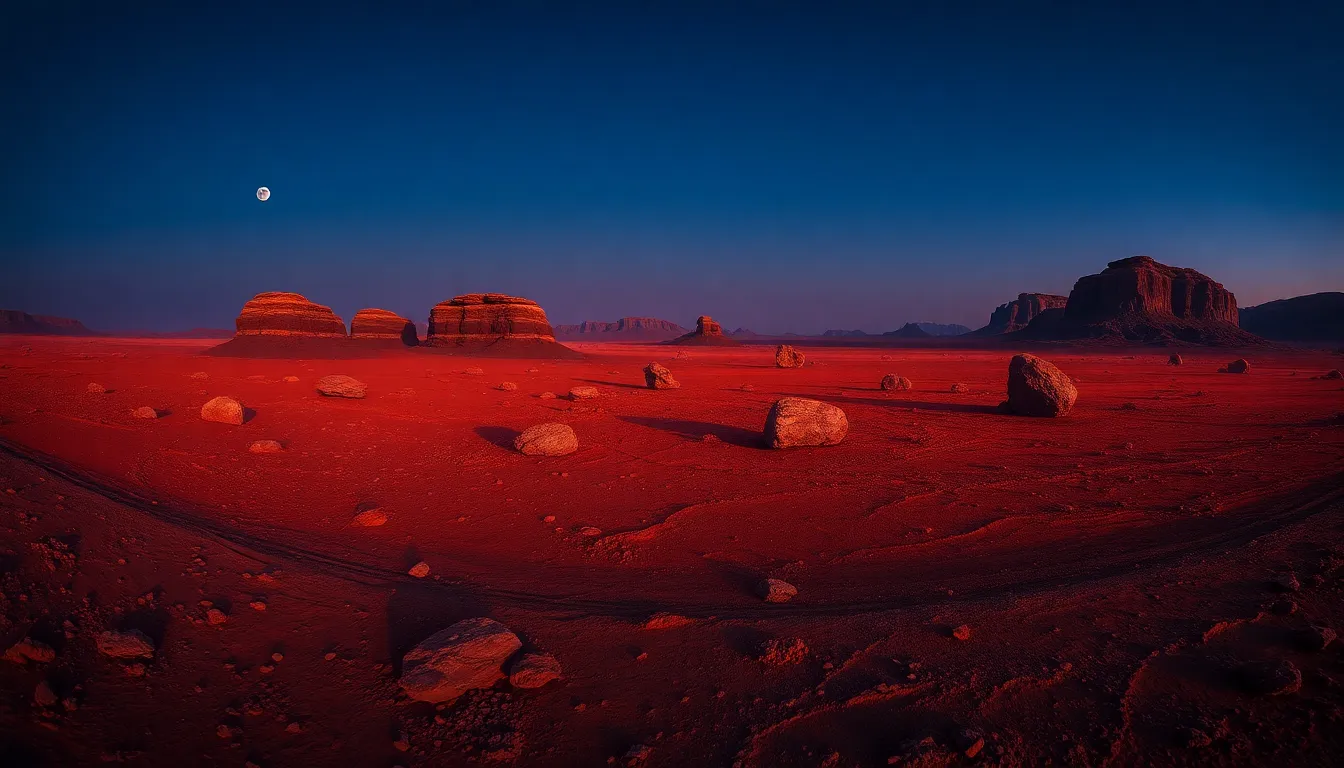
A panoramic view of the Martian landscape, shot on Nikon Z9, 70-200mm f/2.8 telephoto at 135mm, during twilight. The scene features the rusty red Martian soil with scattered boulders and dramatic rock formations under a deep indigo sky, illuminated by a faint crescent moon. The foreground is sharp while the background gradually blurs into a soft bokeh effect, evoking depth. The color palette is inspired by Fujifilm Velvia with enriched reds and deep shadows. Composition employs leading lines of the terrain curving toward the horizon, highlighting the alien beauty of Mars. Textures of the rocky surface are pronounced, with visible dust and grit.
16:9
captured with Hasselblad X2D 100C, 90mm f/2.5 medium format, presenting a panoramic view of Olympus Mons, showcasing its immense scale against the Martian sky. The lighting is diffused and flat, allowing for even illumination of the volcanic landscape, while a hyperfocal distance at f/8 ensures everything remains in focus. The color palette emphasizes natural muted tones, with the browns of the volcano contrasting against the soft blues and whites of the sky. The composition utilizes leading lines from the volcano's slopes that draw attention toward the summit, inviting the viewer to appreciate the grandeur of Mars’ largest volcano.
16:9
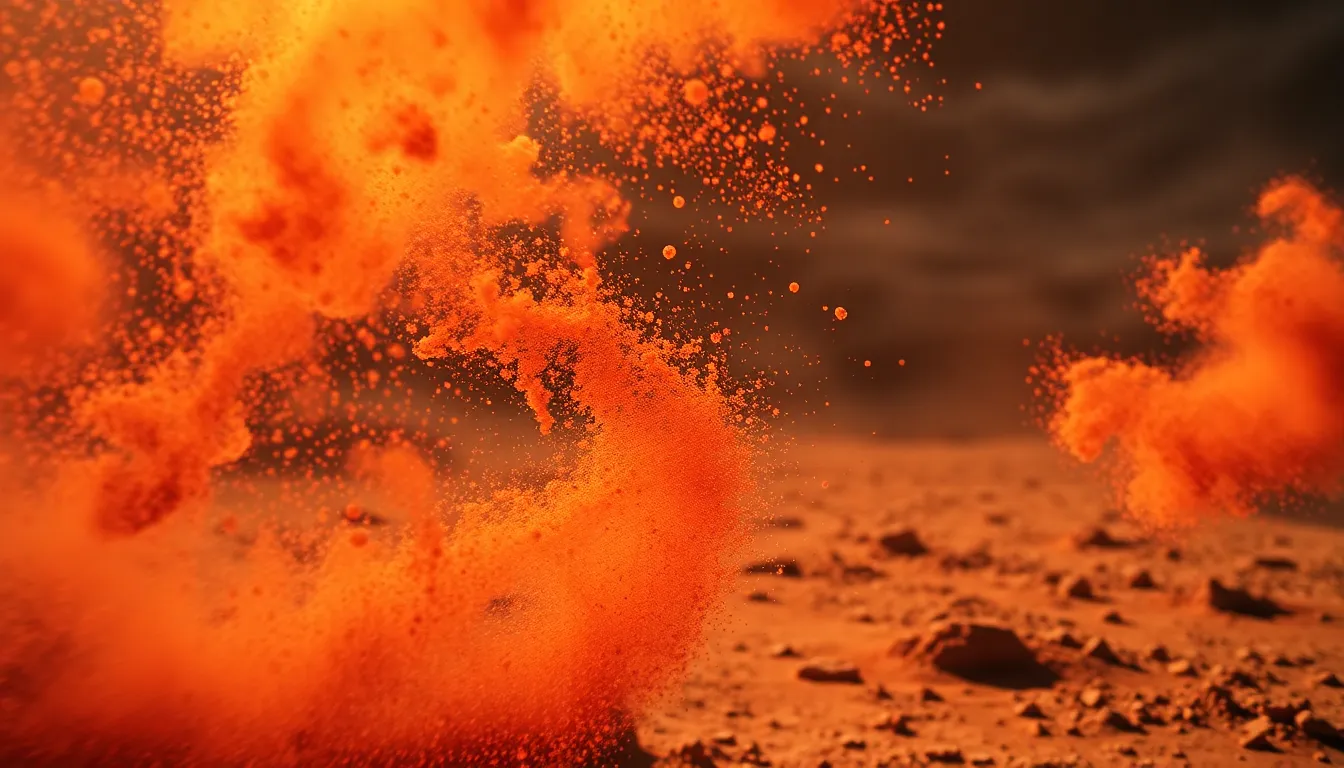
shot on Fujifilm GFX 100S, 110mm f/2 macro, focusing on a Martian dust storm swirling with vibrant red and orange particles. The lighting comes from a low angle, casting dramatic shadows and emphasizing the texture of the dust. A shallow depth of field at f/2 isolates the swirling particles in sharp detail against a blurred, chaotic background of eroded Martian terrain. The color palette is rich with fiery tones, giving a sense of movement and energy. The composition utilizes a dynamic diagonal line to lead the viewer's eye through the storm, capturing the raw power of nature on Mars.
16:9
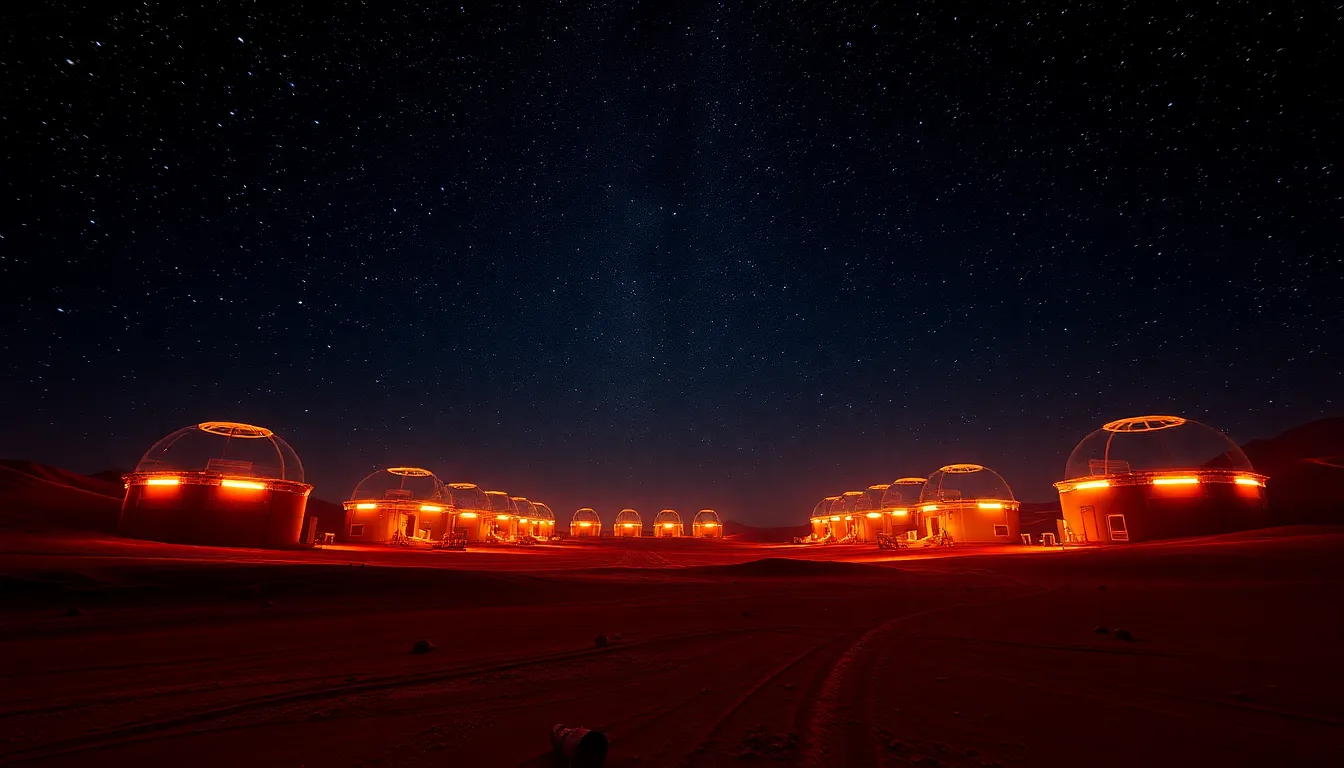
captured with Canon EOS R5, 24-70mm f/2.8L at 35mm, illustrating a futuristic Mars colony under starry skies. The habitat structures are illuminated by practical warm lights, casting soft glows on the surrounding red terrain. The hyperfocal distance at f/8 keeps everything sharply in focus, from the colony details to the star-filled sky above. The color palette combines deep indigos and warm reds, creating a striking contrast between the colony and the night. The composition is centered, with the colonnade of domes leading the view into the expansive cosmos, evoking a sense of exploration and hope.
16:9
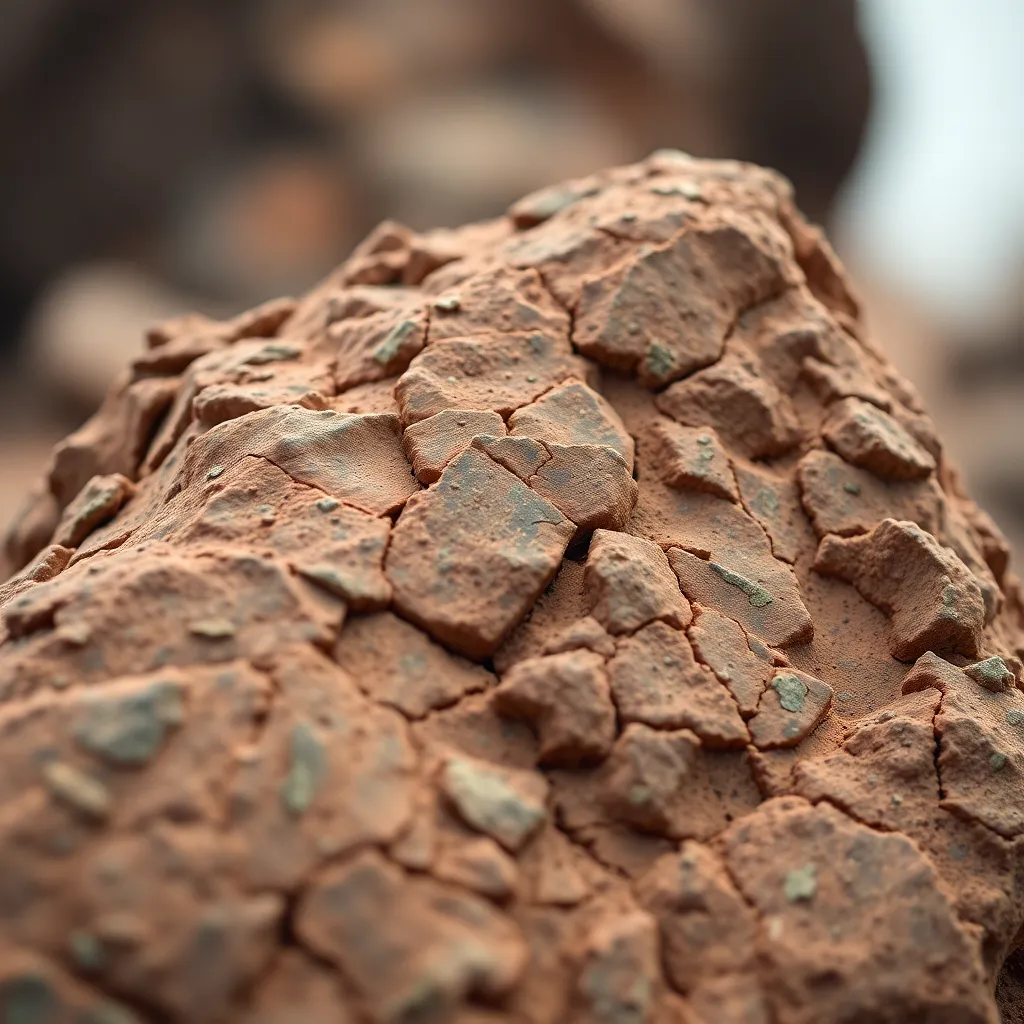
shot on Sony A7R V with 85mm f/1.4 GM lens, displaying a close-up of a Martian rock formation with intricate textures and mineral deposits. Utilized overcast diffused daylight through an ethereal Martian atmosphere to highlight the rock details, creating a serene mood. The image features a shallow depth of field at f/1.4, focusing on the detailed surface made of various shades of iron oxide. The natural color palette reflects muted earth tones with subtle hints of green and blue, creating a harmonious balance. The composition centers on the rock, with soft blurred shapes in the background enhancing the focus on the subject.
1:1
captured with Nikon Z9, 70-200mm f/2.8 telephoto at 135mm, showcasing a rugged Martian landscape under a dramatic sunset. The scene features rippled red sands and distant rocky formations, illuminated by warm golden hour lighting that enhances the earth tones. A shallow depth of field at f/2.8 focuses on a single boulder in the foreground, while the Martian horizon fades into soft focus. The color palette evokes a cinematic orange and red gradient, emphasizing the otherworldly feel. The composition follows the rule of thirds with the boulder placed strategically on the left, drawing the eye across the landscape texture of coarse sand and stone.
16:9
captured with Hasselblad X2D 100C, 90mm f/2.5 medium format, showing an astronaut exploring a Martian canyon at high noon, with harsh shadows and bright highlights. The depth of field at f/5 provides a balanced focus on both the astronaut and the expansive canyon backdrop. The color science leans toward natural muted tones, highlighting earthy reds and browns of the canyon walls. The composition employs the rule of thirds, placing the astronaut off-center to enhance the vastness of the scene, while the texture of the canyon walls is rendered in exquisite detail.
3:2
shot on Fujifilm GFX 100S, 110mm f/2 macro, focusing on Martian dust storms sweeping across the surface, captured in dramatic detail. The lighting is moody with diffused sunlight emerging from behind dark clouds. Using shallow depth of field at f/2, swirling dust particles are rendered in sharp focus with soft bokeh of the storm in the background. The color palette features deep oranges infused with hints of muted browns and greys. The composition utilizes a dynamic angle to convey the movement of the storm, with textures of swirling dust vividly depicted.
4:3
captured with Canon EOS R5, 24-70mm f/2.8L at 35mm, depicting a panoramic view of Olympus Mons at sunrise, where the first light of dawn bathes the volcano in golden hues. The hyperfocal distance at f/8 ensures that both the foreground rocks and distant mountains remain in sharp focus. The color science reflects natural muted tones with soft pastels highlighting the scene. The composition employs a wide format to capture the grandeur of the landscape, with foreground rocks framing the view.
16:9
shot on Sony A7R V with 85mm f/1.4 GM lens, capturing a close-up of the Curiosity rover examining Martian rock samples under the harsh sunlight. The lighting is stark with high contrast, revealing minute details on the rover's robotic arm. Using shallow depth of field at f/1.4, the background dissolves into soft bokeh. The color palette features vibrant metallic greys and earthy reds. The composition is centered, bringing focus to the rover and its surrounding rocky environment, with visible dust and texture on the rocks.
3:2
captured with Nikon Z9, 70-200mm f/2.8 telephoto at 135mm, under a surreal twilight sky with soft diffused light illuminating the Martian landscape. The shallow depth of field at f/2.8 creates a creamy bokeh of rocky formations in the foreground. The color palette includes warm reds and deep oranges, reminiscent of the Martian surface. The composition uses leading lines of the rocky terrain drawing the eye toward the distant horizon. Surface textures of the Martian soil showcase fine particles and rugged edges, enhancing realism.
16:9

Fujifilm GFX 100S, 110mm f/2 macro, captured under practical warm tungsten lighting, focusing on Martian soil samples in a lab setting, showcasing the granules' textures and colors in extreme detail. The color science emulates Kodak Portra 400, enriching warm tones and smooth transitions. The composition employs a macro perspective, showcasing the intricate details of the soil while emphasizing a sense of isolation and scientific exploration. The smooth surface of the lab table adds contrast to the rugged textures of the soil samples, creating a visually engaging image.
16:9
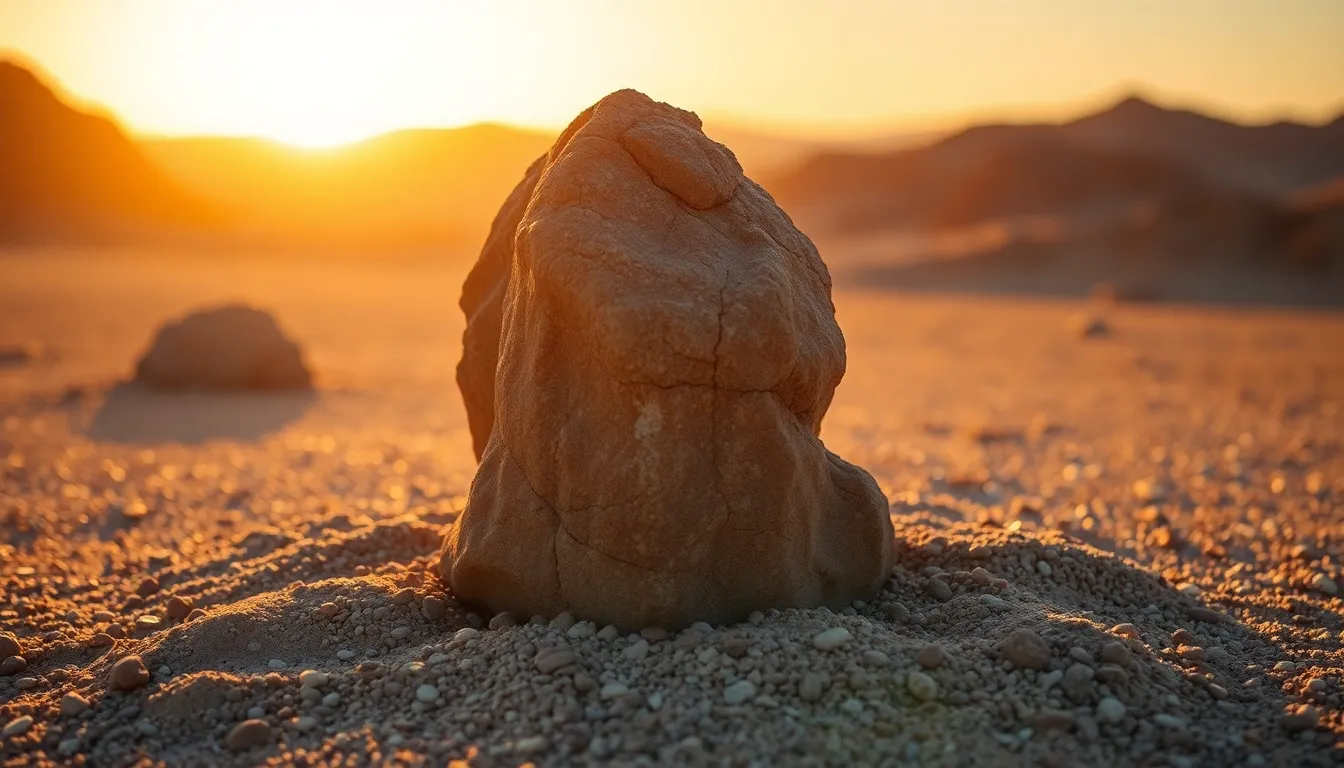
Hasselblad X2D 100C, 90mm f/2.5 medium format, golden hour backlighting creating a surreal glow around a Martian rock formation, shallow depth of field at f/2.5 making the foreground rock sharply defined against a blurred desert landscape. The color palette features golden highlights and deep shadows, evoking a mesmerizing and otherworldly atmosphere. The composition utilizes centered symmetry with the rock formation creating a striking focal point, while textures of the rough surface and scattered pebbles enhance the tactile quality of the scene.
16:9
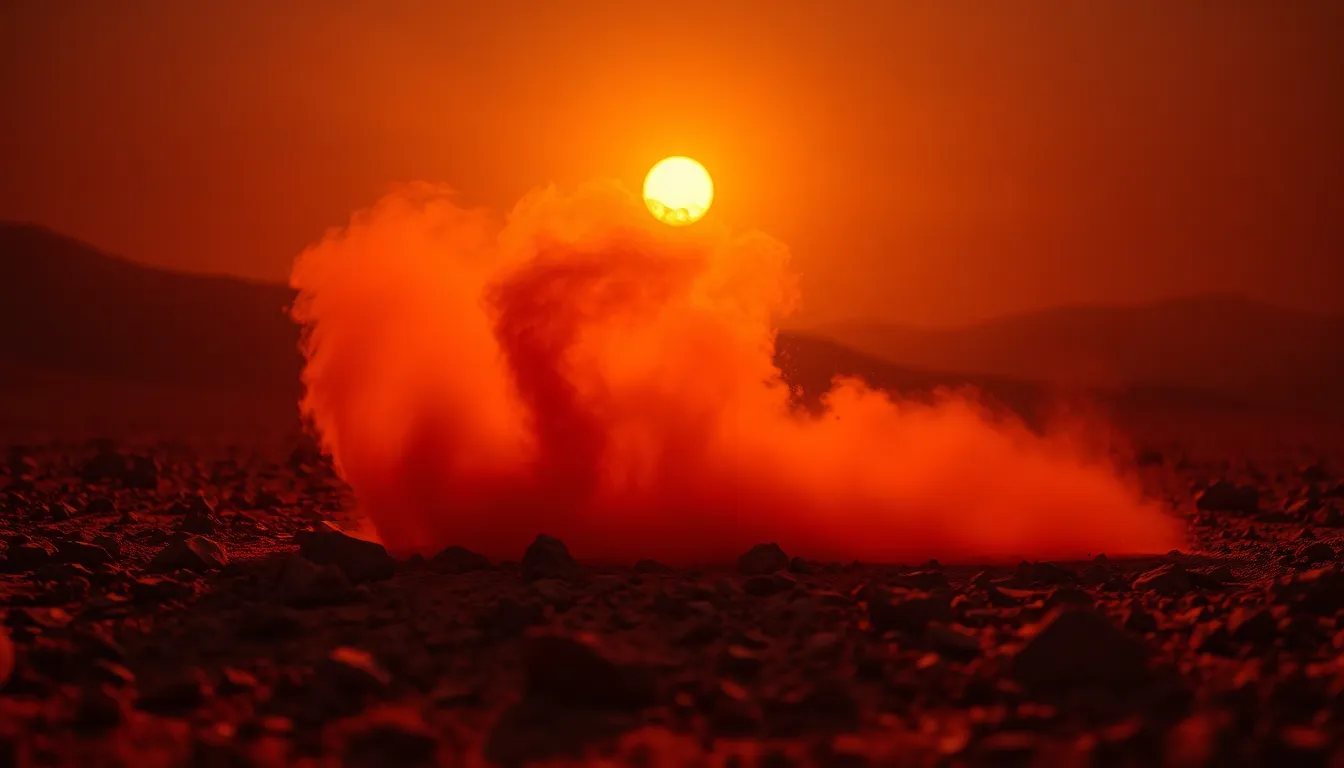
Nikon Z9, 70-200mm f/2.8 telephoto at 135mm, dramatic lighting from a distant sun creating long shadows over a Martian dust storm, selective focus on a swirling cloud of red dust while the rocky landscape fades into soft bokeh. The color grading features a cinematic palette of deep oranges contrasted against dark shadows, enriching the atmosphere. The composition centers on the swirling dust cloud, giving it a dynamic feel, while textures of the coarse Martian surface add depth and realism to the scene.
16:9
shot on Sony A7R V with 85mm f/1.4 GM lens, overcast diffused daylight illuminating a Martian valley filled with deep canyons and ancient rock formations, hyperfocal distance capturing everything from foreground to infinity in pristine detail. The color palette is inspired by natural muted tones with desaturated reds and browns, emphasizing the rugged terrain. The composition employs leading lines from canyon edges drawing the viewer's eye into the vast landscape, while textures of the rocky surfaces and scattered dust create a stunningly realistic portrayal of Mars.
16:9
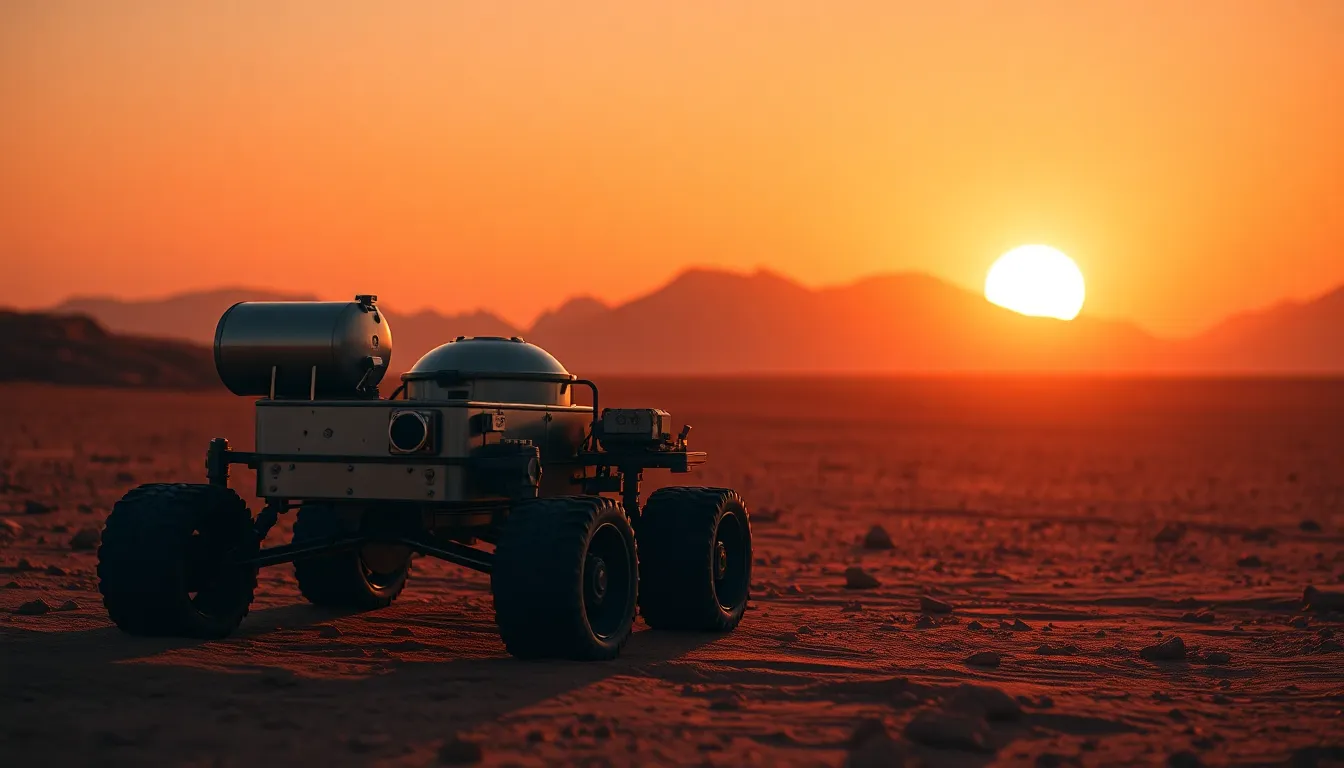
captured with Canon EOS R5, 24-70mm f/2.8L at 35mm, dramatic backlighting with the sun setting on the Martian horizon, shallow depth of field at f/2.8 highlighting a solitary rover in sharp focus with the landscape blurring into warm red and orange hues. The color palette has rich earthy tones reminiscent of desert landscapes, creating a surreal yet realistic depiction. The composition follows the rule of thirds with the rover positioned left, and distant rugged mountains rising dramatically on the right, showcasing textures of the vehicle's metallic surface against the dusty Martian soil.
16:9
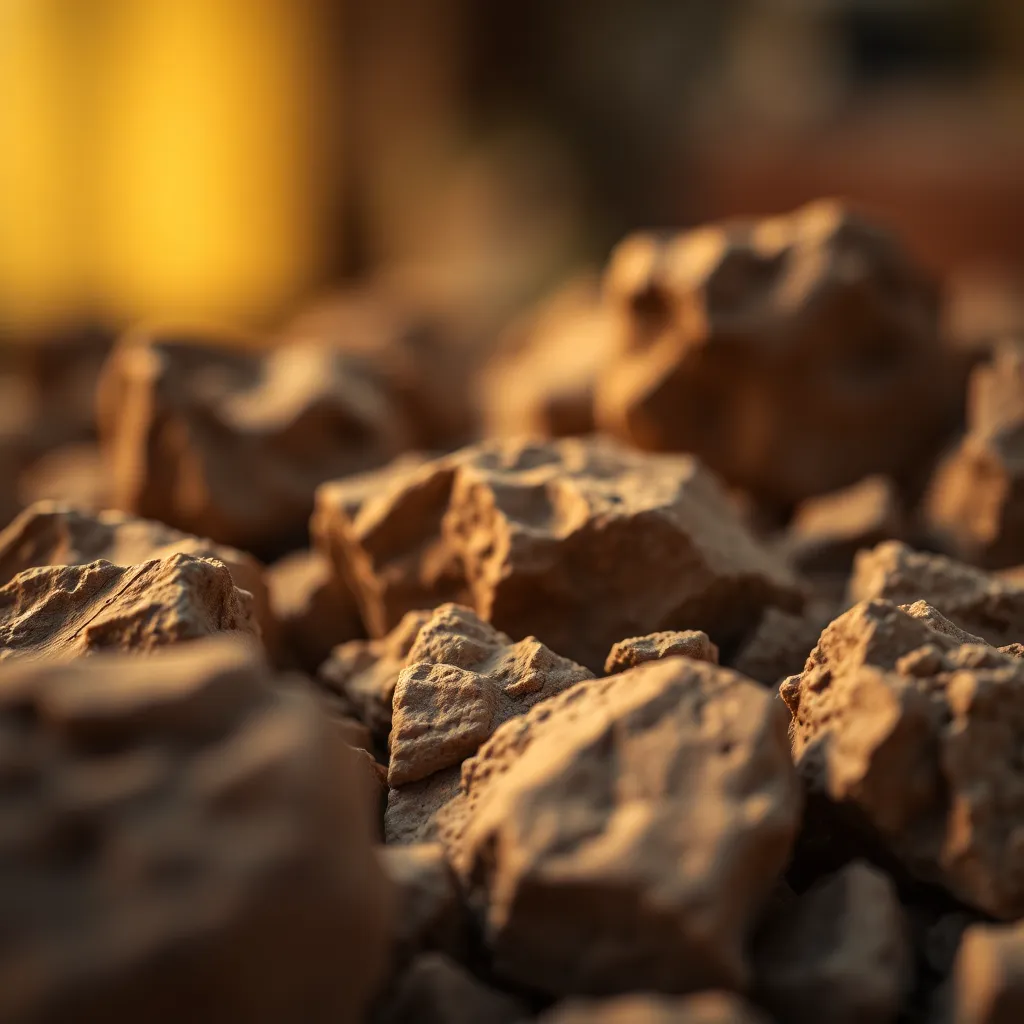
A close-up of Martian rock samples, taken with a Leica Q3, 28mm f/1.7 Summilux lens. The scene is captured under practical warm tungsten light, providing a cozy ambiance that contrasts with the alien nature of the rocks. The shallow depth of field at f/1.7 creates a creamy bokeh, isolating the textures of the rocks from the background. The color palette consists of natural earthy tones, emphasizing the rugged surface details. The composition involves a foreground framing that enhances the tactile quality of the materials, inviting the viewer to appreciate the wonders of Martian geology.
1:1
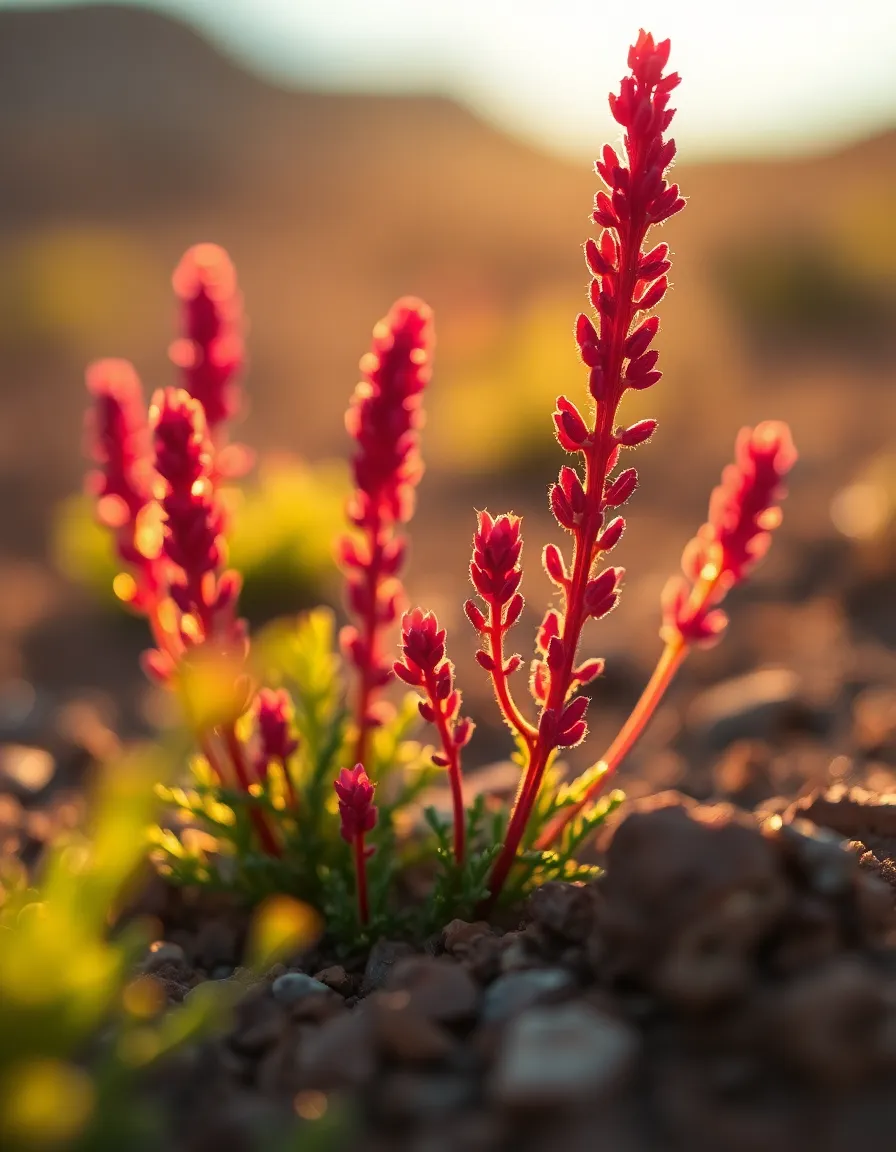
An artistic rendering of Martian flora, showcased shot on Hasselblad X2D 100C, 90mm f/2.5 medium format. The scene is illuminated with natural golden hour backlighting, emphasizing the delicate features of the plants. A shallow depth of field at f/2.5 creates a soft bokeh effect, allowing the vibrant reds and greens of the foliage to stand out against a blurred Martian landscape. The color palette features vivid hues reminiscent of a fantasy world, blending realistic textures with imaginative colors. The composition follows the rule of thirds, with the plants strategically placed off-center, inviting the viewer to explore the surrounding terrain.
3:4
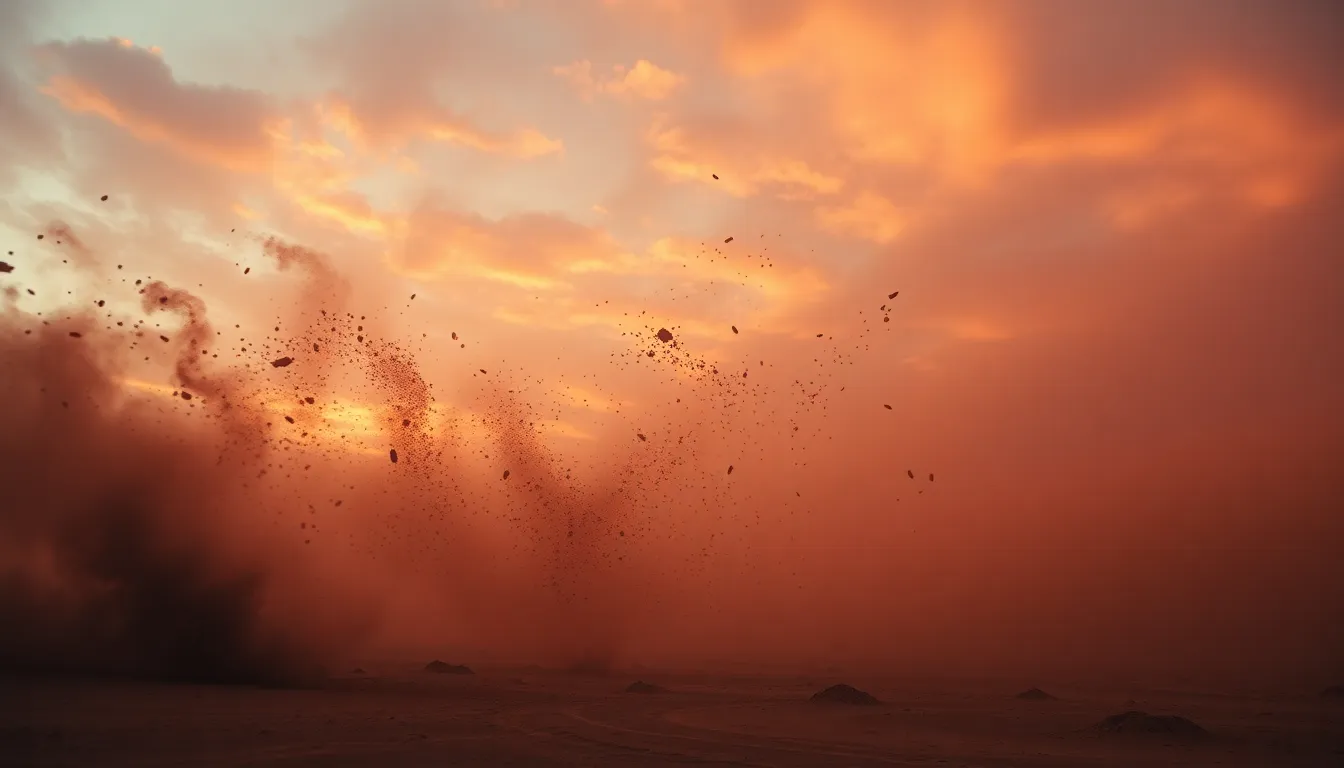
A panoramic view of a Martian dust storm, captured with a Fujifilm GFX 100S, 110mm f/2 macro lens. The image is set during twilight, with soft, diffused light illuminating the swirling dust and debris. Using a wide depth of field ensures every grain of Martian dust is sharply detailed against the turbulent sky. The color palette draws inspiration from Fujifilm Velvia, showcasing rich oranges and earthy browns contrasting with the darkening sky. The composition utilizes leading lines formed by the swirling dust, guiding the viewer's eye through the chaotic beauty of the storm.
16:9
An astronaut exploring the surface of Mars, shot on a Canon EOS R5, 24-70mm f/2.8L at 35mm. The scene is illuminated by dramatic overcast daylight, creating soft shadows and even lighting. A hyperfocal depth of field at f/8 ensures that both the astronaut and the Martian soil are in focus, showcasing details like the textured helmet and the fine dust. The color palette features natural muted tones with desaturated earth colors, reflecting the planet's barren beauty. The composition captures the astronaut centrally framed against a backdrop of ancient Martian rocks and craters, emphasizing the vastness of space.
3:2
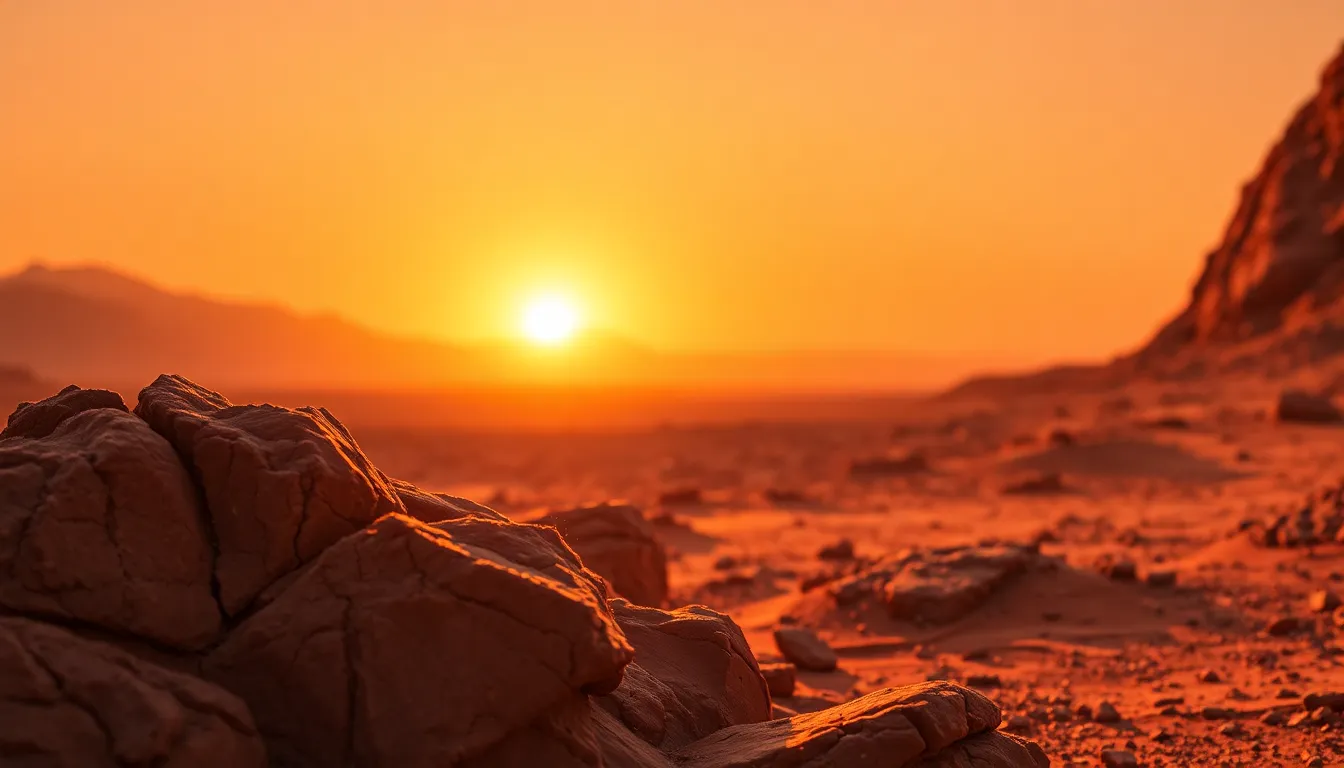
A stunning view of the Martian landscape captured with a Nikon Z9, 70-200mm f/2.8 telephoto lens at 135mm. The scene is bathed in warm, golden sunlight as it sets on the horizon, highlighting the red rocky terrain and distant mountains. Shallow depth of field at f/2.8 creates a soft bokeh effect in the background, enhancing the clarity of the foreground rocks. The color palette draws from cinematic teal and orange grading, emphasizing the warm reds and cool shadows. Compositionally, the rule of thirds places the mountains on the left third of the frame, with textured rocky formations in the foreground showcasing natural striations and dust.
16:9
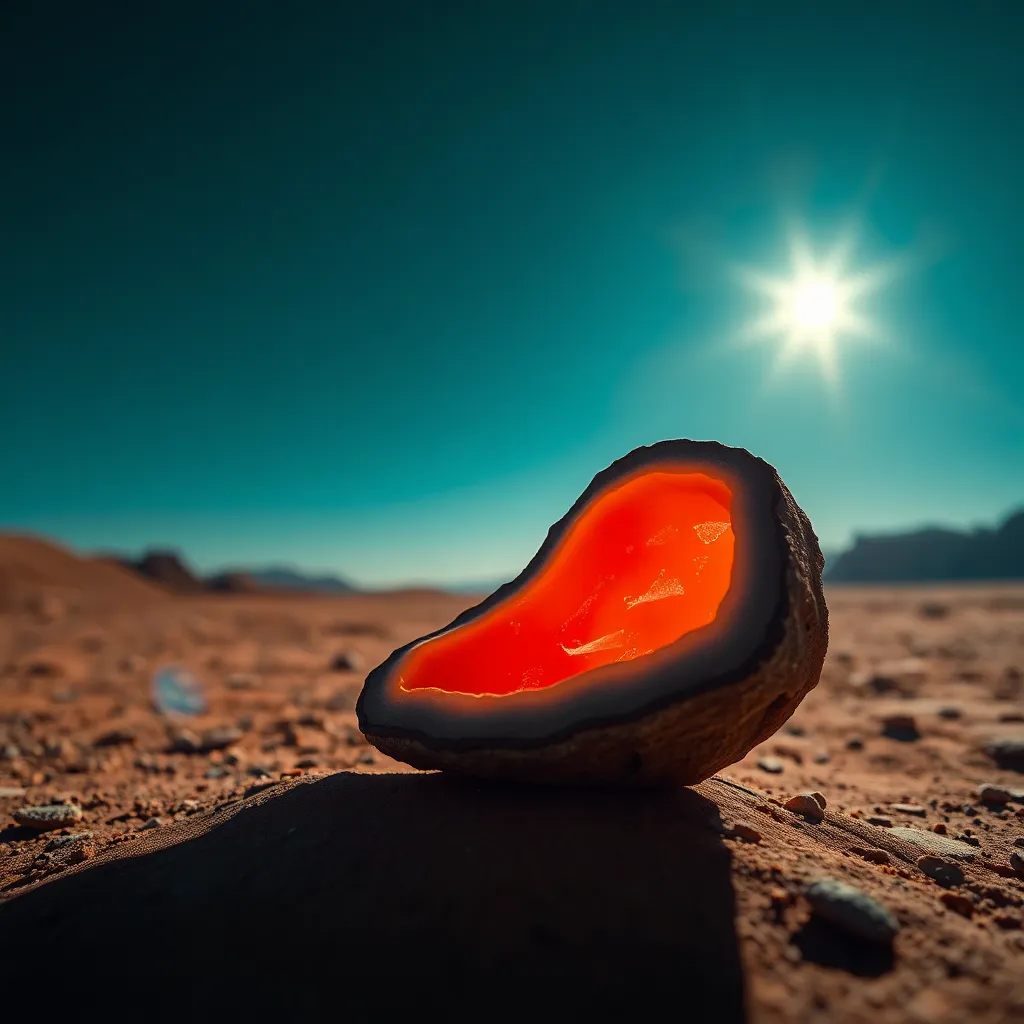
shot on Sony A7R V with 85mm f/1.4 GM lens, illuminated by a single bright star in the Martian sky, shallow depth of field at f/1.4 creating a dreamy bokeh effect, cinematic teal and orange color grading, centered composition focusing on a Martian geode, showing its vibrant interior colors against the stark landscape, highlighting the smooth and shiny texture of the geode contrasted with the rough surrounding terrain.
1:1
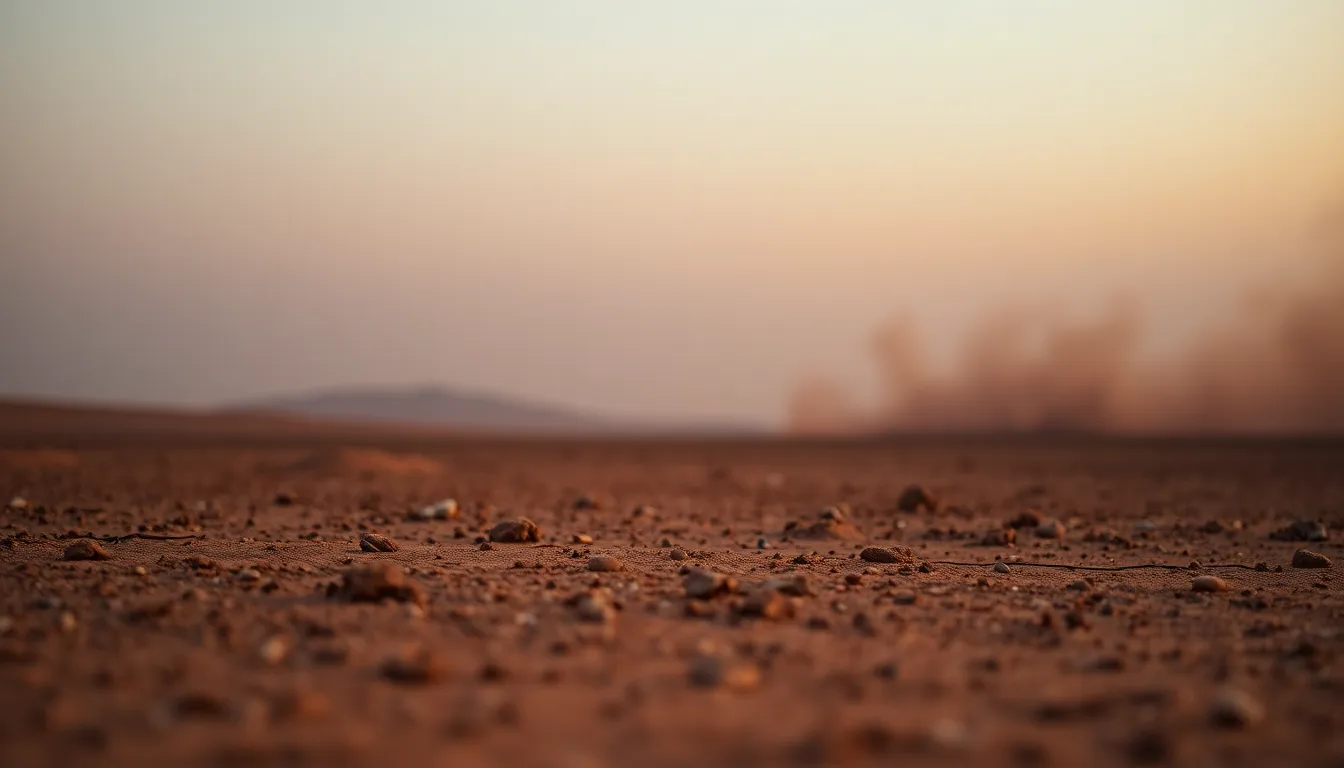
Fujifilm GFX 100S, 110mm f/2 macro, captured in soft diffused Martian dusk light, selective focus on a Martian dust storm in the distance, natural muted tones with desaturated earthy colors, rule of thirds composition placing the storm to the right, showing the rough texture of the Martian surface in the foreground as it gradually fades into the vibrant dust clouds.
16:9
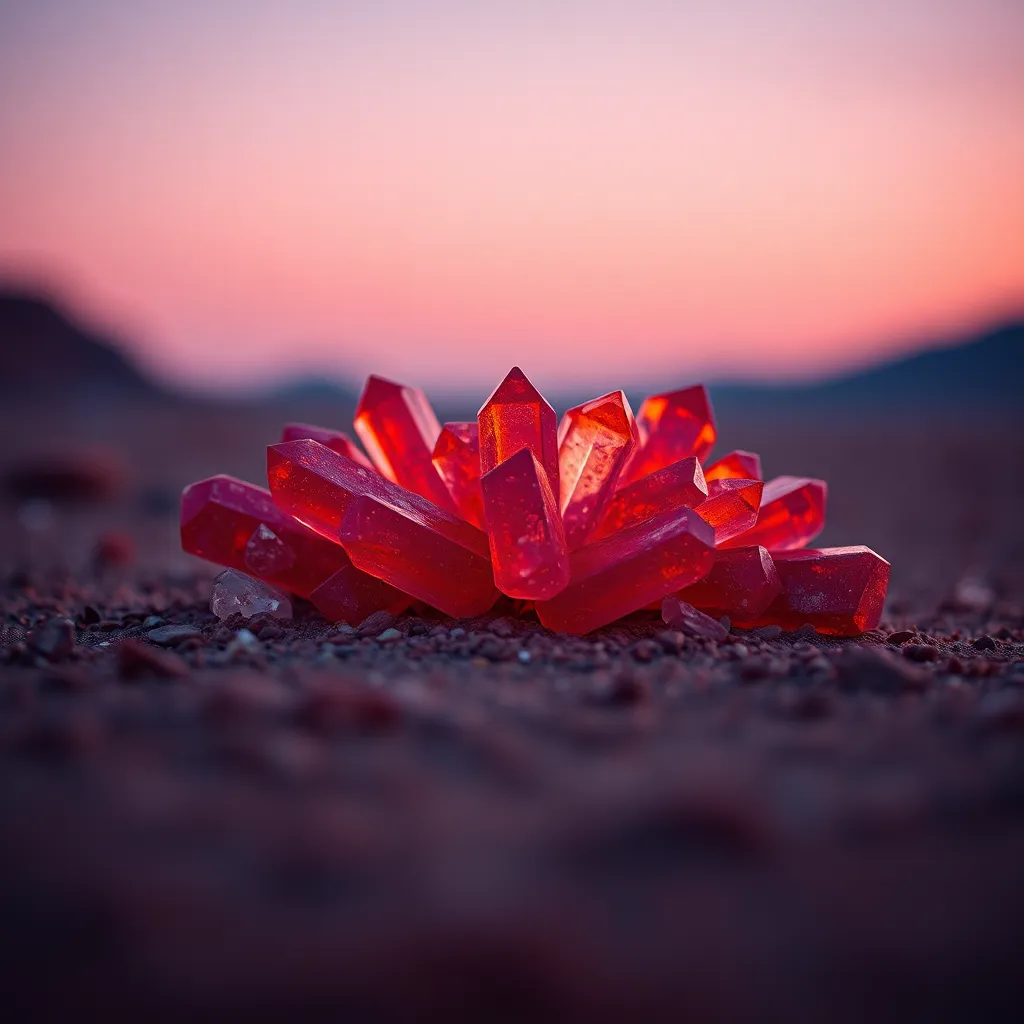
Hasselblad X2D 100C, 90mm f/2.5 medium format, illuminated by soft, diffused Martian twilight light, shallow depth of field at f/2.5 focusing on a cluster of Martian crystals, vibrant Fujifilm Velvia-inspired colors with rich reds and oranges, centered symmetrical composition highlighting the beauty of the crystals against the soft landscape, capturing the intricate texture and natural facets of the crystals under twilight.
1:1
captured with Canon EOS R5, 24-70mm f/2.8L at 35mm, illuminated by stark Martian daylight with high contrast shadows, hyperfocal distance at f/8 ensuring crisp detail from foreground rocks to distant hills, natural muted tones with desaturated reds and browns, composited using rule of thirds to position a lone rover in the foreground against the expansive Martian horizon, emphasizing the rugged surface texture of the planet and fine dust.
16:9
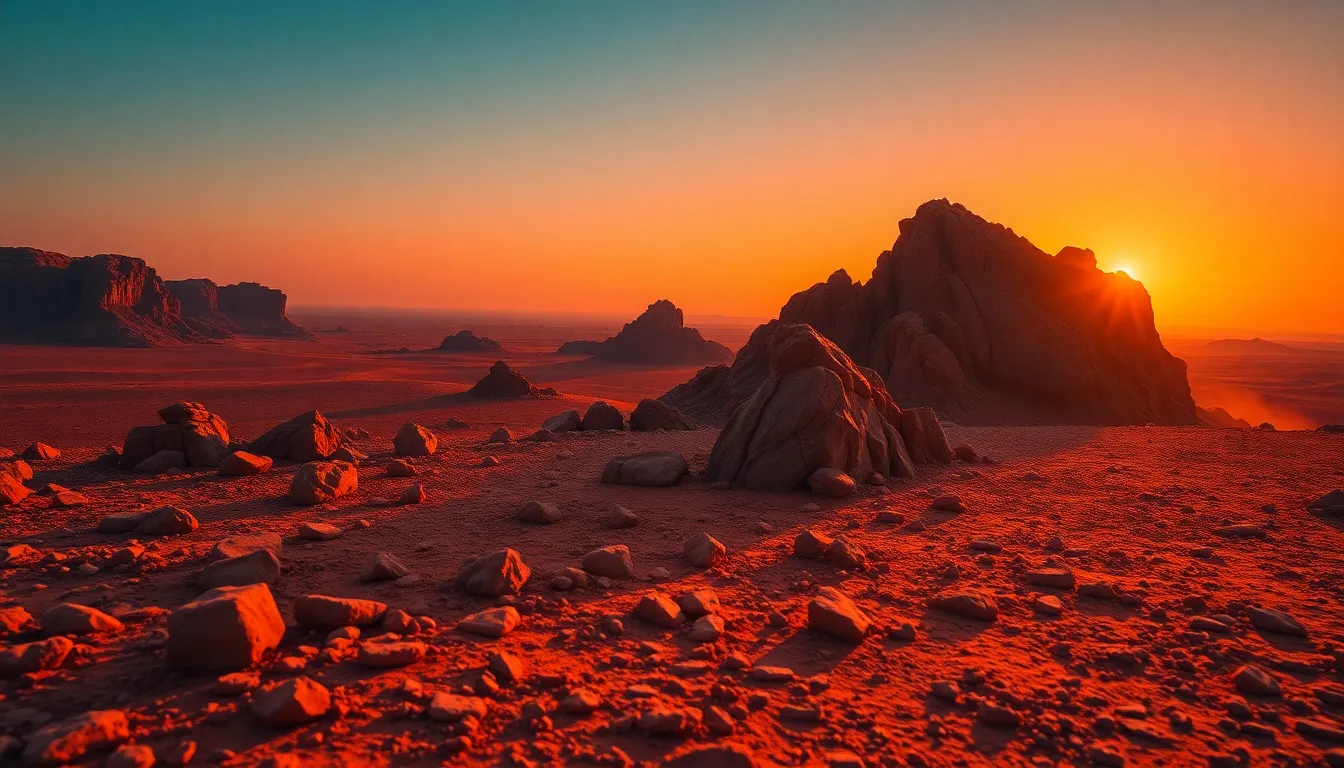
shot on Nikon Z9, 70-200mm f/2.8 telephoto at 135mm, under dramatic Martian sunset lighting with deep orange and red hues, shallow depth of field at f/2.8 focusing on the rocky terrain, cinematic teal and orange color grading, leading lines formed by the jagged rocks directing the viewer’s eye toward the distant horizon, showcasing the rough texture of the Martian soil with fine dust particles suspended in the atmosphere.
16:9
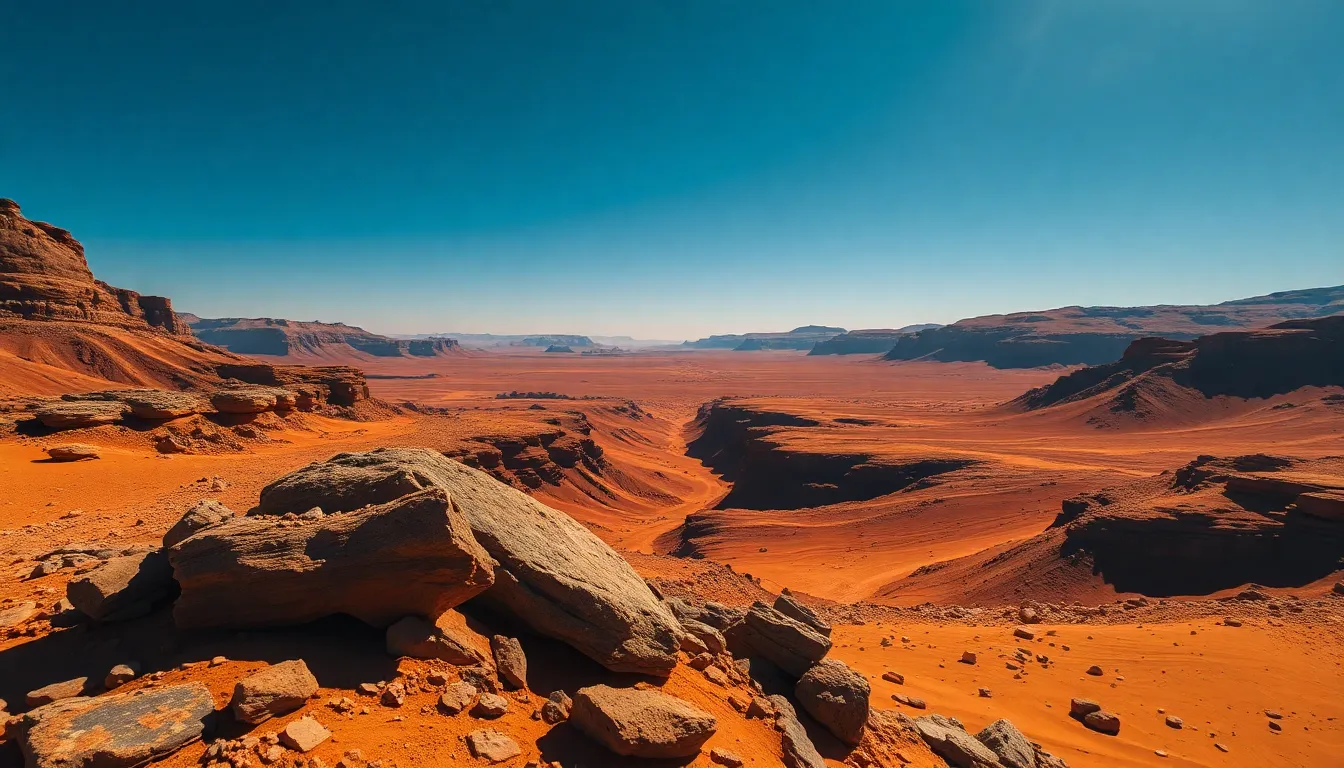
Utilizing Hasselblad X2D 100C, 90mm f/2.5 medium format, this grand image showcases a sweeping Martian valley during the midday sun. The scene is bright and vibrant, filled with stark contrasts between the orange-red soil and the deep blue sky. The composition follows the rule of thirds, with a prominent canyon leading the eye into the distance. The depth of field is hyperfocal, ensuring everything from the foreground rocks to the distant horizon is in sharp focus. The texture of the rocky terrain is palpable, with fine details capturing the rugged features of the valley.
16:9
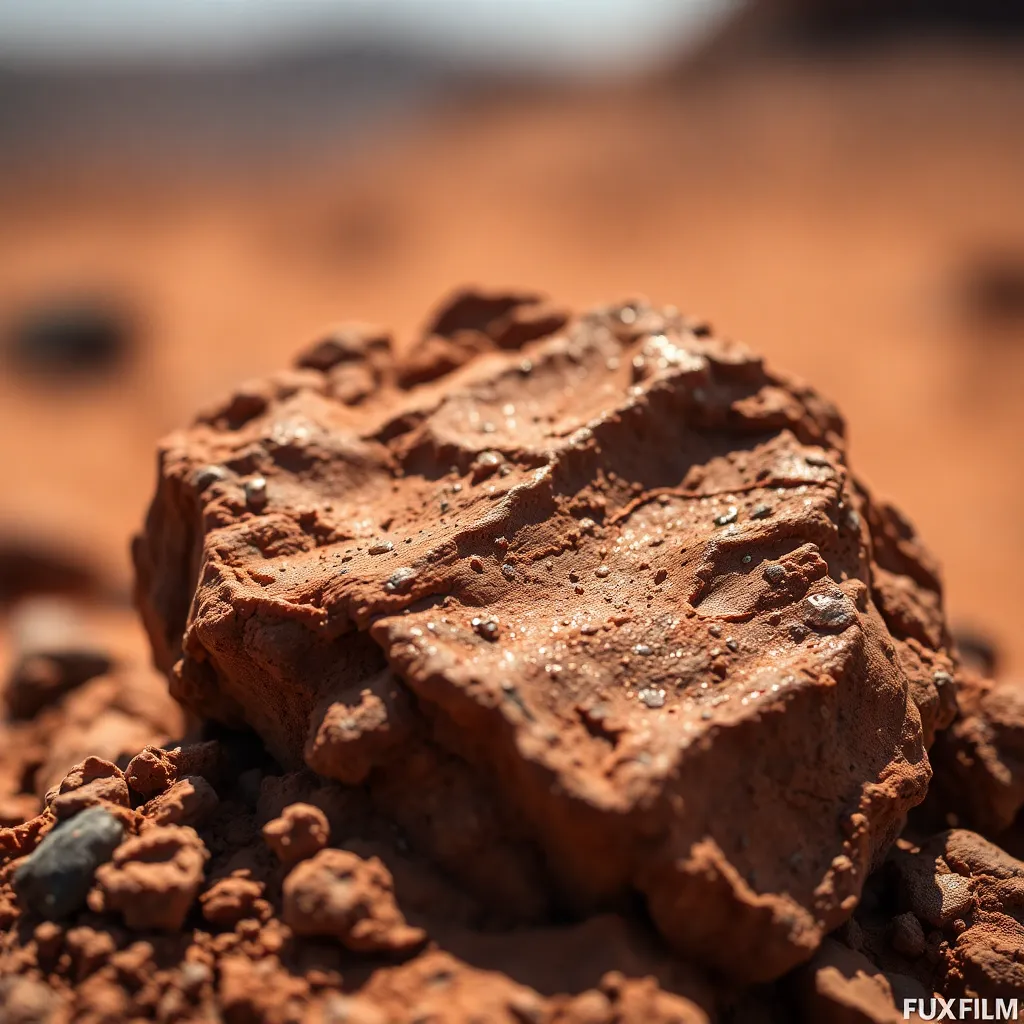
Photographed using Fujifilm GFX 100S, 110mm f/2 macro, this detailed image captures a Martian rock sample under bright natural light, highlighting its intricate textures. The lighting is soft, with subtle reflections that enhance surface details. The shallow depth of field at f/2 creates a creamy bokeh that isolates the rock against a blurred Martian landscape background. The color palette features earthy reds and browns, with occasional flecks of metallic minerals. A close-up composition allows viewers to appreciate the fine details and textures, inviting curiosity about the geological history of Mars.
1:1
Captured with Canon EOS R5, 24-70mm f/2.8L at 35mm, this compelling image features an astronaut standing on the rocky surface of Mars, gazing at Earth in the night sky. The scene is lit by the faint glow of distant stars and a large Earth visible against the dark sky, providing a contrasting cool backlight. The depth of field is hyperfocal, ensuring sharpness from the foreground to infinity. The natural muted tones of the Martian terrain contrast with the vibrant blues and greens of Earth. Central composition draws focus to the lone figure, emphasizing solitude and the vastness of space.
16:9

Shot on Sony A7R V with 85mm f/1.4 GM lens, this stunning image focuses on a futuristic Martian colony concept. The scene is illuminated by soft artificial light simulating a dusk environment with warm hues. Shallow depth of field at f/1.4 gently blurs the colony's structures in the background, drawing attention to a group of astronauts in advanced suits engaged in scientific analysis. The color palette blends rich reds and earthy browns with cool metallic tones of the colony. The composition uses leading lines formed by the pathways connecting the domes, inviting viewers into the scene while emphasizing the pioneering spirit of exploration.
16:9
Captured with Nikon Z9, 70-200mm f/2.8 telephoto at 135mm, this hyper-detailed image features a Martian landscape bathed in golden hour light. A dust storm looms in the distance, partially obscuring the red planet's terrain, while dramatic shadows stretch across the rocky surface. The composition follows the rule of thirds, positioning a rugged rock formation on the left power point, creating a sense of depth. The natural color palette includes warm reds and oranges, complemented by cool blue-grey tones in the sky. Fine grains and textures of the rocks are visible, enhancing the realism of the scene, with soft focus on the background to emphasize the foreground detail.
16:9
shot on Sony A7R V with 85mm f/1.4 GM lens, featuring a dramatic view of Olympus Mons against a starry night sky, natural lighting from the stars creating a soft luminescent effect, shallow depth of field at f/1.4 with the mountain sharply in focus while the stars create a dreamy bokeh, cinematic teal and orange color grading enhancing the cosmic atmosphere, and a centered composition highlighting the grandeur of the volcano.
16:9
captured with Hasselblad X2D 100C, 90mm f/2.5 medium format, showcasing the Martian surface with a futuristic colony in the distance, overcast diffused daylight creating soft uniform lighting, hyperfocal distance keeping everything from the foreground rocks to the colony sharp, natural muted tones reflecting the dusty environment, and a composition featuring leading lines from the rocks guiding the eye toward the colony's glowing structures.
16:9

Fujifilm GFX 100S, 110mm f/2 macro, focusing on Martian rock samples arranged artfully on a weathered wooden surface, warm tungsten lamp casting soft directional light accentuating the textures of the rocks, shallow depth of field at f/2 with a creamy bokeh background, Kodak Portra 400 color palette enhancing warm tones, and a centered composition that draws attention to the intricate details of Martian minerals.
1:1
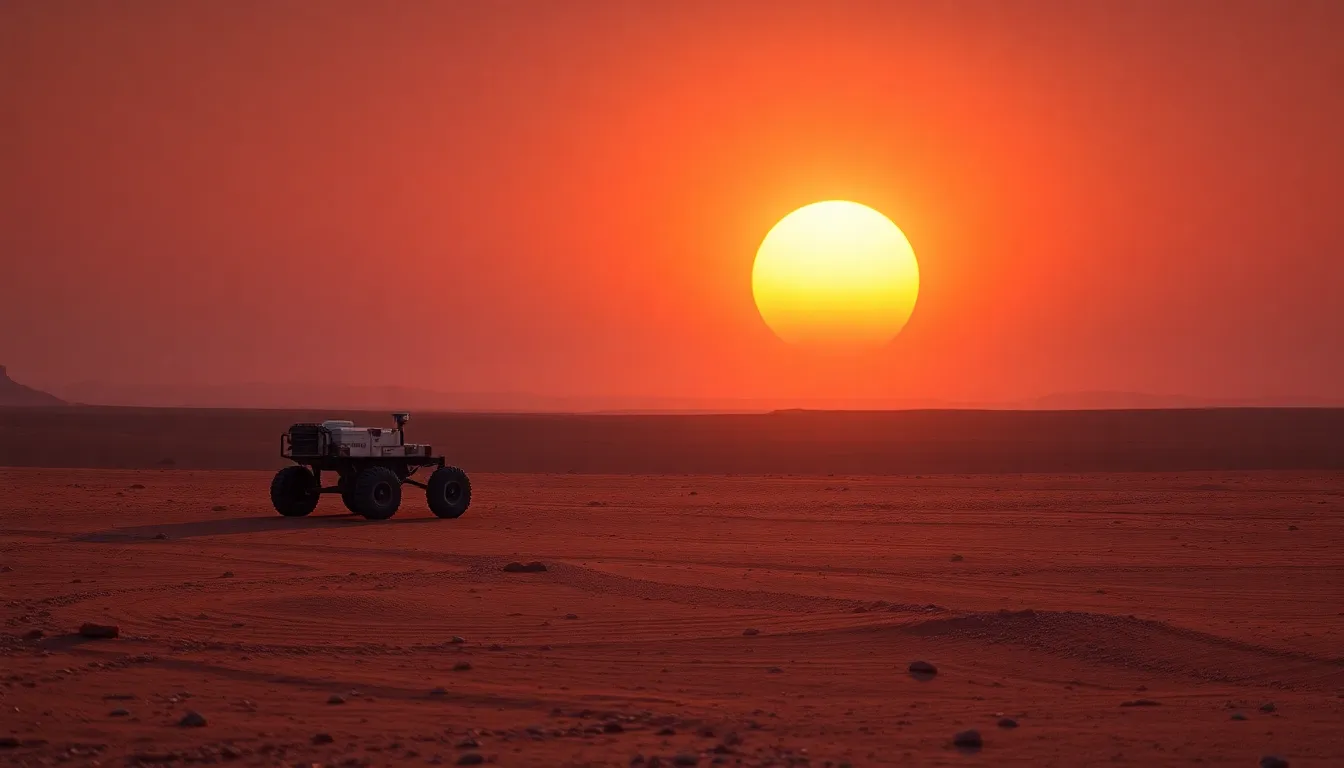
captured with Canon EOS R5, 24-70mm f/2.8L at 35mm, under the glow of a Martian sunset illuminating the horizon in vibrant orange and deep purple, hyperfocal distance achieving sharpness from foreground to infinity, natural muted tones reflecting the dusty landscape, rule of thirds with a lone rover positioned at a left power point, and soft textures of Martian soil detailed with pebbles and fine dust.
16:9
shot on Nikon Z9, 70-200mm f/2.8 telephoto at 135mm, captured during a Martian dust storm with dramatic swirling clouds blocking the sun, selective focus showcasing the red rocky terrains in the foreground, cinematic teal and orange color grading enhancing the alien landscape's hues, leading lines of the terrain drawing the eye towards distant hills, and textured rock formations revealing layers of Martian soil.
16:9
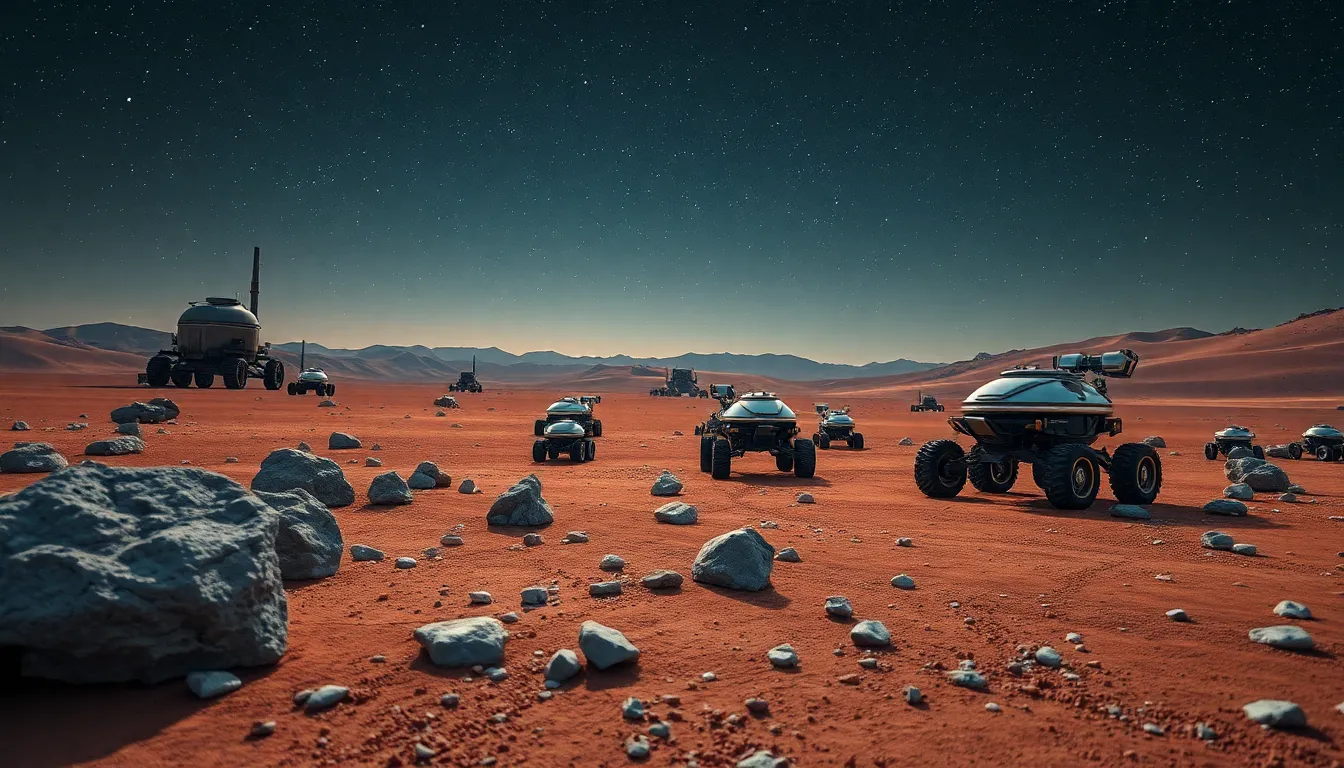
Hasselblad X2D 100C, 90mm f/2.5 medium format, capturing a wide shot of the Martian landscape dotted with futuristic rover vehicles exploring the terrain under a starry sky. The lighting is soft moonlight with stars creating a glittering backdrop. The image has a hyperfocal depth of field at f/8 ensuring clarity from foreground rocks to the infinite stars above. The color palette is a mix of deep blues and muted reds, with sharp details in the metallic rover textures reflecting the light.
16:9

Fujifilm GFX 100S, 110mm f/2 macro, depicting Martian soil samples in glass vials arranged on a metallic lab table. The practical lighting from overhead LEDs casts a bright, clinical glow, highlighting the textures of the soil. A shallow depth of field at f/2 creates interesting bokeh effects with soft lights reflecting in the background. The color palette incorporates earthy browns and subtle reds, while the glass reflects light beautifully, emphasizing the scientific exploration theme.
4:3
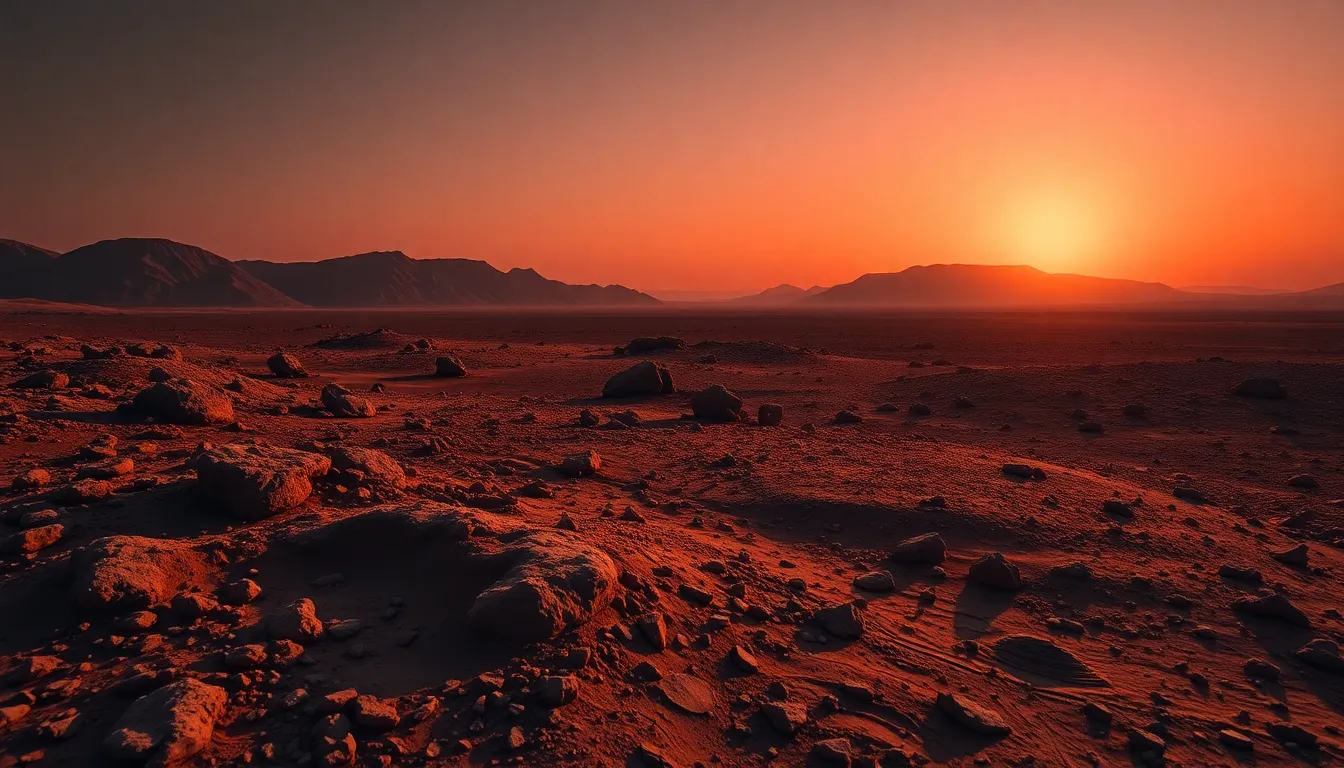
Nikon Z9, 70-200mm f/2.8 telephoto at 135mm, capturing a Martian sunrise with a stunning horizon of deep orange and soft pink hues illuminating the rocky landscape. The lighting is soft with the first light of day providing a gentle glow across the surface. The depth of field is hyperfocal at f/8 ensuring that both the foreground craters and distant hills are sharply in focus. The color palette includes rich warm tones, showcasing the dramatic textures of the Martian surface with intricate details on rocks and dust.
16:9
shot on Sony A7R V with 85mm f/1.4 GM lens, featuring an astronaut standing on the Martian surface, gazing contemplatively at the Earth in the distance. The lighting is a soft natural light at golden hour creating warm, golden tones, enhancing the astronaut's reflective visor. The image has a shallow depth of field at f/1.4 with a beautifully blurred background that highlights the intricate details of the spacesuit. The color palette includes vibrant reds and soft earth tones with fine texture on the helmet and suit.
9:16
captured with Canon EOS R5, 24-70mm f/2.8L at 35mm, during a dust storm on Mars creating dramatic shadows and highlights. The composition features the swirling red dust particles caught in sunlight, with a shallow depth of field at f/2.8 for creamy bokeh background. The color palette embodies the harsh, desaturated reds and muted oranges of the Martian landscape, enhancing the atmospheric perspective. The surface shows cracking, rocky terrain with fine textures, highlighting the alien environment.
16:9