Black Holes
90 images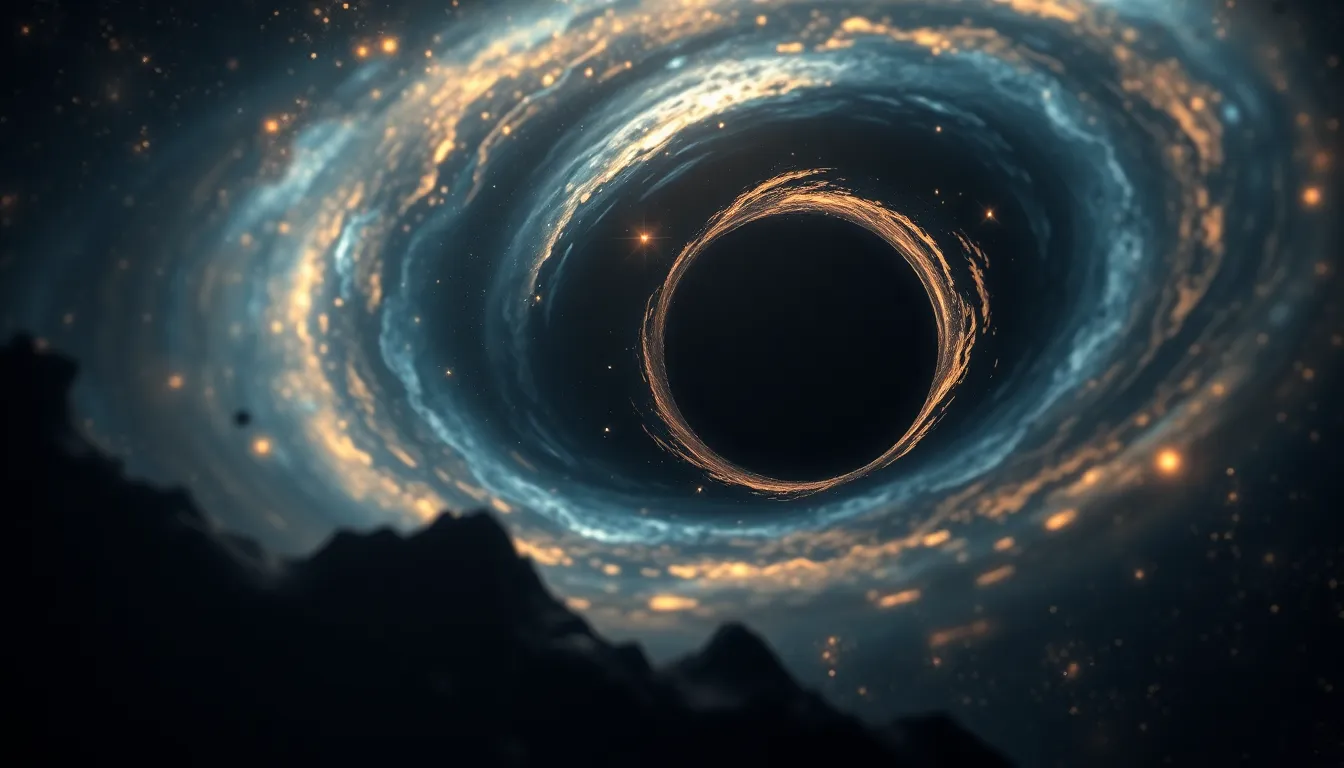
A captivating view of a binary black hole system, captured with Leica Q3, 28mm f/1.7 Summilux. The scene is lit by an ethereal glow of light emitted from the stars being consumed by the black holes, creating dramatic contrasts. A tilt-shift miniature effect emphasizes the scale of the black holes amidst the cosmic landscape. The color grading includes deep blues and golds, while the composition uses leading lines from the orbits of surrounding stars, drawing the eye toward the interaction of the two black holes.
16:9
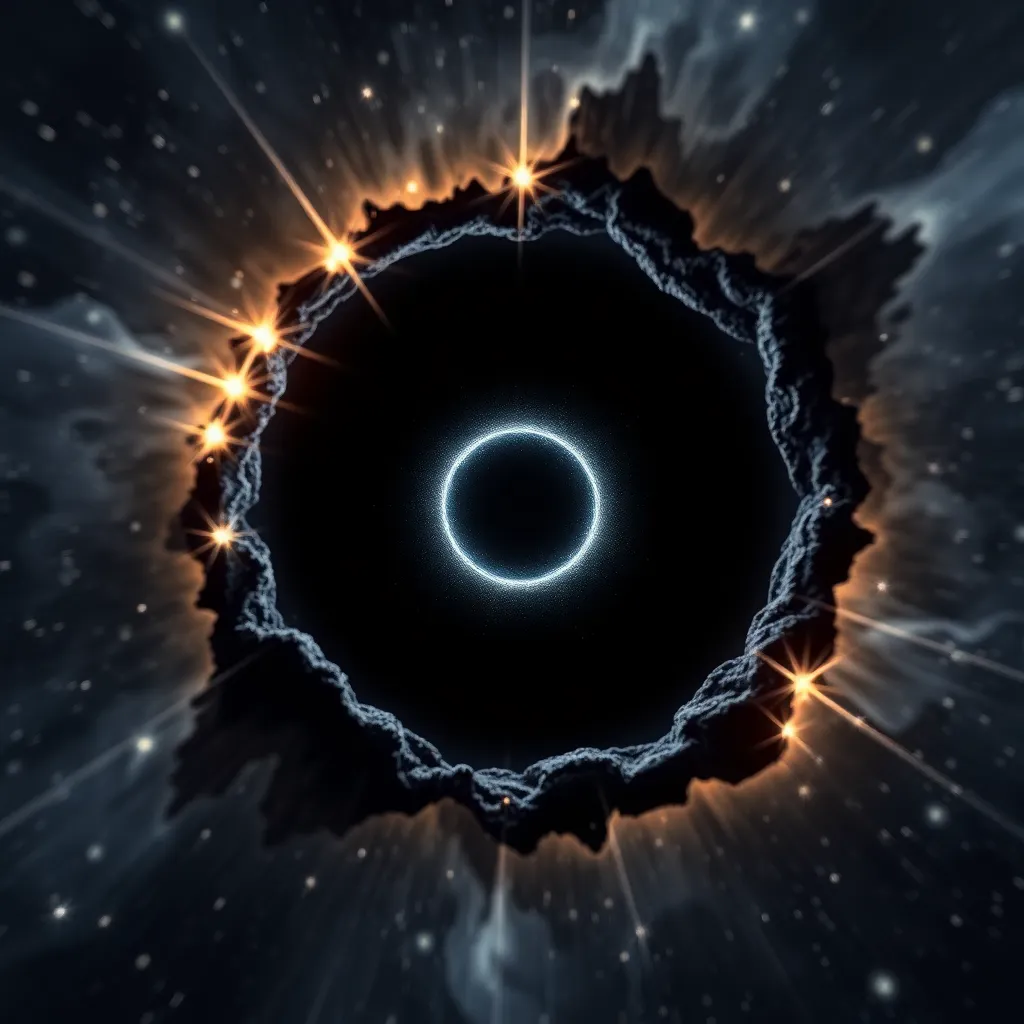
A surreal artistic depiction of a black hole tearing through the fabric of space-time, shot on Hasselblad X2D 100C, 90mm f/2.5 medium format. The lighting is created by starbursts emanating from the edges of the black hole, contrasting with a deep void of darkness. A shallow depth of field blurs the cosmic background, emphasizing the black hole's intricate details. The color palette features dark blacks, silvery whites, and ethereal blues, while the composition uses a centered symmetrical approach to enhance the surreal experience.
1:1
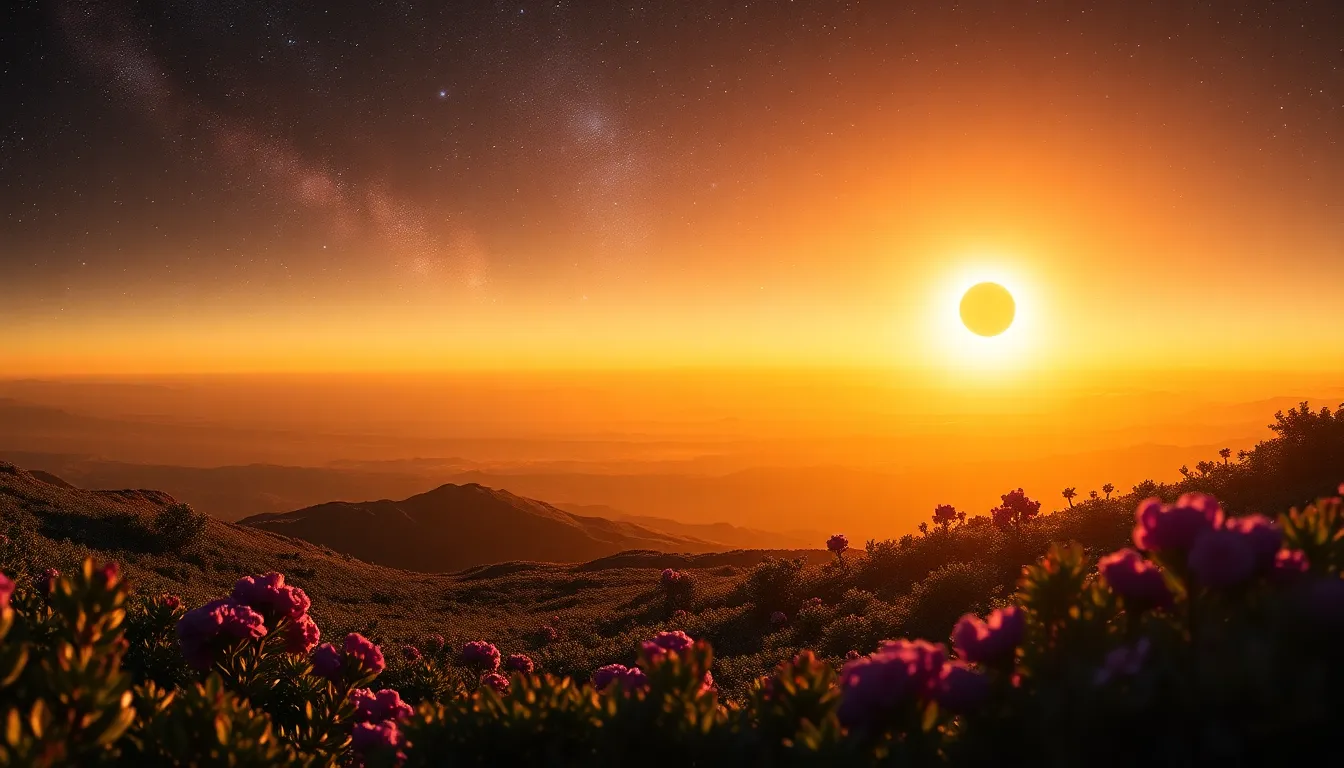
Panoramic view of a black hole being observed from a distant planet, captured with Canon EOS R5, 24-70mm f/2.8L at 35mm. The scene is bathed in the soft golden hour light, revealing a horizon filled with colorful nebulae and distant stars. Hyperfocal distance ensures sharpness from the foreground alien landscape to the black hole in the distance, creating a sense of depth. The cinematic color grading employs rich purples and golds, while the composition captures the awe of cosmic observation with the planet's alien flora framing the scene.
16:9

Close-up shot of a cosmic illustration of a black hole, captured with Fujifilm GFX 100S, 110mm f/2 macro. Illuminated by vibrant white and teal starlight, the image showcases the intense gravitational pull and the colorful matter spiraling into the event horizon. A shallow depth of field at f/2 creates a dreamy bokeh background emphasizing the black hole's detailed surface textures. The composition places the black hole prominently off-center, using the rule of thirds for balanced visual interest, while the color palette is enriched with deep blacks and iridescent colors.
1:1
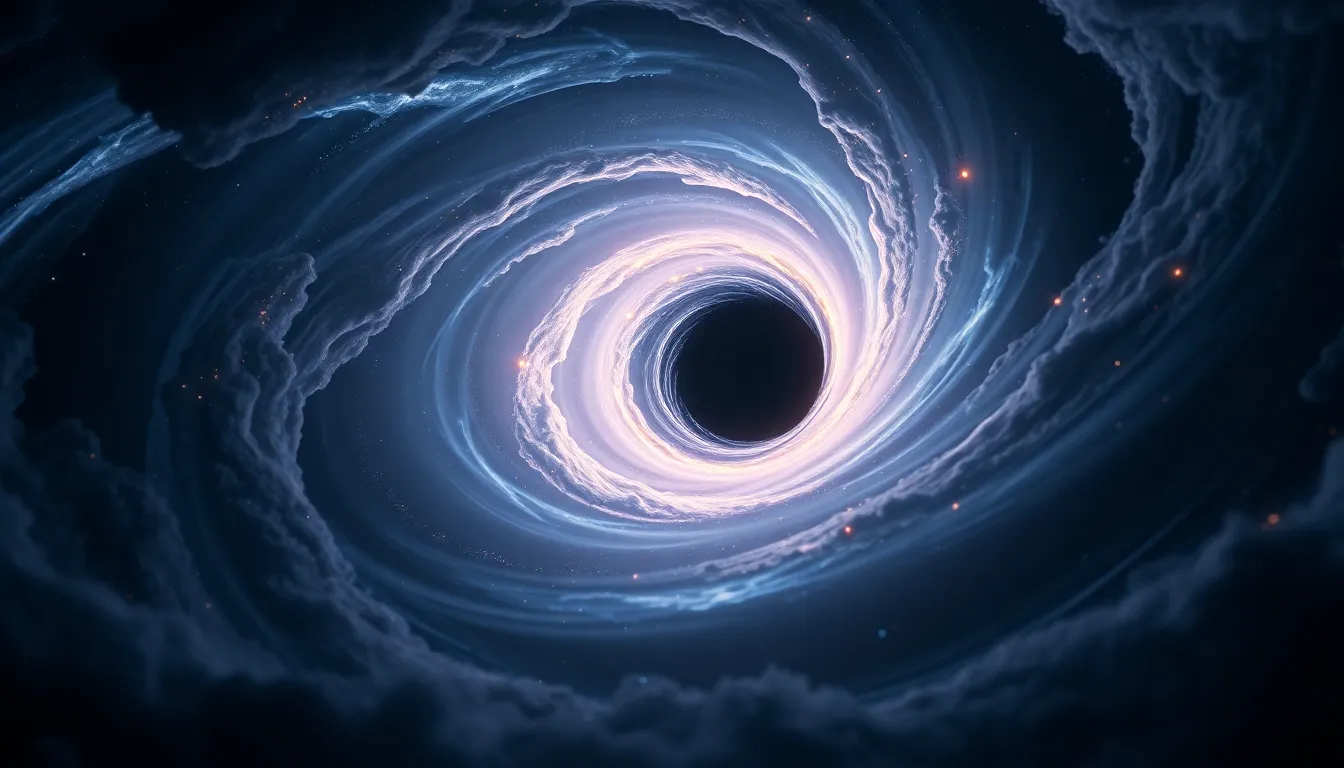
Rendered view of a black hole with an accretion disk, shot on Nikon Z9, 70-200mm f/2.8 telephoto at 135mm. The scene is illuminated by soft bioluminescent waves from nearby cosmic entities, creating an otherworldly glow. Deep focus captures the swirling gases and dust, with a color palette dominated by dark blues, purples, and hints of fiery orange from the disk. The composition uses leading lines from the spiral arms to draw the eye toward the event horizon, while fine details of gas and stellar remnants are visible in the foreground.
16:9
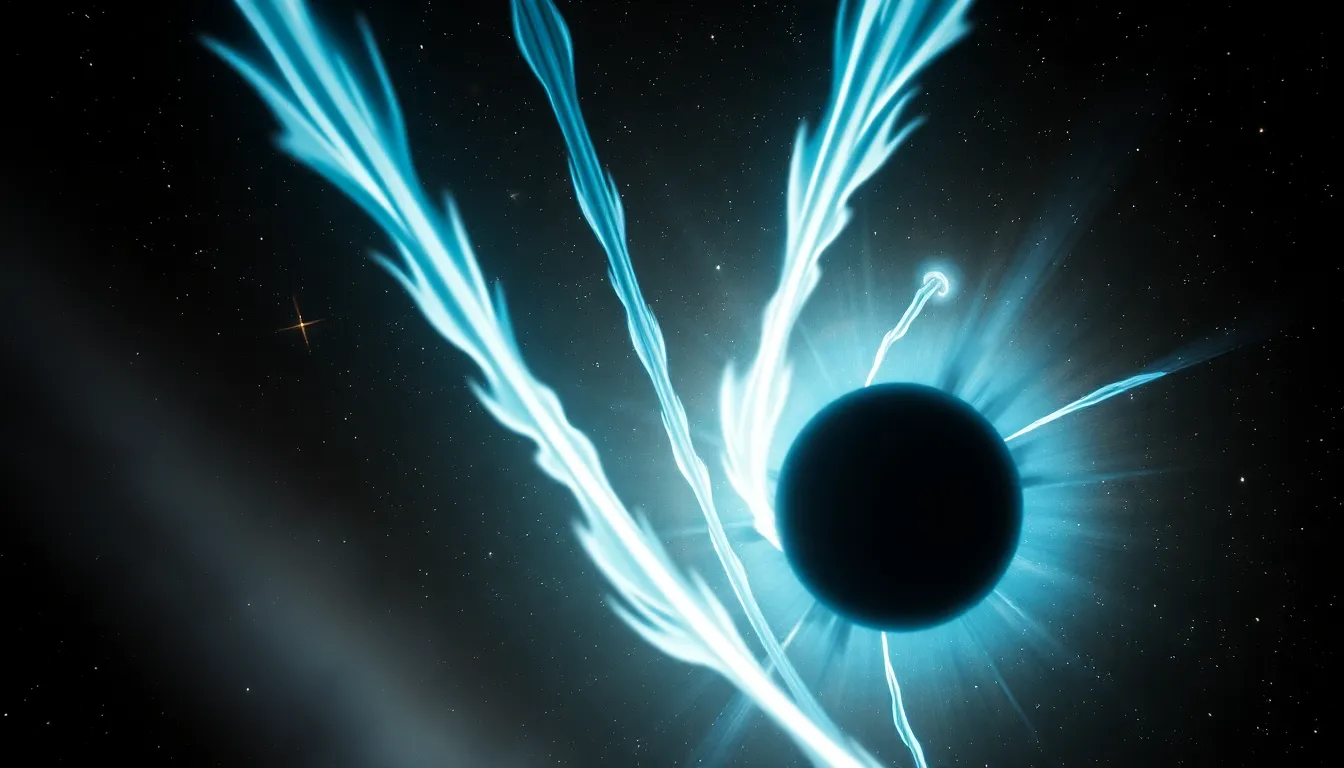
A beautiful cosmic scene with a black hole depicted ejecting jets of plasma, taken with a Leica Q3, 28mm f/1.7 Summilux lens. The composition showcases pale blue and white plasma jets contrasting with the rich, dark background of space, illuminated by soft, diffused starlight. The vibrant colors of the jets are enhanced by a color palette reminiscent of Kodak Portra 400, featuring warm tones and creamy highlights. The depth of field is shallow at f/1.7, allowing for a soft bokeh of distant stars, enhancing the focus on the active jets. The scene is framed with dynamic angles to convey the power and motion of the plasma bursts.
16:9
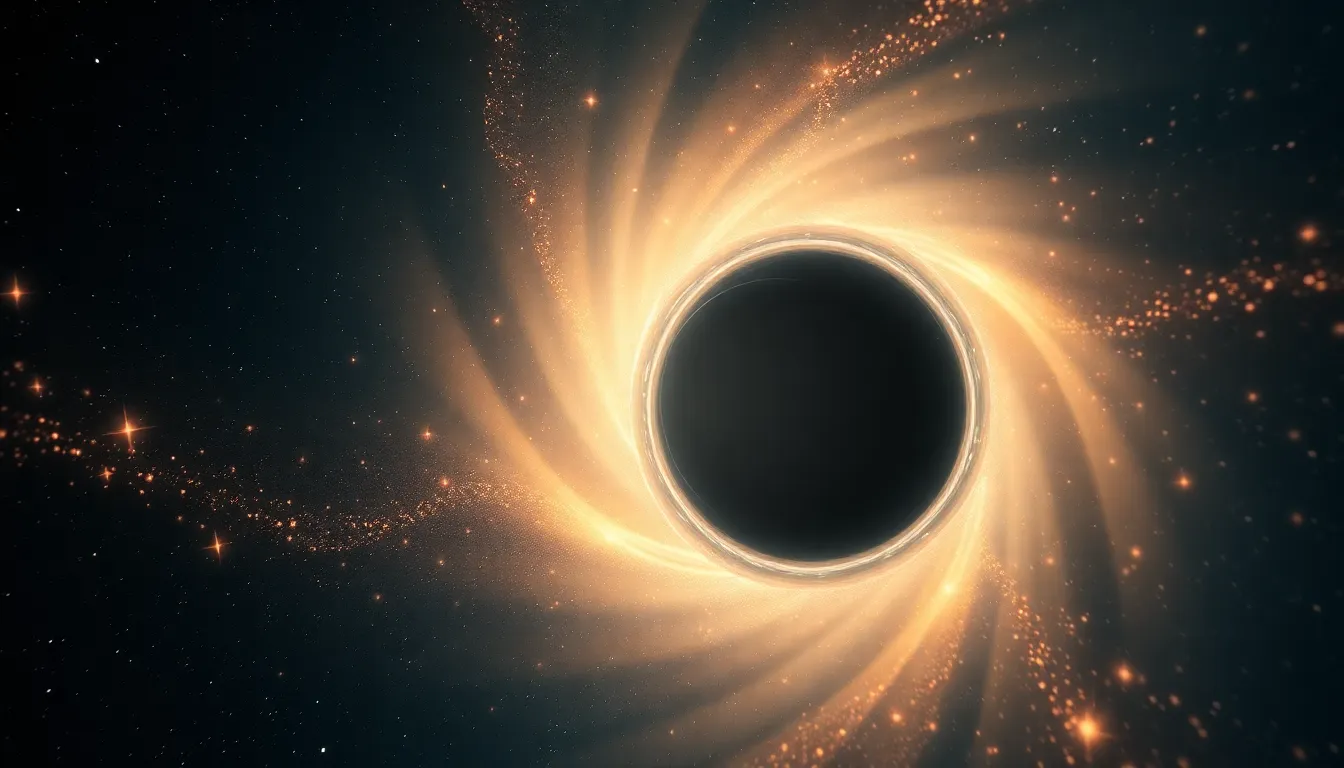
A dramatic interpretation of a black hole bending surrounding star light, shot on a Hasselblad X2D 100C, 90mm f/2.5 medium format. The scene is illuminated by soft, ethereal light, simulating the way a black hole warps space and time. The color palette is rich with dark indigos and shimmering golds, capturing the celestial beauty of the cosmos. The depth of field is hyperfocal, ensuring everything from the distant stars to the black hole is sharply in focus. The composition features a centered symmetrical arrangement, showcasing the distortion of space around the gravitational pull, creating a surreal yet breathtaking image.
16:9
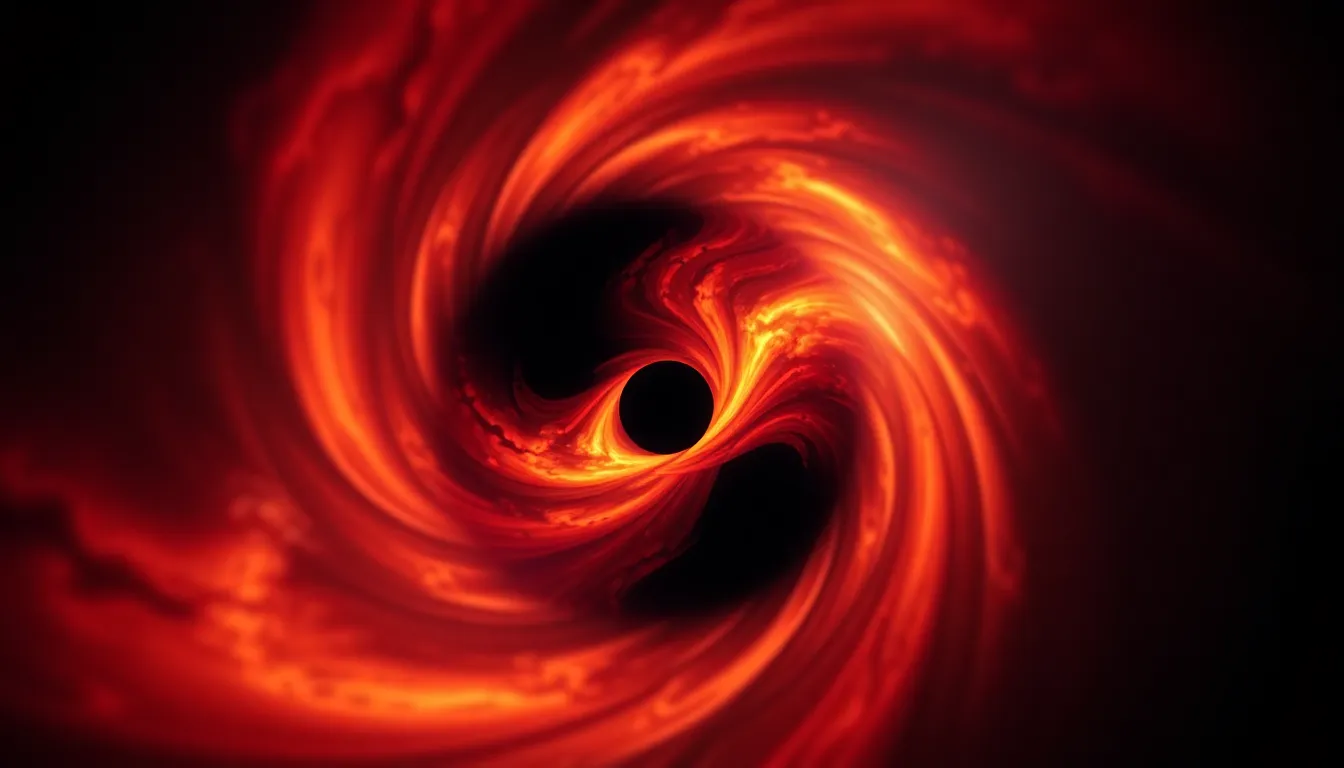
A stunning visualization depicting a black hole with a surrounding accretion disk, crafted using a Fujifilm GFX 100S, 110mm f/2 macro lens. The image features natural daylight simulated with soft volumetric lighting, creating a halo effect around the black hole. A color palette inspired by Fujifilm Velvia showcases vibrant reds, oranges, and yellows in the accretion disk against the deep black of space. The depth of field is shallow, drawing focus to the dynamic swirling gas while the background gently fades into an ethereal blur. The composition highlights the contrast between the dynamic disk and the stillness of the black hole, effortlessly drawing the viewer's gaze.
16:9

An abstract representation of a black hole's event horizon, created with a Canon EOS R5, 24-70mm f/2.8L at 35mm. Dramatic lighting simulates the intense gravitational lensing effect, casting sharp shadows and highlights across the surface. The color palette features deep blacks blended with iridescent blues and greens, giving a surreal appearance to the scene. The focus is selective, highlighting the swirling mass at the center while the edges fade into soft bokeh, evoking a sense of depth and mystery. The composition utilizes leading lines formed by light distortion around the event horizon, guiding the viewer's eye toward this cosmic phenomenon.
16:9
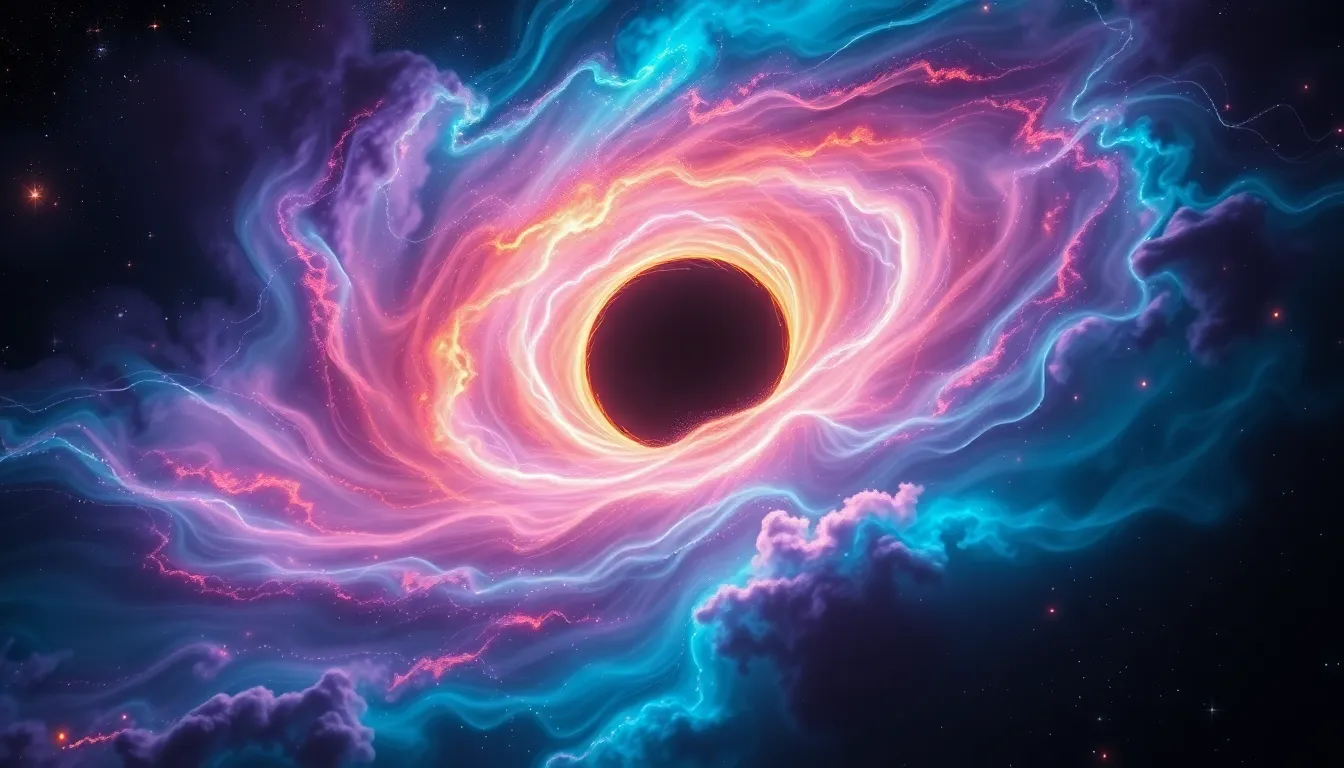
A stunning cosmic landscape depicting a black hole surrounded by a vibrant accretion disk, captured with a Nikon Z9, 70-200mm f/2.8 telephoto at 135mm. The scene is illuminated by ethereal, swirling gas clouds emitting radiant energy in hues of deep purples, blues, and fiery oranges, creating a dramatic contrast against the dark void of space. The composition features the black hole off-center, emphasizing its gravitational pull with trailing star lines converging towards it, set against a backdrop of sparkling distant galaxies. The surface texture of the gas clouds shows intricate details resembling wispy tendrils of light and cosmic dust. The image is styled with a cinematic teal and orange color grading to enhance the visual impact.
16:9
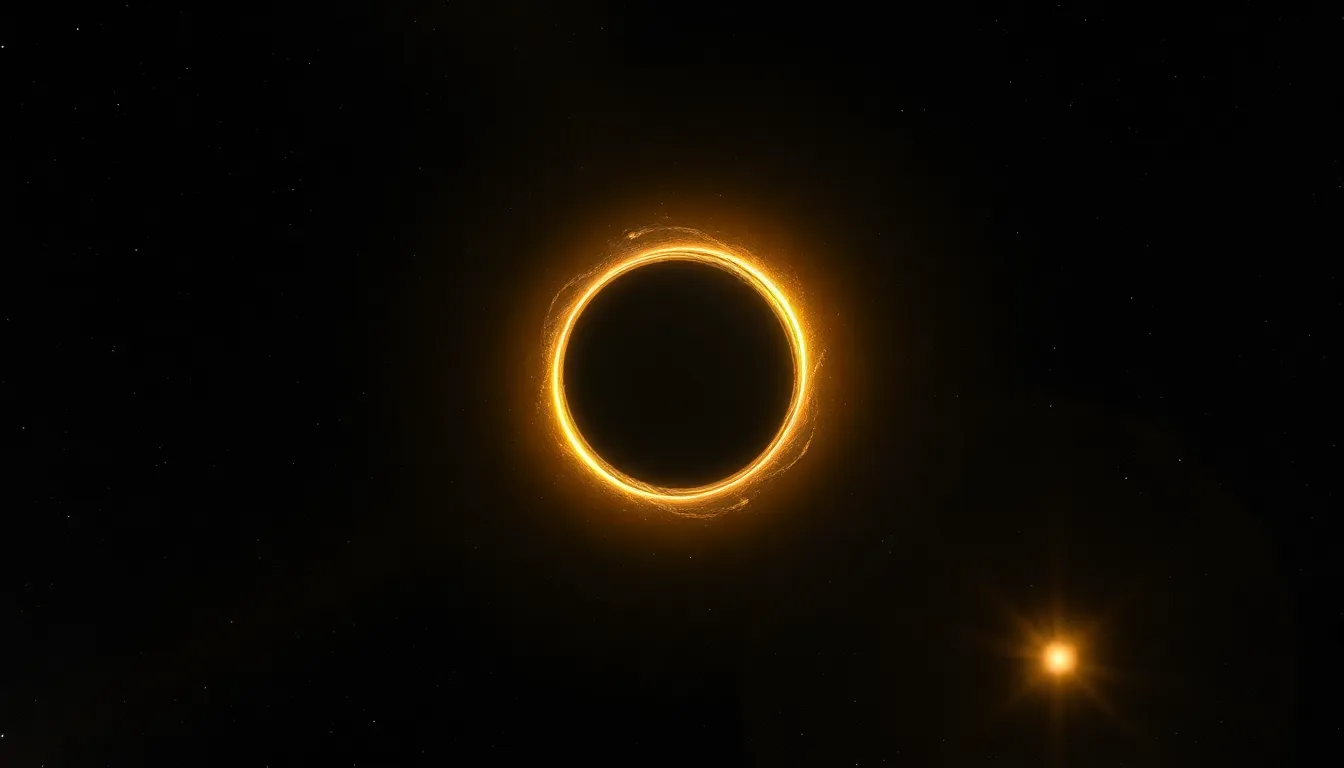
captured with Hasselblad X2D 100C, 90mm f/2.5 medium format, illustrating a dramatic scene of a black hole devouring a star, with bright rays and debris scattered through space. The lighting utilizes contrasting bright starlight and dark voids, with ambient light highlighting fragments of the star. Hyperfocal distance ensures razor-sharp detail from foreground to background, capturing the enormity of the scene. The color science invokes cinematic teal and orange grading, emphasizing the fiery destruction. The composition incorporates a dynamic diagonal line towards the black hole, enhancing tension and movement. Texture is vivid in the star fragments, showcasing sharp edges and glowing trails.
16:9

shot on Fujifilm GFX 100S, 110mm f/2 macro, representing a close-up of the swirling gas clouds around a black hole, creating a microcosmic view of the cosmic phenomenon. The lighting is natural, with dappled sunlight mimicking the illumination from nearby stars. Shallow depth of field at f/2 creates a dreamy atmosphere with creamy bokeh in the background. The color palette draws from Kodak Portra 400 film, enhancing warm skin tones and subtle orange highlights. The composition uses a centered approach, focusing on the intricate details of the gas while incorporating a circular frame of light. Texture is captured in the swirling gas, showing soft gradients and luminosity.
16:9
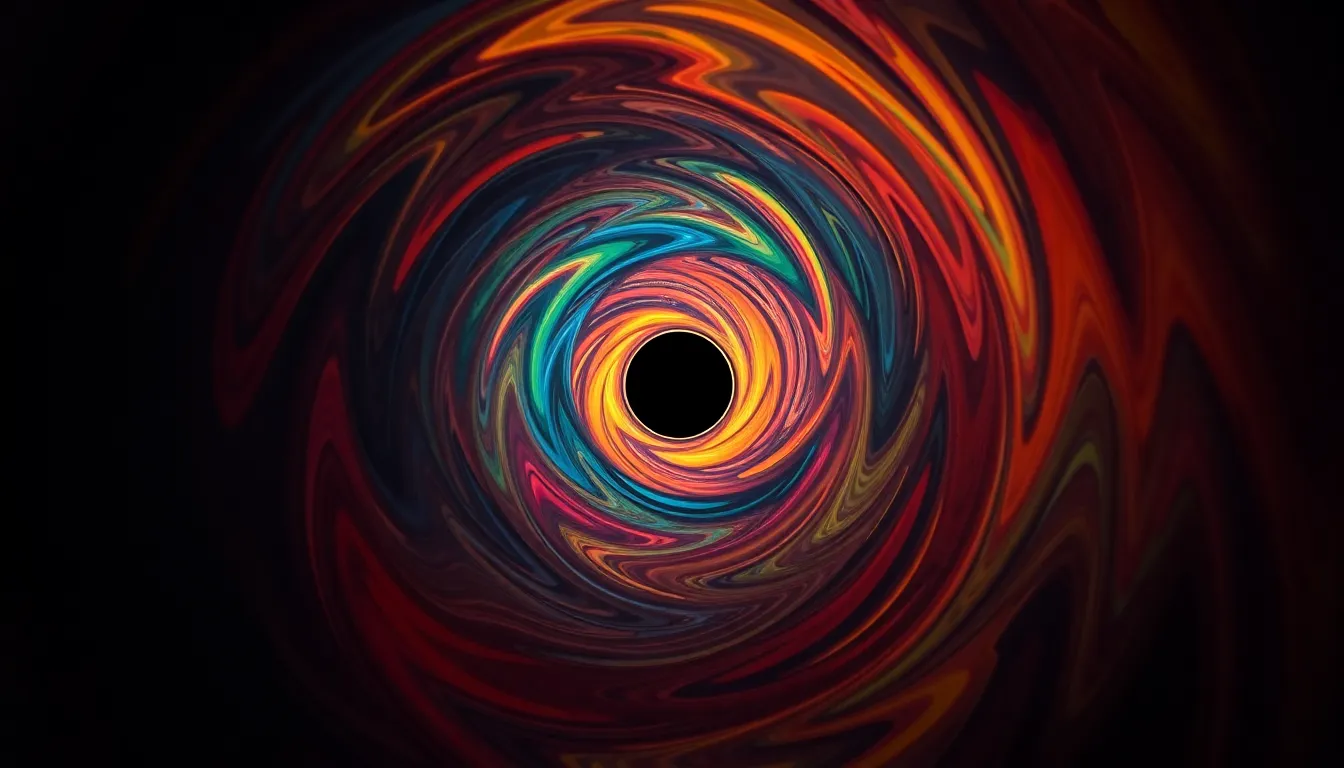
captured with Canon EOS R5, 24-70mm f/2.8L at 35mm, depicting a digital artist's concept of a black hole pulling in nearby celestial bodies. The studio-lit scene features Rembrandt lighting accentuating the textures of planets and debris being drawn toward the event horizon. A selective focus highlights the black hole, making it stand out against the blurred background of swirling gases. The color science is inspired by natural muted tones, with desaturated earth colors enhancing the drama. The composition centers on the black hole, with surrounding celestial bodies creating a dynamic circle leading toward it, conveying gravitational pull. Textural details highlight the rugged surfaces of asteroids and planets.
16:9
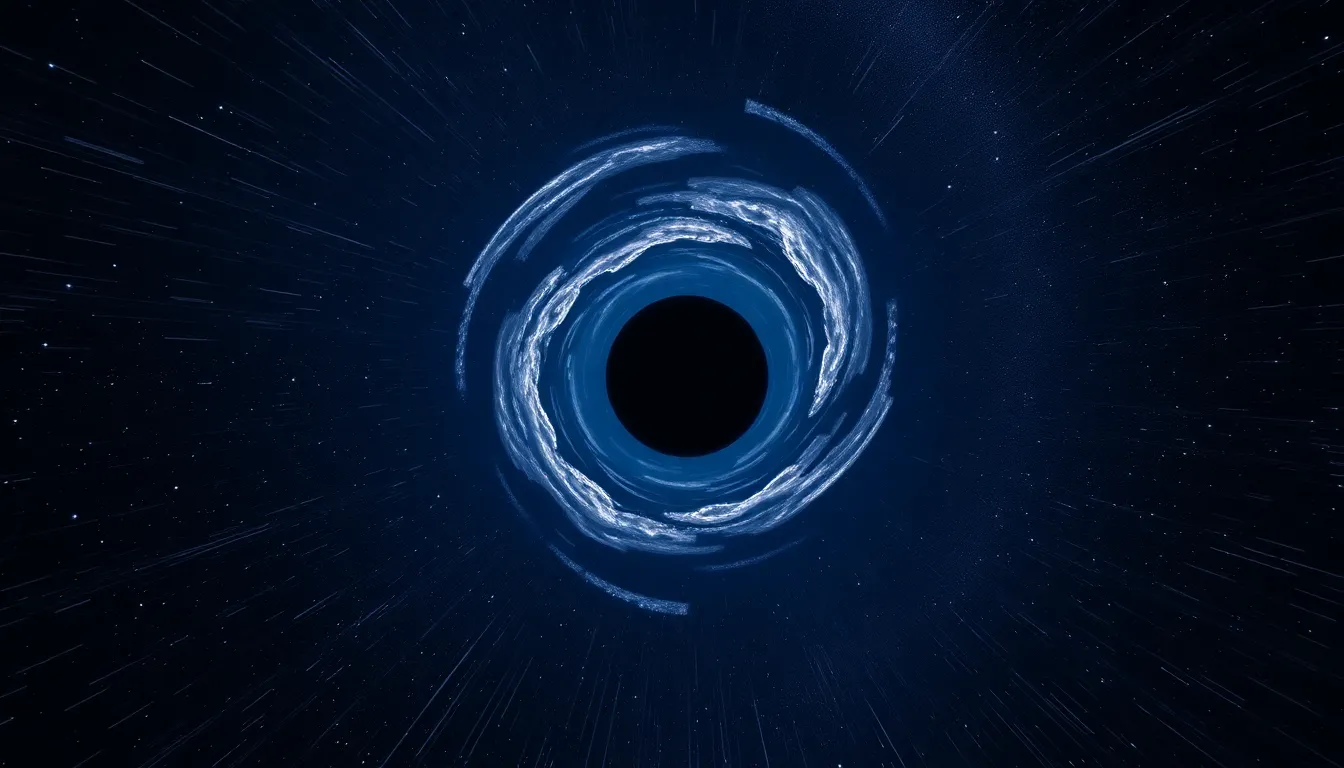
shot on Sony A7R V with 85mm f/1.4 GM lens, featuring an imaginative representation of a black hole as a cosmic whirlpool viewed from a distance in a starry universe. Utilizing natural lighting from distant stars, soft ambient light illuminates the scene. Hyperfocal distance ensures sharp details in both the black hole and surrounding stars. The color palette showcases rich dark blues and purples with specks of bright white starlight. The composition employs leading lines from star trails converging toward the black hole, creating a sense of depth and movement. Texture is evident in the starfield, with visible grain and sparkle.
16:9
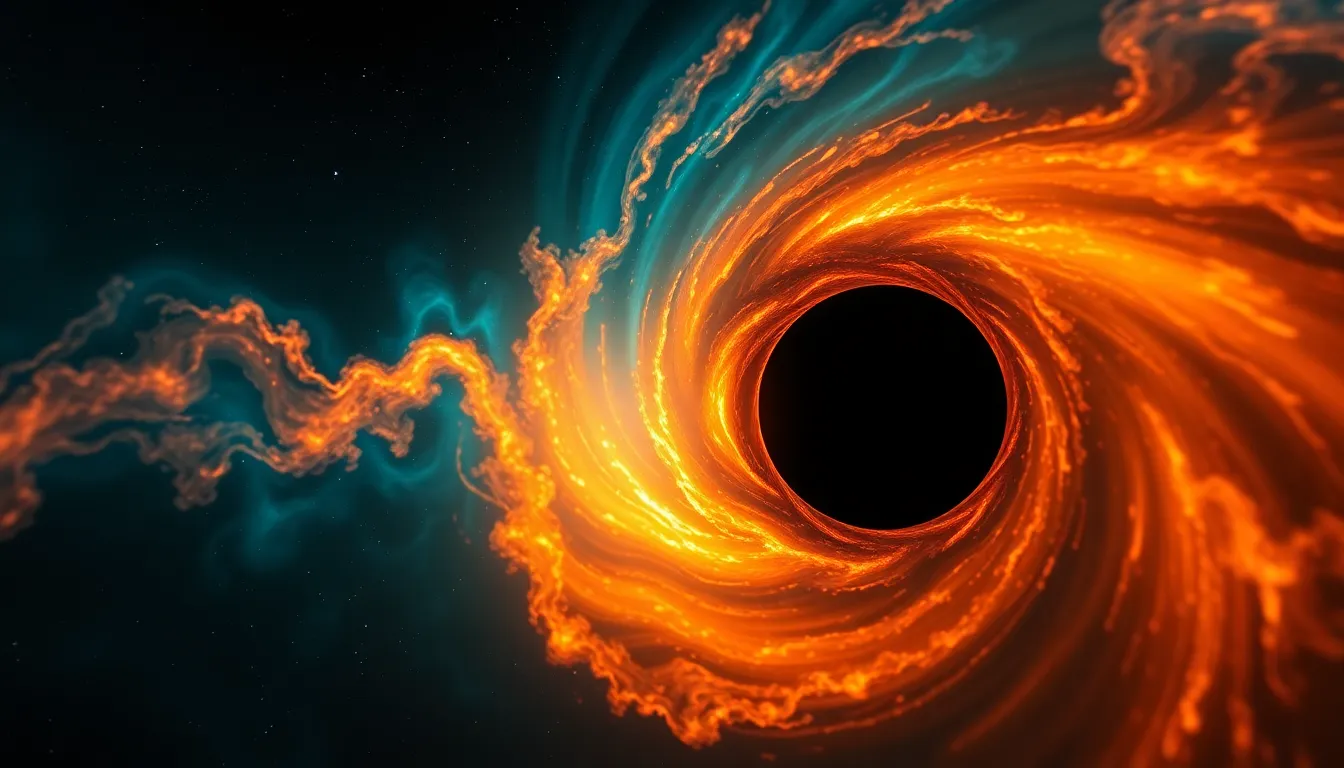
captured with Nikon Z9, 70-200mm f/2.8 telephoto at 135mm, featuring a cosmic scene of a black hole surrounded by swirling accretion disks emitting brilliant jets of light. The image utilizes dramatic backlighting with a spectrum of deep blues and fiery oranges contrasting against the darkness of space. Shallow depth of field with a focus on the black hole's event horizon, giving it an otherworldly glow. The color palette draws inspiration from cinematic teal and orange hues. The composition highlights the black hole at the center, with the accretion disk swirling outward, creating a vortex-like effect. Texture is captured in the luminous gas clouds, showing intricate swirling patterns.
16:9
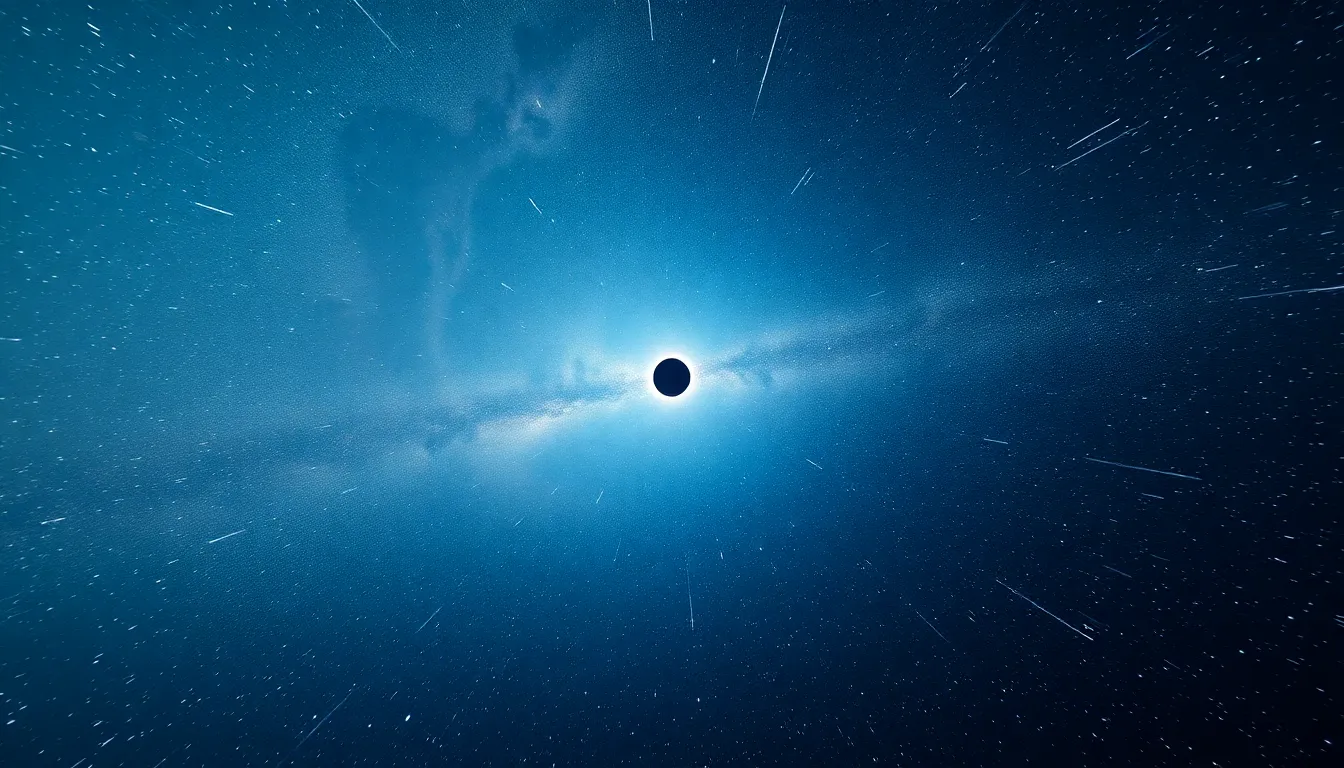
Shot on Hasselblad X2D 100C, 90mm f/2.5 medium format, this image presents a breathtaking cosmic landscape featuring a distant black hole set within a vibrant star field. The soft, diffused natural light provides a serene quality to the scene, illuminating the intricate details of stars scattered across the vastness of space. A hyperfocal distance ensures sharpness from foreground to infinity, creating an immersive experience. The color palette utilizes soft blues and whites, evoking a tranquil yet awe-inspiring ambiance. The composition employs leading lines from star trails directed towards the black hole, enhancing the sense of depth and scale.
16:9
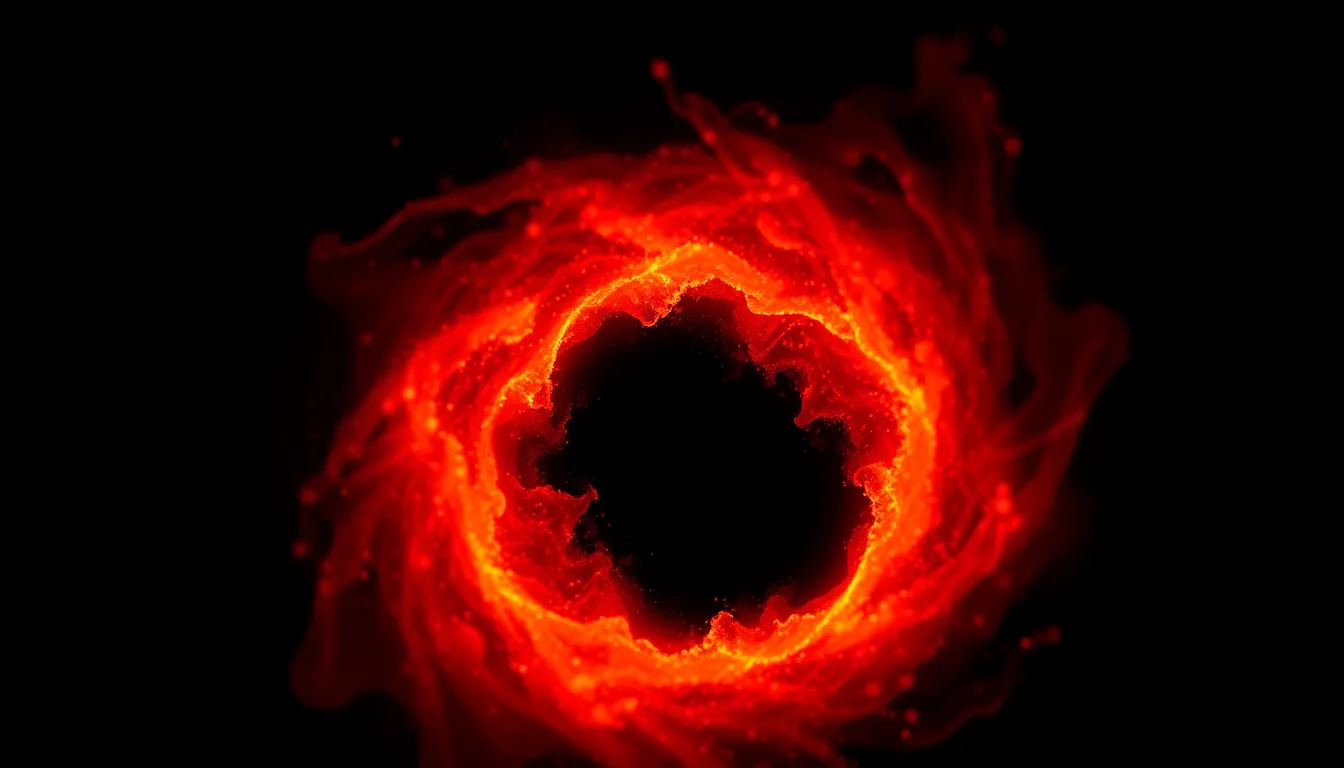
Photographed with Fujifilm GFX 100S, 110mm f/2 macro, this image zooms in on the swirling gas and particles just outside a black hole’s event horizon. Using dramatic studio lighting, the scene captures the intense textures of gaseous matter illuminated against a stark black backdrop. A selective focus technique isolates the swirling details, rendering the background into a soft, abstract blur. The color palette consists of deep reds and oranges, reflecting the energy of the gases. The composition incorporates a centered arrangement, emphasizing the swirling motion around the event horizon.
16:9
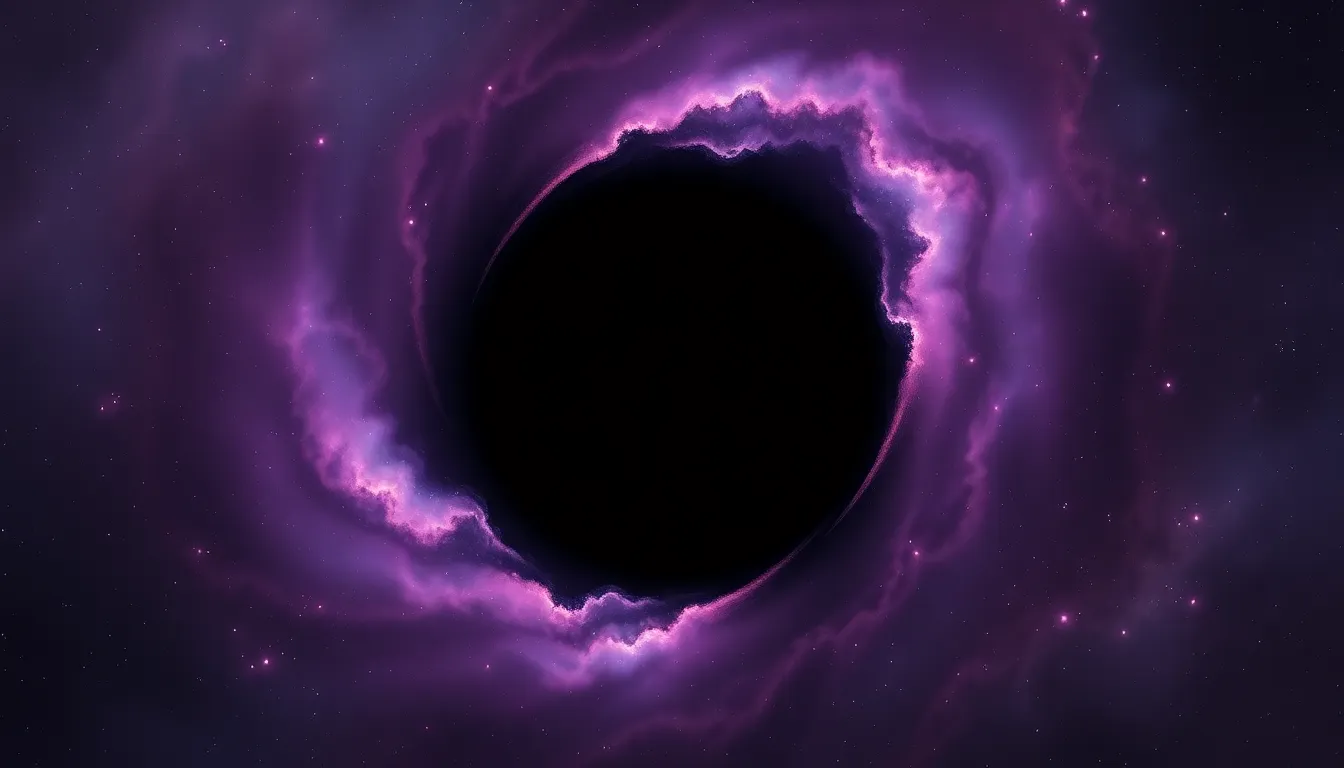
Captured with Canon EOS R5, 24-70mm f/2.8L at 35mm, this image depicts a massive black hole silhouetted against a colorful nebula. The soft, diffused natural light illuminates the edges of the nebula, enhancing its ethereal qualities. Hyperfocal distance keeps all elements sharp from the foreground to infinity, providing a captivating depth. The color palette showcases deep purples, blues, and hints of pink, evoking a sense of wonder. The composition uses a centered layout, emphasizing the central void of the black hole while presenting the vibrant nebula swirling around it.
16:9
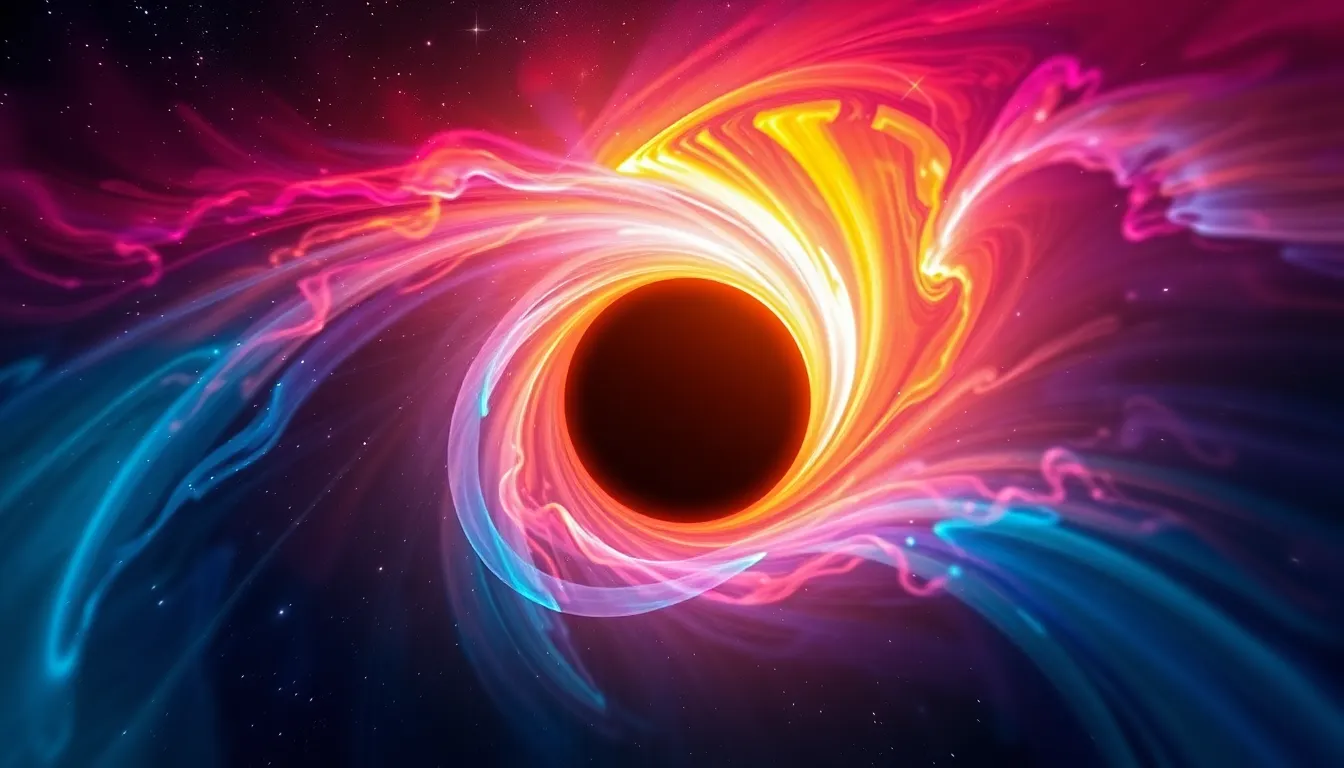
Shot on Sony A7R V with 85mm f/1.4 GM lens, this image captures a surreal representation of light bending around a black hole in a vibrant cosmic scene. The play of light creates stunning lensing effects, resembling a colorful rainbow halo. Utilizing natural illumination from surrounding stars, the scene features hyper-realistic textures of cosmic dust. A shallow depth of field at f/1.4 isolates the black hole’s core while the vibrant colors blur into a soft gradient, enhancing visual interest. The composition incorporates leading lines from swirling gas to draw the viewer's eye towards the central void, establishing a sense of motion and dynamic tension.
16:9
Captured with Nikon Z9, 70-200mm f/2.8 telephoto at 135mm, the scene depicts a black hole surrounded by a swirling accretion disk of glowing gas. Dramatic backlighting from distant stars casts a brilliant halo effect, creating a stark contrast against the dark void. A shallow depth of field at f/2.8 highlights the luminous disk while blurring the surrounding starlit sky into an ethereal bokeh. The color palette features vivid blues and fiery oranges that evoke a sense of cosmic drama. The composition employs the rule of thirds, placing the black hole slightly off-center, enhancing the dynamic energy of the scene. Detailed textures of the gaseous accretion disk shimmer and swirl, reflecting the chaotic yet beautiful nature of space.
16:9
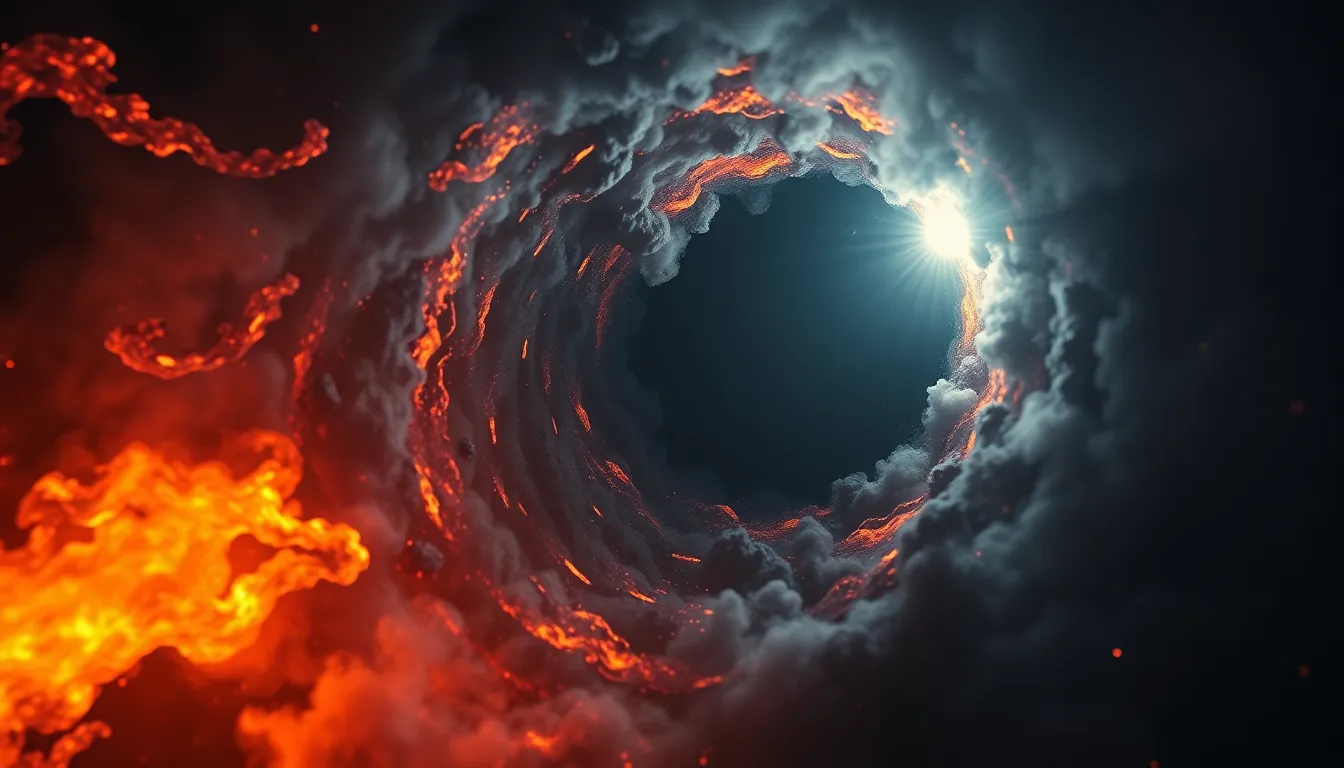
shot on Leica Q3, 28mm f/1.7 Summilux, capturing a dramatic and chaotic scene of matter being consumed by a black hole, with fiery and smoky elements swirling towards the center. The lighting is emphasized with bright glows and deep shadows, creating a sense of danger and unease. The color palette consists of fiery oranges and reds contrasting with deep blacks and grays of space. The composition uses a Dutch angle to enhance the chaotic energy of the swirling matter as it spirals into the black hole.
16:9
captured with Hasselblad X2D 100C, 90mm f/2.5 medium format, showcasing a theoretical visualization of a black hole with an event horizon and accretion disk illuminated by distant stars. Lighting is dramatic with starlight illuminating the edges of the event horizon, creating a halo effect. The color palette features deep space blacks with striking golden highlights from the starlight. The composition employs a symmetrical layout, with the black hole centered and the surrounding cosmos capturing the viewer's gaze.
16:9

shot on Fujifilm GFX 100S, 110mm f/2 macro, depicting a surreal artistic interpretation of a black hole as a swirling vortex of vibrant colors and light. The lighting is ethereal, with soft glows emanating from the center of the vortex, casting gentle reflections on the surrounding space. The color science reflects a Fujifilm Velvia-inspired palette filled with saturated purples, blues, and pinks. The composition is centered with a circular framing that emphasizes the dynamic energy of the vortex, creating a dreamlike atmosphere.
16:9
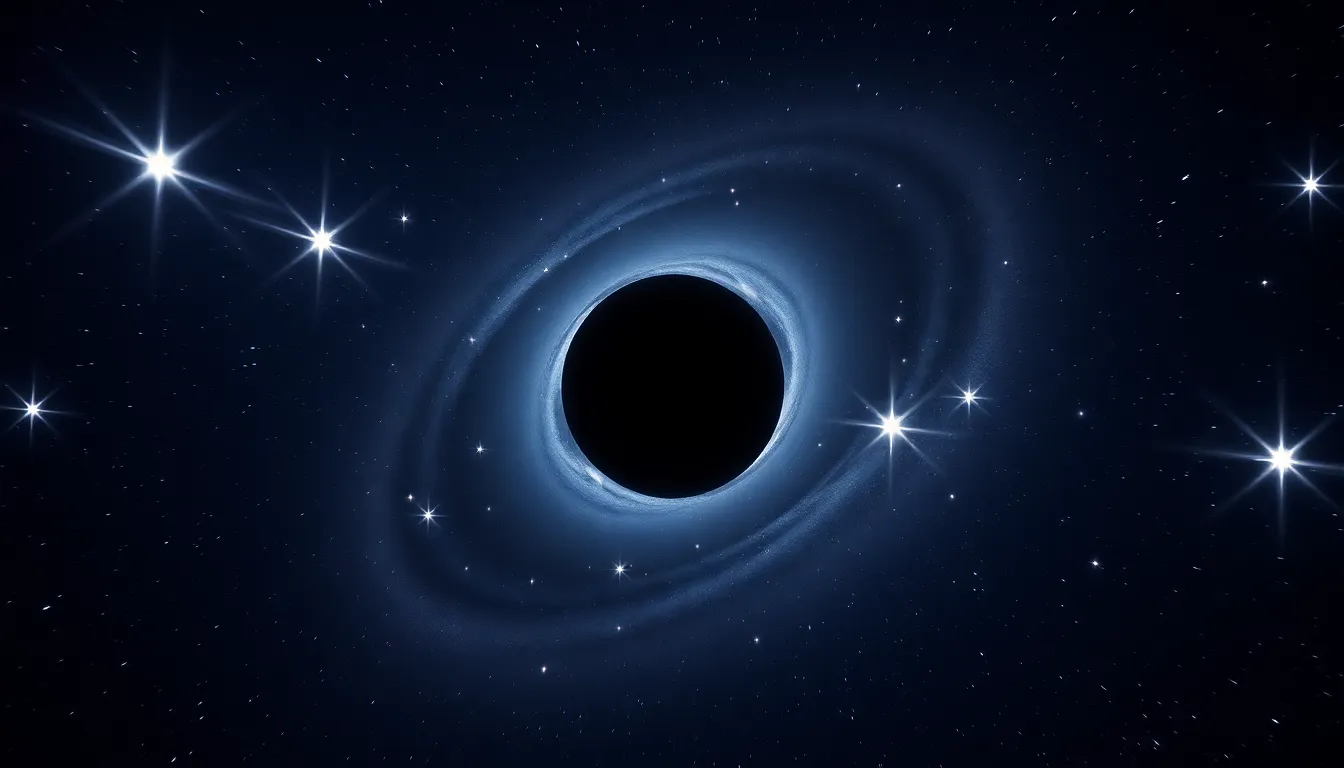
captured with Canon EOS R5, 24-70mm f/2.8L at 35mm, showcasing a black hole's gravitational influence on nearby stars. The scene features a dark void at the center with bright stars being distorted into elongated shapes. The lighting is dramatic, created by distant starlight, enhancing the gravitational lensing effect. The color palette utilizes muted tones of dark blue and purple with bright white highlights from the stars. The composition uses leading lines formed by the stars leading toward the black hole, creating a sense of depth.
16:9
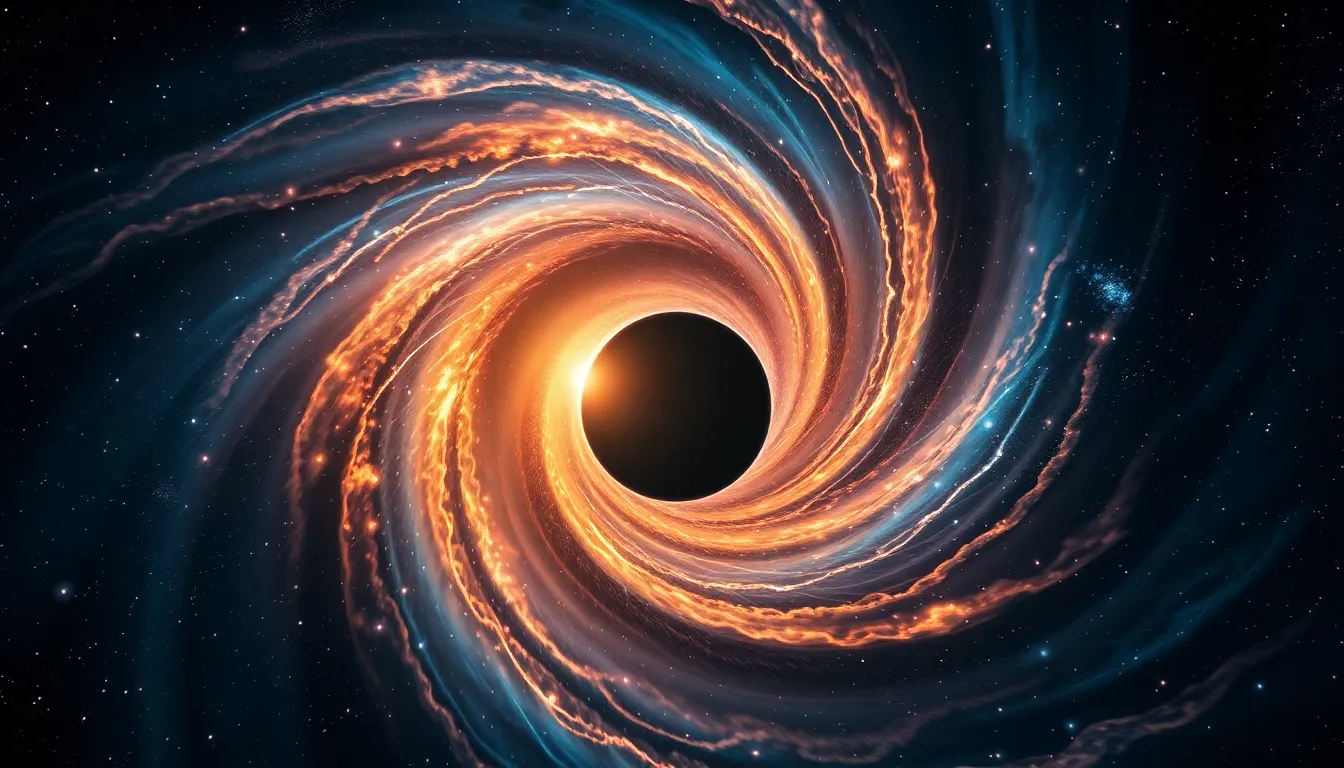
shot on Nikon Z9, 70-200mm f/2.8 telephoto at 135mm, capturing a vibrant cosmic scene of a black hole surrounded by swirling accretion disks emitting bright jets of energy. The lighting is dramatic with a star-filled background, using hyperfocal distance for a sharp focus on the black hole while the background melts into soft bokeh. The color palette features deep blacks contrasted with vibrant blues and oranges, resembling a cosmic painting. The composition is dynamic, with the black hole centered and the accretion disks radiating outward, giving a sense of movement and depth.
16:9
captured with Hasselblad X2D 100C, 90mm f/2.5 medium format, presenting a dramatic scene showcasing the gravitational lensing effect caused by a black hole. The lighting is natural, highlighting the ethereal effect of light bending around the black hole, creating surreal patterns. The composition focuses on the lensing waves, symmetrically arranged around the black hole, creating a balance that draws the eye. The film look features vibrant colors inspired by Kodak Portra 400, with warm skin tones and creamy highlights. The hyperfocal distance keeps all details of the lensing phenomenon sharp and engaging.
16:9
shot on Fujifilm GFX 100S, 110mm f/2 macro, depicting an astrophysical diagram of a black hole illustrated against a starry background. The lighting is soft with gentle highlights enhancing the intricate details of the diagram. The composition focuses on the central black hole, emphasizing detailed textures of space and surrounding cosmic bodies. A natural muted tone color palette of deep blacks and soft whites gives a classic feel. The depth of field is shallow, with subtle bokeh that keeps the attention on the numerical and visual details of the black hole representation.
16:9

captured with Canon EOS R5, 24-70mm f/2.8L at 35mm, illustrating a conceptual representation of a black hole in a colorful, abstract interpretation. The lighting is soft and diffused, with artificial lights enhancing the vibrant tones and shadows. Hyperfocal distance is used to keep the entire composition sharp, with textures reminiscent of swirling galaxies on a canvas-like background. A vivid and mixed color palette rounds out warm pinks, deep purples, and glowing whites. The composition plays with symmetry, centering the black hole in the frame to draw attention and provoke thought about the nature of space.
16:9
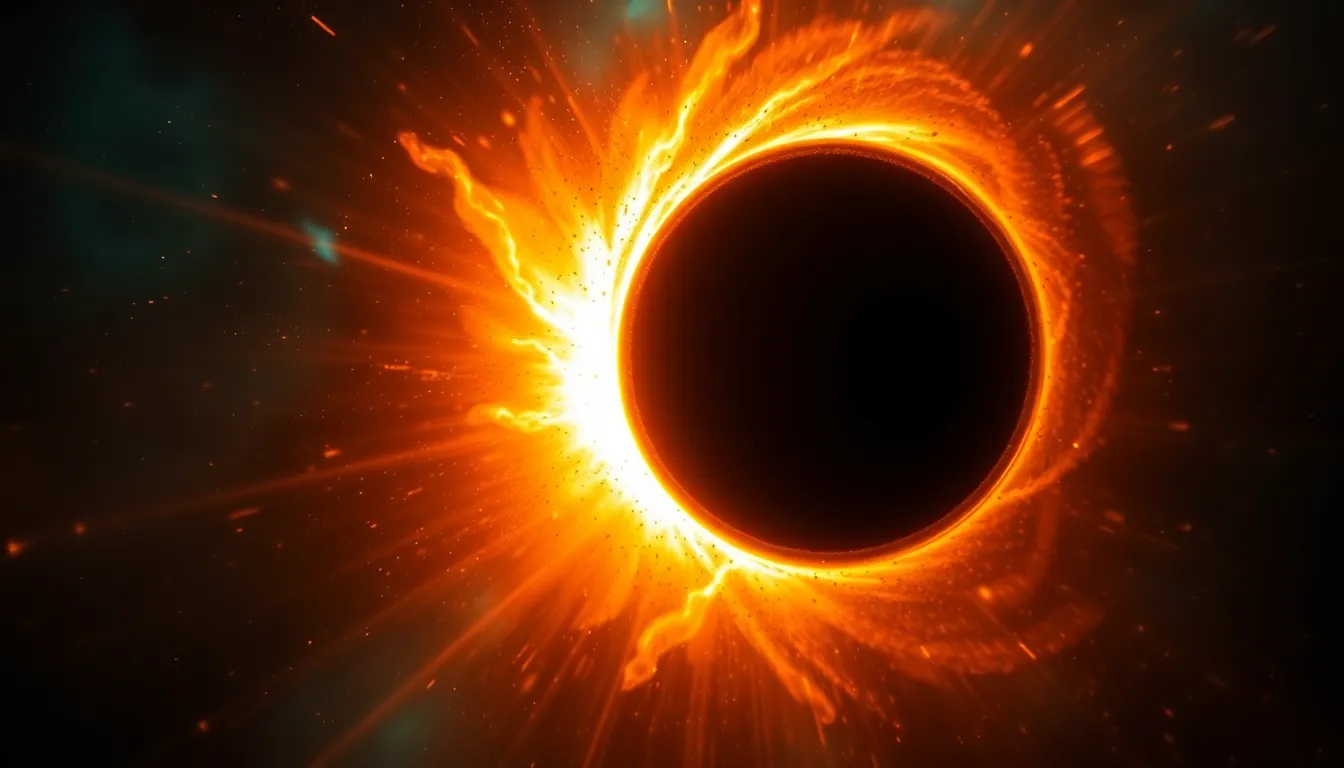
shot on Sony A7R V with 85mm f/1.4 GM lens, showcasing a dramatic visualization of a black hole consuming a star, surrounded by an accretion disk glowing with intense light. The scene is illuminated with a cinematic mix of teal and orange lighting, creating a visually striking contrast. A shallow depth of field at f/1.4 provides a creamy bokeh effect in the background, directing focus to the central action. The color grading leans towards saturated hues to emphasize the bright gas and debris. The composition utilizes diagonal lines leading towards the black hole, enhancing the sense of depth and motion.
16:9
captured with Nikon Z9, 70-200mm f/2.8 telephoto at 135mm, featuring a captivating scene of a swirling black hole at the center, with vibrant jets of light emitting from its poles. The lighting is dramatic with backlit colors highlighting the cosmic event amidst the dark void of space. A hyperfocal depth of field keeps everything from the event center to the surrounding stars sharply in focus. The color palette is a striking blend of deep blues and fiery oranges, reminiscent of powerful cosmic explosions. The composition follows the rule of thirds, with the black hole positioned to the left and vibrant jets spreading across the frame, creating a sense of dynamic movement and depth.
16:9
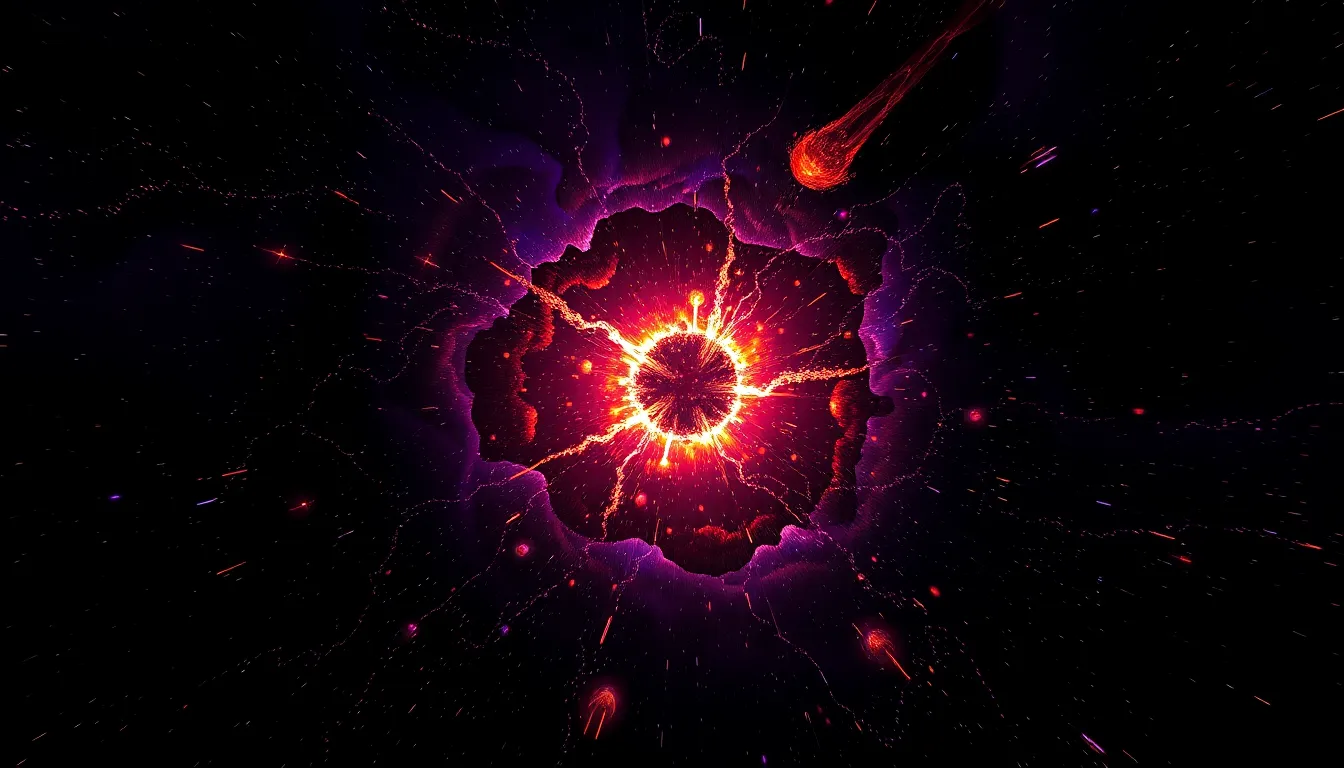
A breathtaking cosmic collision around a black hole, captured with a Leica Q3, 28mm f/1.7 Summilux lens. The lighting features explosive bursts of light from colliding stars illuminating the surrounding dark void. Shallow depth of field at f/1.7 highlights the kinetic energy of the scene while blurring the cosmic backdrop into a dreamlike haze. The color palette employs saturated colors with rich purples and fiery oranges, reflecting the chaos of the collision. The composition uses a Dutch angle to convey dynamic tension, enhancing the sense of movement. Textures depict the swirling, heated gases and shockwaves radiating from the center.
16:9
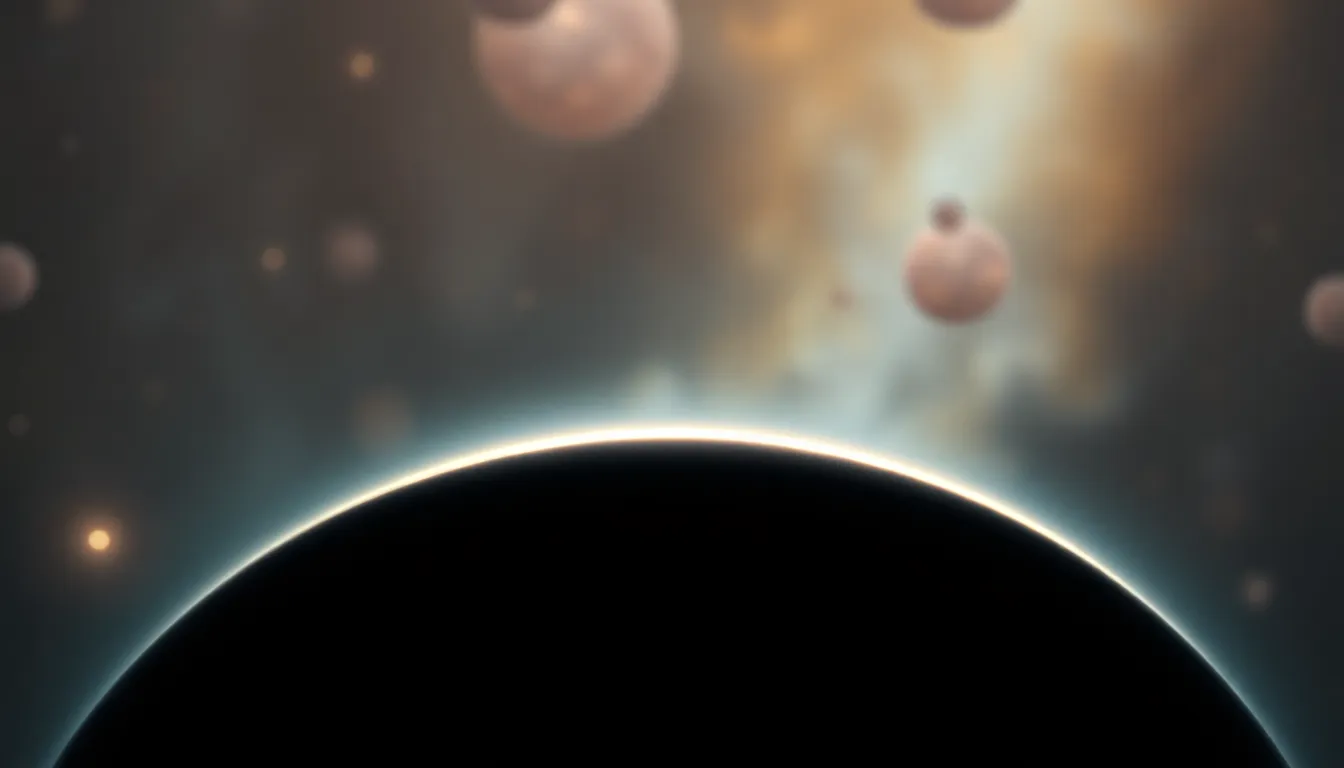
A mystical scene depicting the event horizon of a black hole, shot using a Fujifilm GFX 100S, 110mm f/2 macro lens. The lighting mimics the soft glow of nearby stars reflecting off the horizon's edge, creating a captivating contrast. The depth of field showcases a shallow focus on the event horizon, blurring the cosmic background into pastel shades. The color science resembles natural muted tones with desaturated earth colors, evoking a sense of mystery. The composition adheres to the rule of thirds, positioning the horizon off-center to give a sense of vastness. Textures include the subtle shimmering of light against the event horizon, accentuating the boundary between light and darkness.
16:9
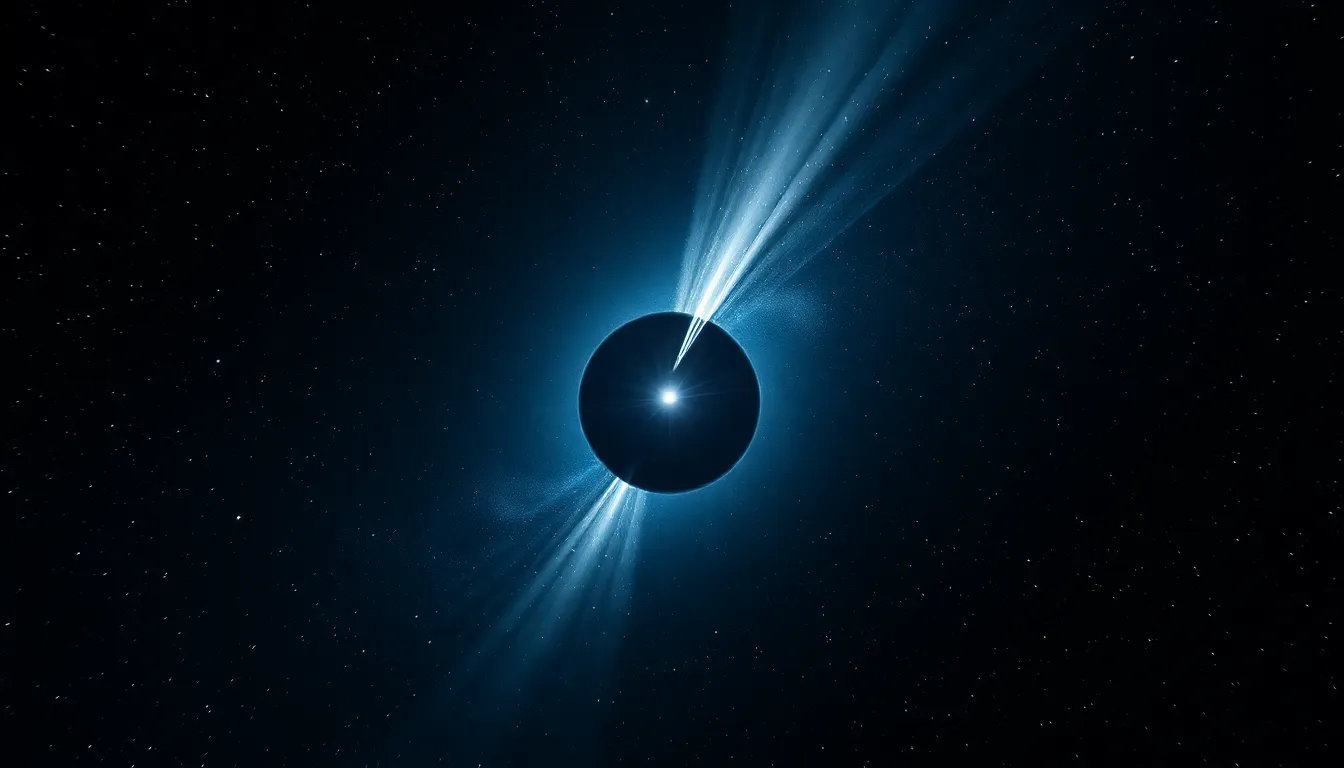
A breathtaking view of a black hole's gravitational lensing effect captured using a Nikon Z9, 70-200mm f/2.8 telephoto at 135mm. The lighting combines subtle ambient starlight with vivid cosmic rays bending around the black hole, creating a mesmerizing visual. The depth of field is narrow, focusing on the lensing distortion while softening the background stars into a wash of light. The color palette features contrasting dark voids and bright white stars, creating a dramatic yet serene atmosphere. The composition introduces leading lines from the shifted star paths toward the black hole, enhancing the effect of gravitational pull. Textures include distant star fields merging at the edges, creating a dynamic depth.
16:9
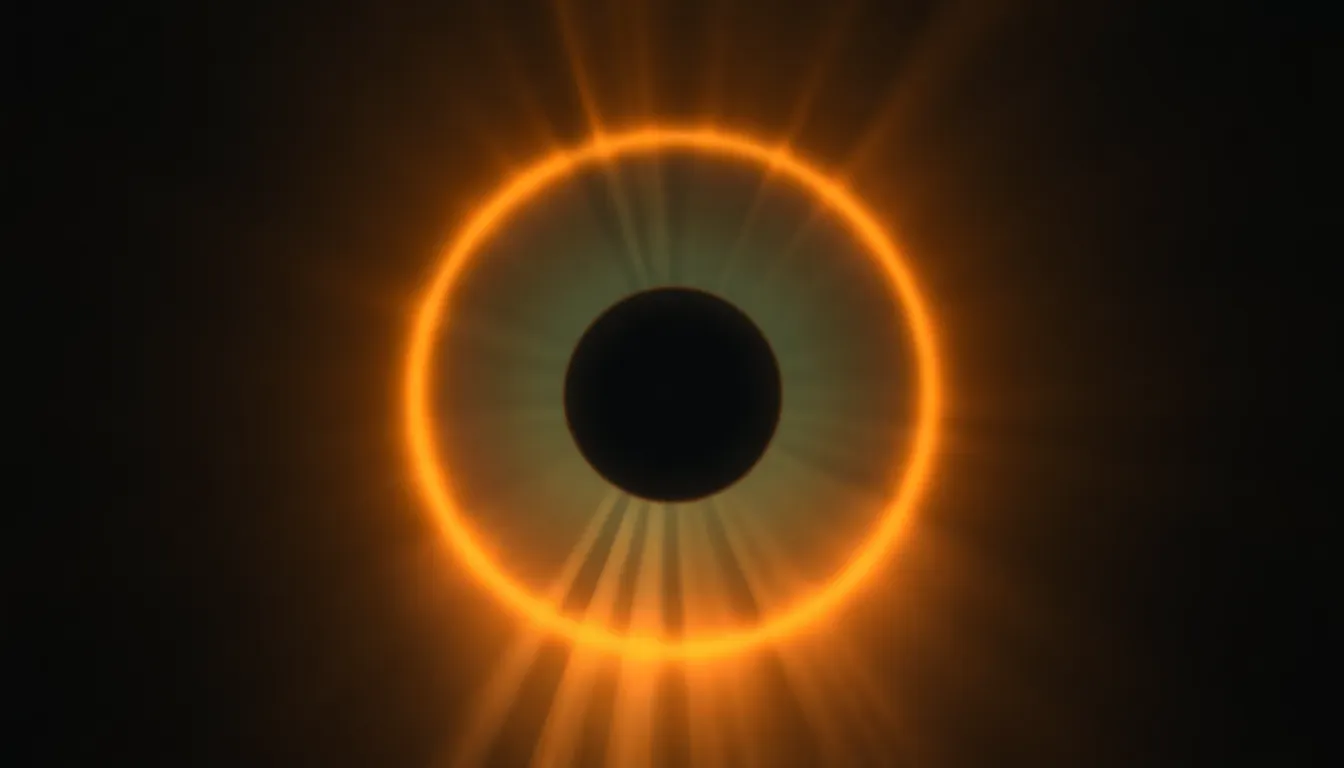
An abstract concept of a black hole formed from light, shot on a Hasselblad X2D 100C with a 90mm f/2.5 medium format lens. The lighting is dramatic, with beams of light converging into a dark center, creating a glowing halo effect. Shallow depth of field at f/2.5 allows for a dreamy background that accentuates the central black hole. The color grading leans towards cinematic teal and orange, enhancing the otherworldly feel. The composition is centered, focusing on the illusion of light pulling towards the darkness, with smooth gradients. Textures include a seamless transition between light and shadow, inviting intrigue.
16:9
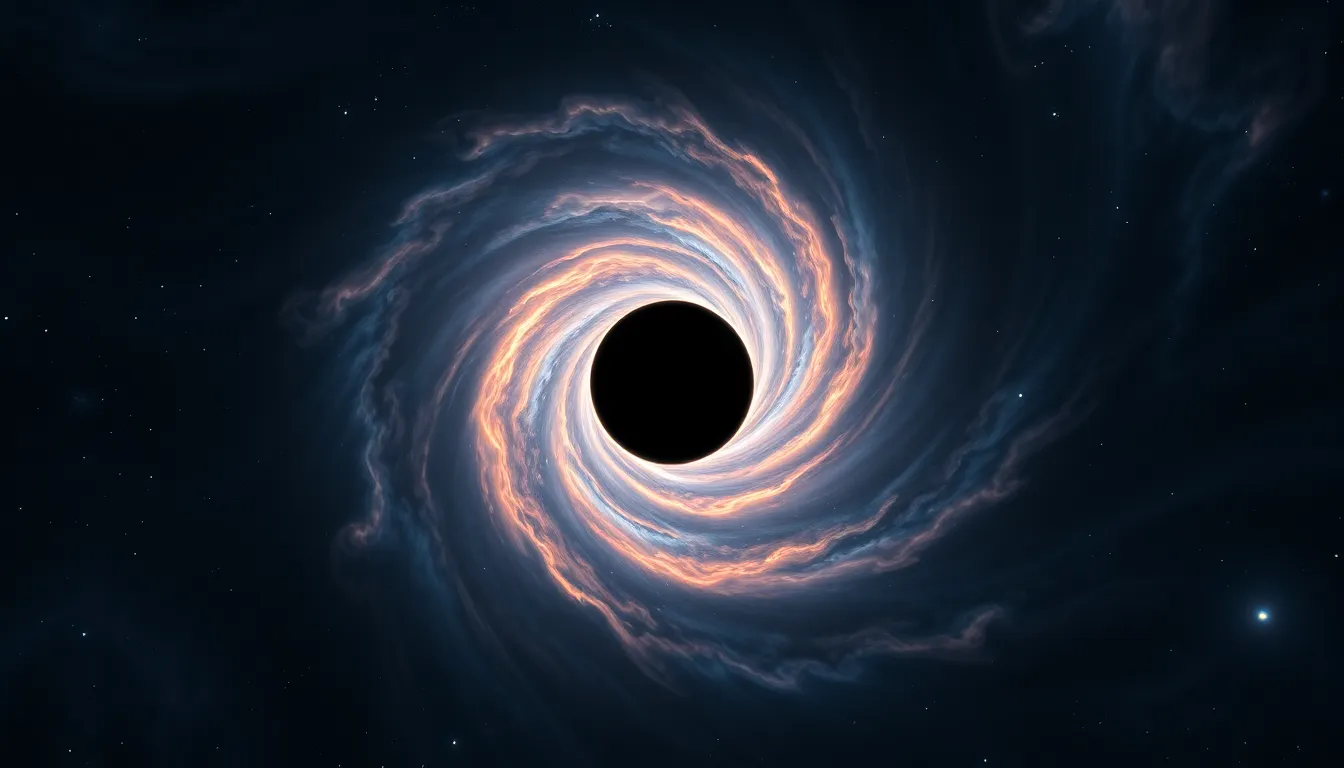
A stunning cosmic scene showcasing a black hole surrounded by swirling accretion disk, captured with the Canon EOS R5, 24-70mm f/2.8L at 35mm. The lighting is from distant stars casting stark highlights against the dark void, creating a contrast between the illuminated disk and the shadowed core. Depth of field is set to hyperfocal distance, ensuring every detail from the swirling gases to the luminous edges is sharp. The color palette features deep blues and purples with hints of fiery orange from the disk. The composition utilizes the rule of thirds, with the black hole off-center, drawing the viewer's eye. Texture details include the gases taking on a soft, almost ethereal glow as they spiral inward.
16:9
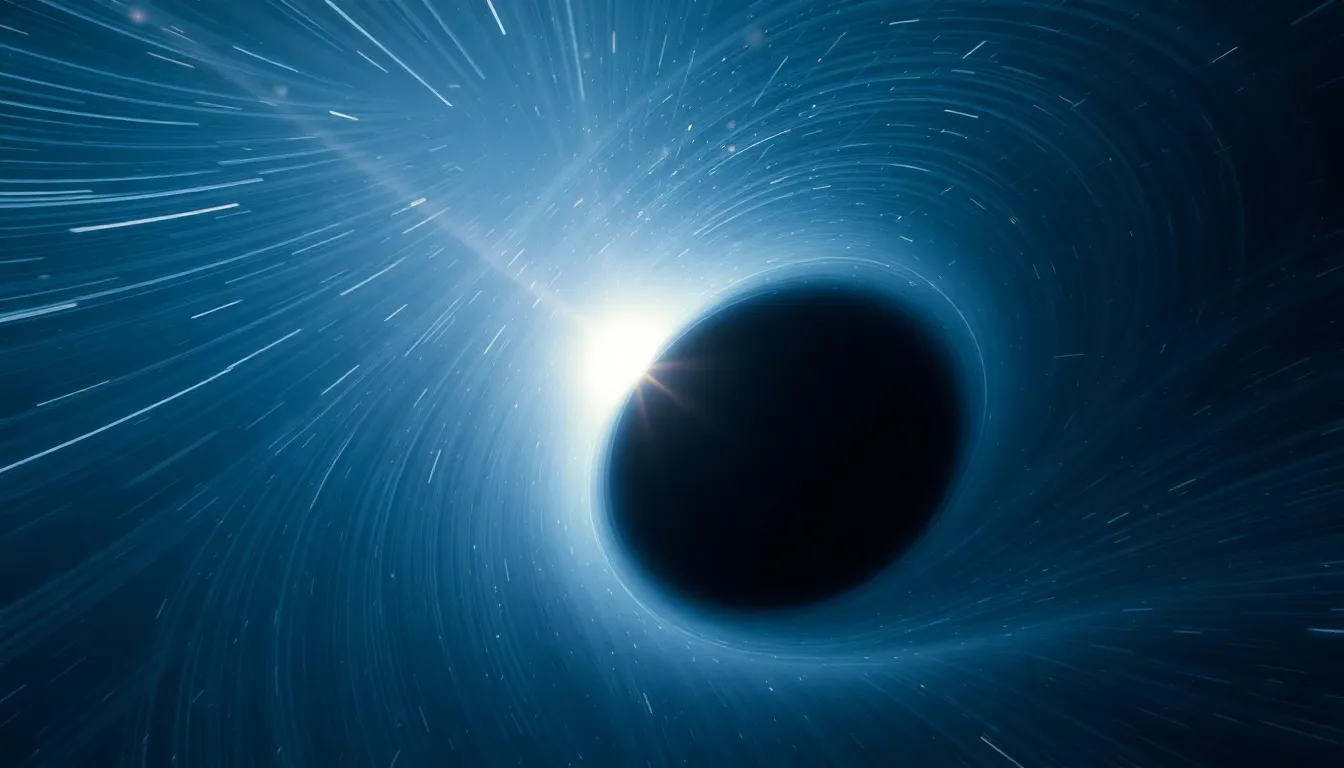
A breathtaking timelapse of stars being pulled around a black hole, captured with Leica Q3, 28mm f/1.7 Summilux. The image shows motion blur effects as stars arc dramatically, illuminated by the intense light of the accretion disk. The lighting features soft blue ambient light contrasting with sharp white star trails, creating an engaging visual rhythm. The depth of field is hyperfocal at f/8, allowing clarity throughout the scene. The composition utilizes leading lines of star trails extending around the black hole, guiding the viewer's gaze toward the void. Textures of the night sky enhance the overall depth, showcasing tiny dust particles illuminated in the scene.
16:9
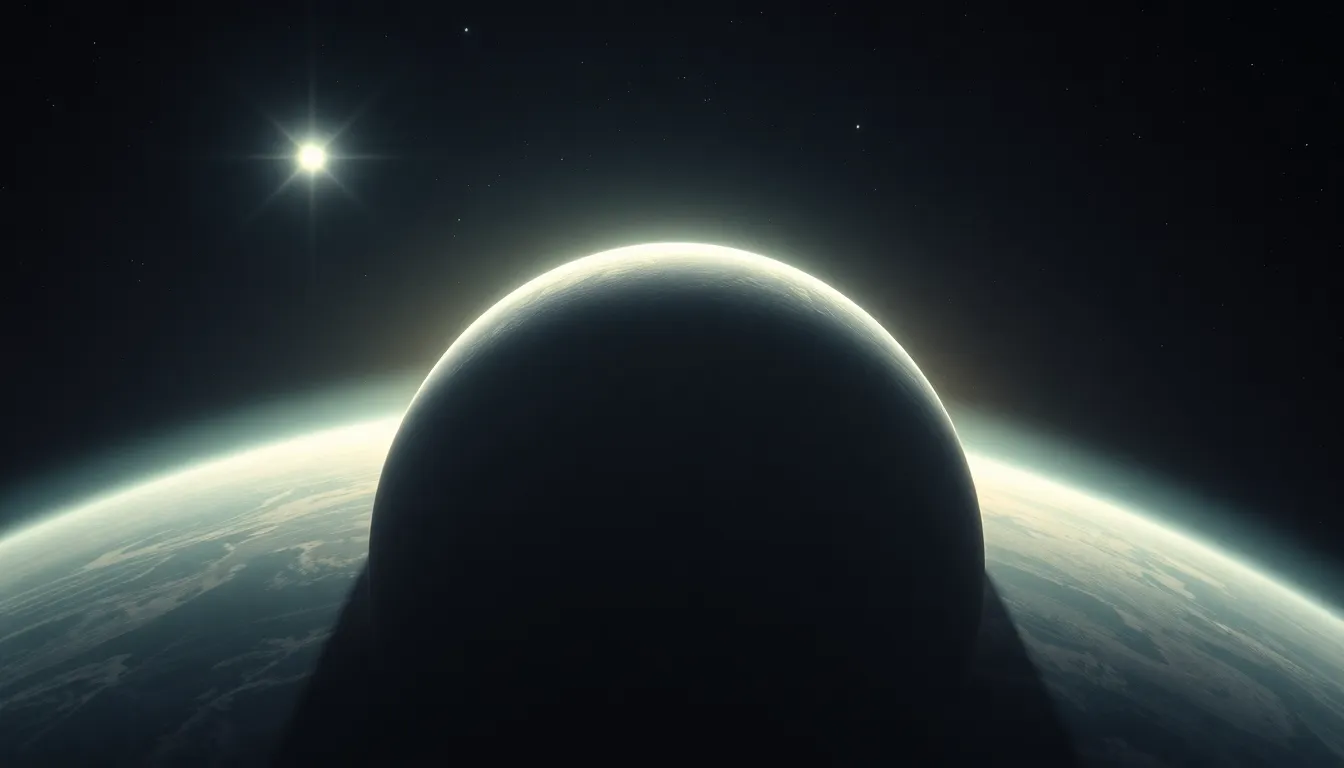
An astrobiological study of a planet being drawn into a black hole's gravitational pull, shot with Hasselblad X2D 100C, 90mm f/2.5 medium format. The scene is illuminated by a distant star, providing soft rim light against the planet’s atmosphere. The color palette features desaturated earth tones with cosmic highlights, creating a realistic atmosphere. The depth of field is selective at f/4, focusing on the planet while the black hole looms ominously in the background. The composition uses rule of thirds, placing the planet off-center with the black hole's dark mass threateningly present. Textures highlight the planet’s surface features, showcasing craters and atmospheric details.
16:9

A conceptual art piece depicting a black hole as a swirling vortex, shot on Fujifilm GFX 100S, 110mm f/2 macro. This surreal depiction utilizes dramatic lighting with high contrast, where light bends around the event horizon. The colors are inspired by cinematic teal and orange grading, creating an otherworldly ambiance. The depth of field is shallow at f/2, emphasizing the vortex's texture and detail. The composition employs a Dutch angle, adding a dynamic tension to the swirling motion of the vortex. The textures reflect the flow of matter being drawn into the black hole, creating a vivid sense of depth and movement.
16:9
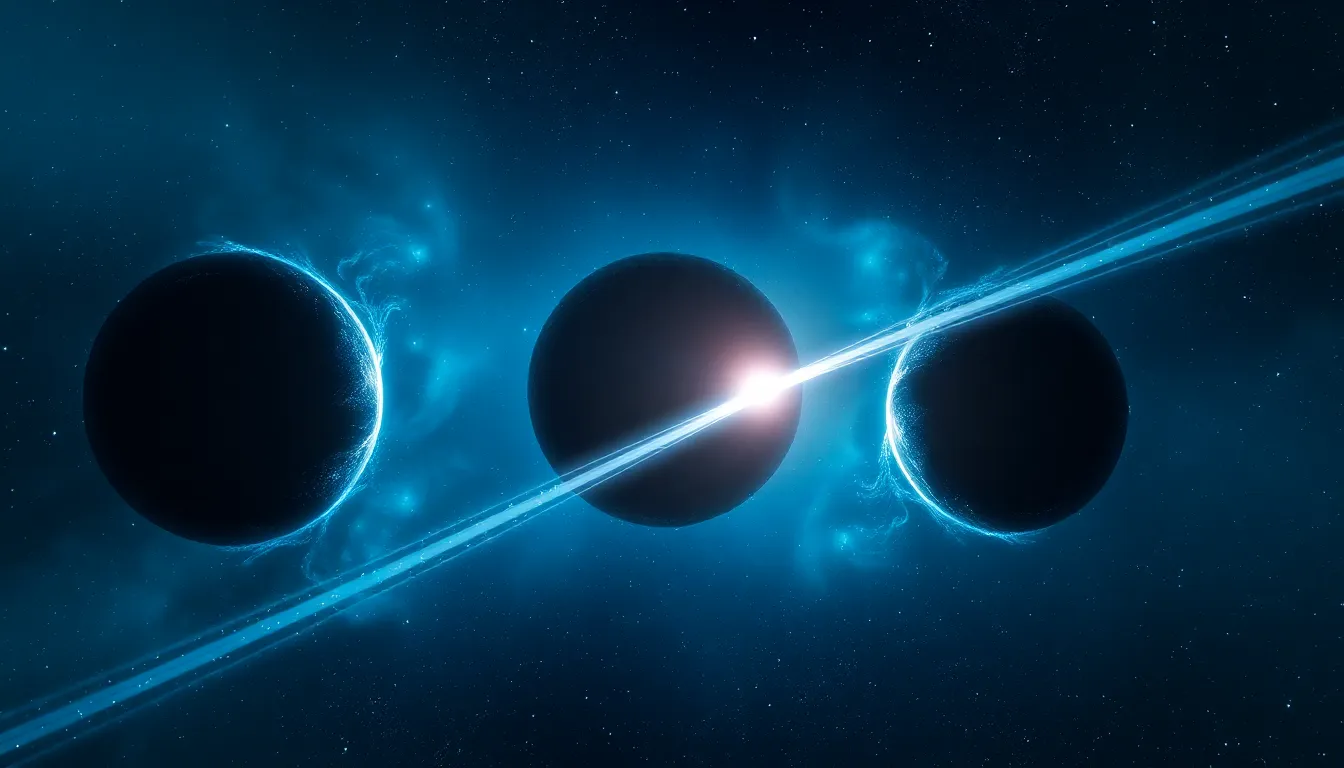
A cosmic scene showing multiple black holes merging, captured with Nikon Z9, 70-200mm f/2.8 telephoto at 135mm. This image is bathed in ethereal blue and turquoise light, simulating the cosmic energy released during a merger, using natural muted tones to depict the surrounding space. A shallow depth of field at f/2.8 isolates the merging black holes, creating creamy bokeh of distant stars. The composition uses leading lines of light emanating from the merging point, guiding the viewer's eye to the dramatic event. Textures illustrate the surrounding space, with faint star trails and cosmic dust highlighting the dynamic interactions.
16:9
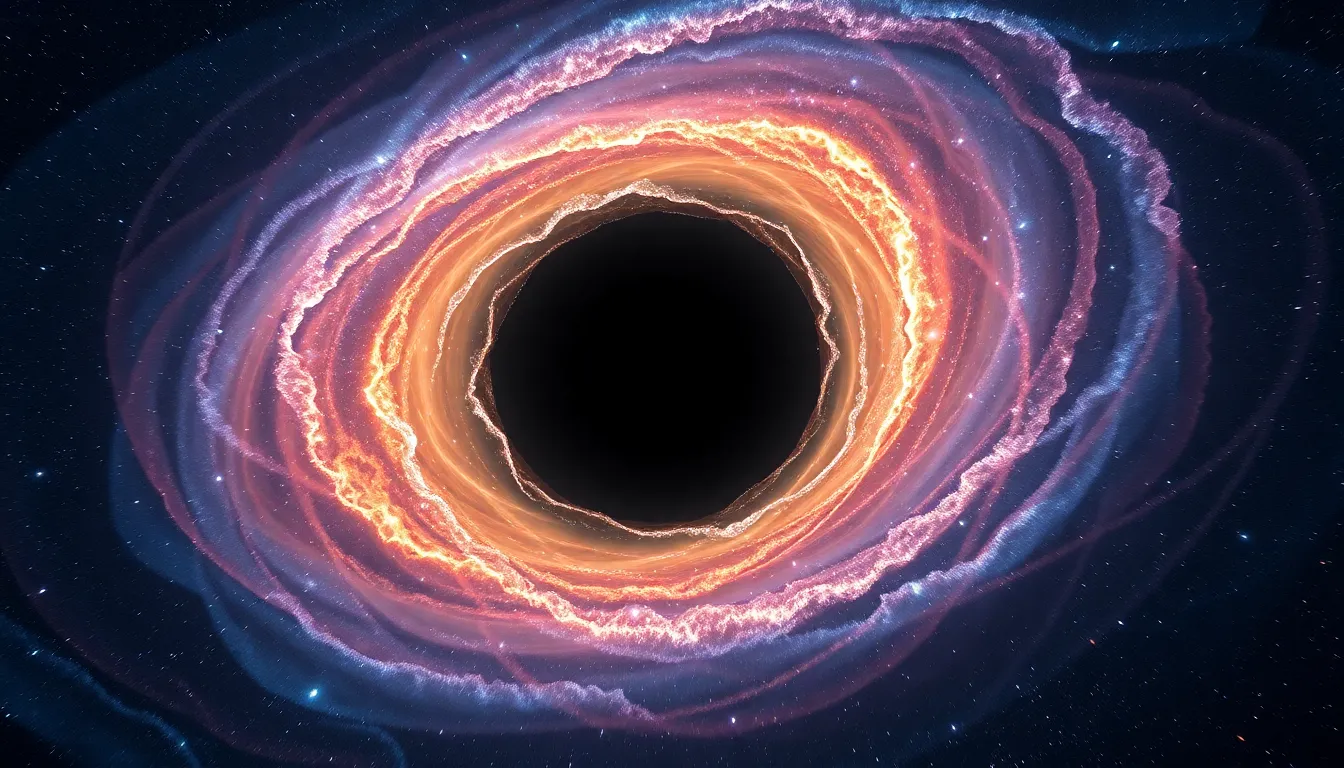
An immense black hole at the center of a swirling galaxy, shot on Canon EOS R5, 24-70mm f/2.8L at 35mm. The scene is illuminated by the accretion disk's fiery glow, creating dramatic rim lighting around the black hole. The depth of field is hyperfocal at f/8, revealing intricate stellar formations throughout the galaxy. The color science mimics Fujifilm Velvia with rich blues and vibrant purples. Compositionally, the black hole is centered, surrounded by spiraling arms of stars and gas. The texture highlights the luminous gas and dust swirling around the dark void, creating a striking contrast with the emptiness of space.
16:9
captured with Hasselblad X2D 100C, 90mm f/2.5 medium format, illustrating the collision of galaxies leading to the formation of a black hole. Overcast diffused daylight creates a soft and even illumination across the galaxies. Depth of field is shallow at f/2.5, creating a dramatic focus on the point of collision while background galaxies melt into soft bokeh. The color science employs natural muted tones with desaturated earth colors, enhancing the realism of the cosmic phenomenon. The composition is dynamic, with swirling galaxies forming leading lines towards the central black hole.
16:9
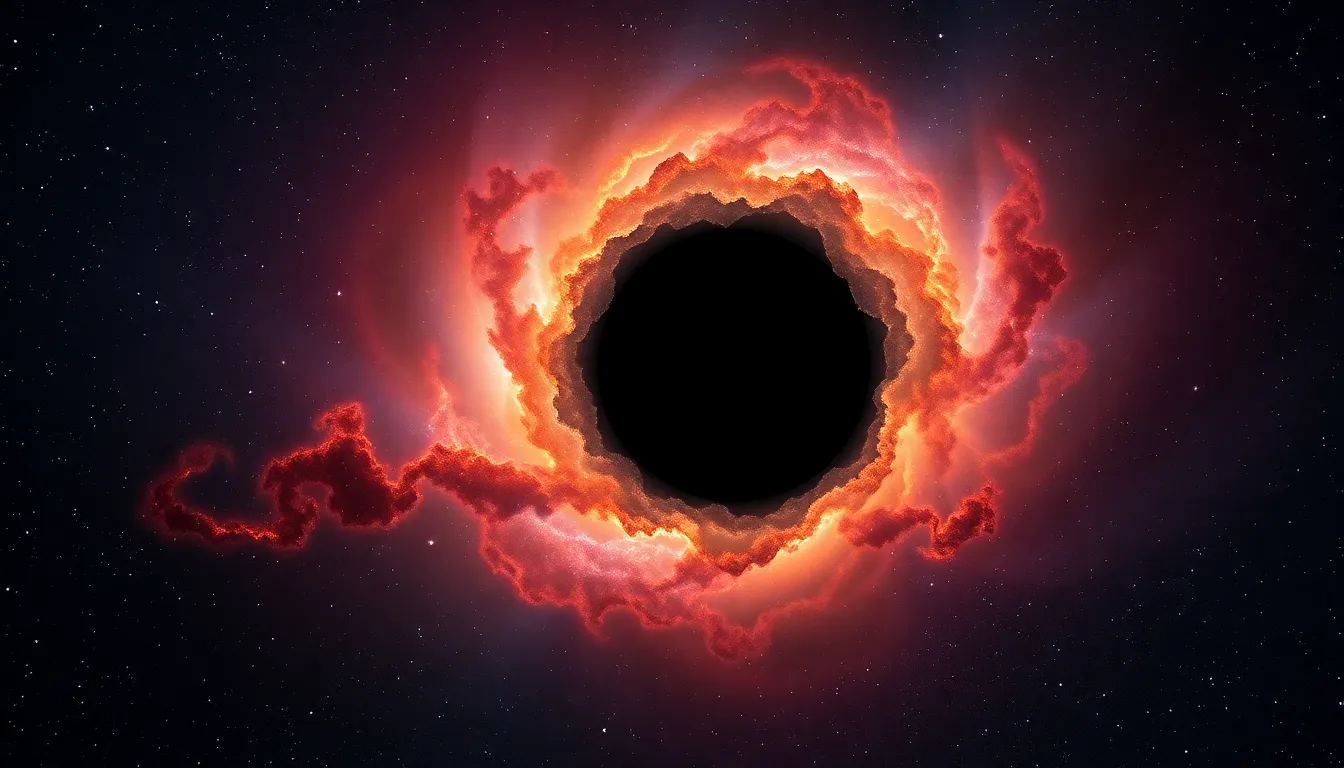
shot on Canon EOS R5, 24-70mm f/2.8L at 35mm, showcasing a stunning astrophotography of a black hole silhouette against a vibrant nebula. Natural starlight punctuates the scene, with a stark contrast between the black hole and the colorful gases of the nebula. The composition leverages the rule of thirds, placing the black hole at one power point while the nebula swirls around it. Depth of field is hyperfocal at f/8, ensuring all stars and nebula details are crisp. The color palette features natural muted tones with desaturated earth colors.
16:9
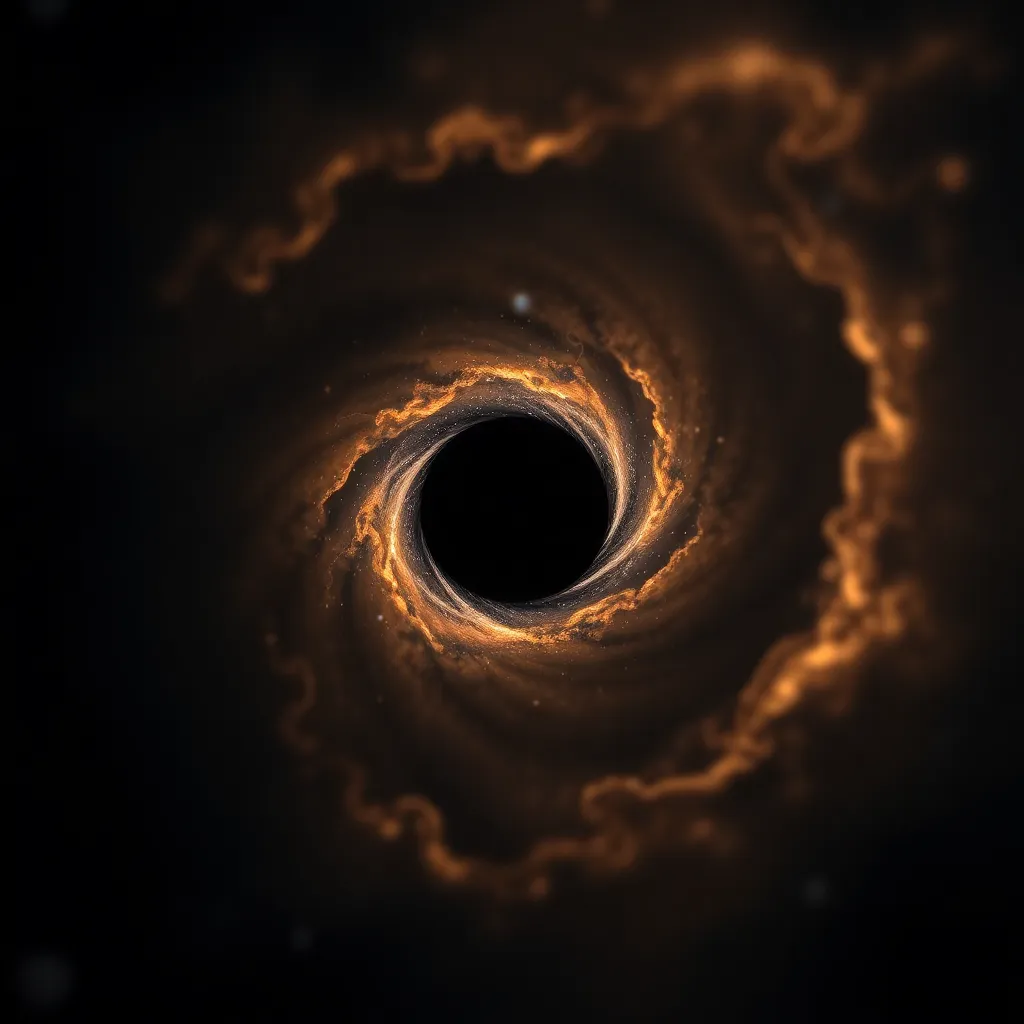
captured with Fujifilm GFX 100S, 110mm f/2 macro, this image presents a close-up view of an artist's impression of a black hole surrounded by cosmic dust and swirling galaxies. The soft glow from the black hole is contrasted with dark space, illuminated by surrounding stars. Shallow depth of field allows the focus to be on the swirling dust, while the background blurs into a painterly bokeh. Color science is inspired by Kodak Portra 400, featuring warm highlights and smooth transitions. The composition utilizes centered symmetry, creating a harmonious balance.
1:1

shot on Sony A7R V with 85mm f/1.4 GM lens, depicting an artistic interpretation of a black hole with vibrant colors emanating from its accretion disk. The ambient lighting encompasses a dream-like quality, with soft highlights blending into shadowy areas. Hyperfocal distance ensures everything from the swirling gas to the stars in the background is tack-sharp at f/8. Color palette inspired by Fujifilm Velvia enhances the saturation of colors. The composition places the black hole off-center, creating dynamic tension with cosmic elements in the foreground, rich with textured gas clouds.
16:9
captured with Nikon Z9, 70-200mm f/2.8 telephoto at 135mm, showcasing a distant black hole absorbing surrounding stardust in a cosmic landscape. The scene is illuminated by the light from nearby stars, creating a stark contrast against the dark void of the black hole. Shallow depth of field at f/2.8 with soft bokeh in the foreground. Cinematic teal and orange color grading emphasizes the drama of the cosmic event. The composition utilizes leading lines formed by the swirling accretion disk, drawing the eye toward the event horizon, while the texture includes intricate details of stardust and celestial gas.
16:9
captured with Leica Q3, 28mm f/1.7 Summilux, showcasing a dramatic concept image of a black hole with a star being consumed by its gravity, warm tungsten lighting simulates a distant sun, shallow depth of field at f/1.7 blurring the background into a painterly bokeh, cinematic teal and orange color grading gives a striking contrast, rule of thirds composition with the black hole and star in key areas, a stark contrast against the darkness of space adds tension to the image.
16:9
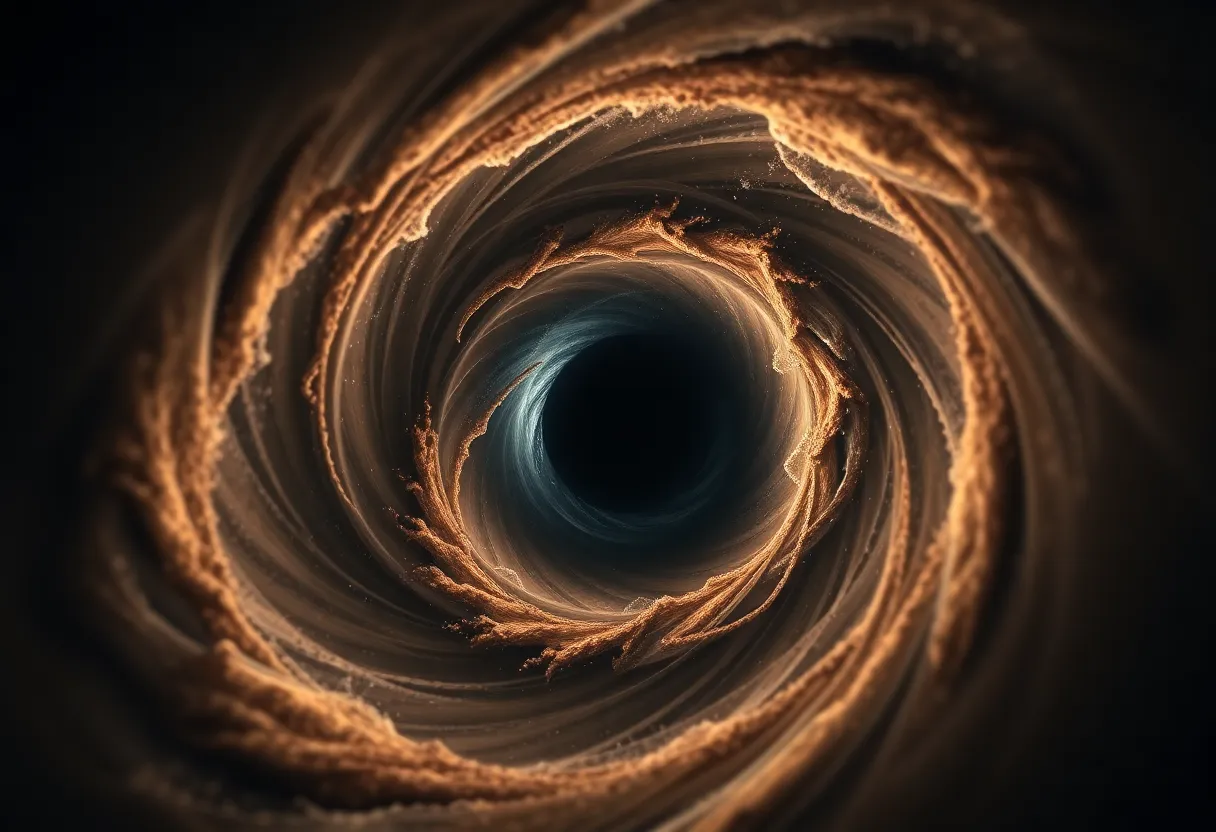
shot with Fujifilm GFX 100S, 110mm f/2 macro, capturing a detailed view of a black hole's accretion disk, overcast diffused daylight provides soft light with atmospheric perspective, selective focus on the swirling gases around the event horizon, natural muted tones with desaturated earth colors, leading lines from the spiraling material draw the eye towards the black hole, emphasizing the dramatic texture of the gases and dust swirling in space.
3:2
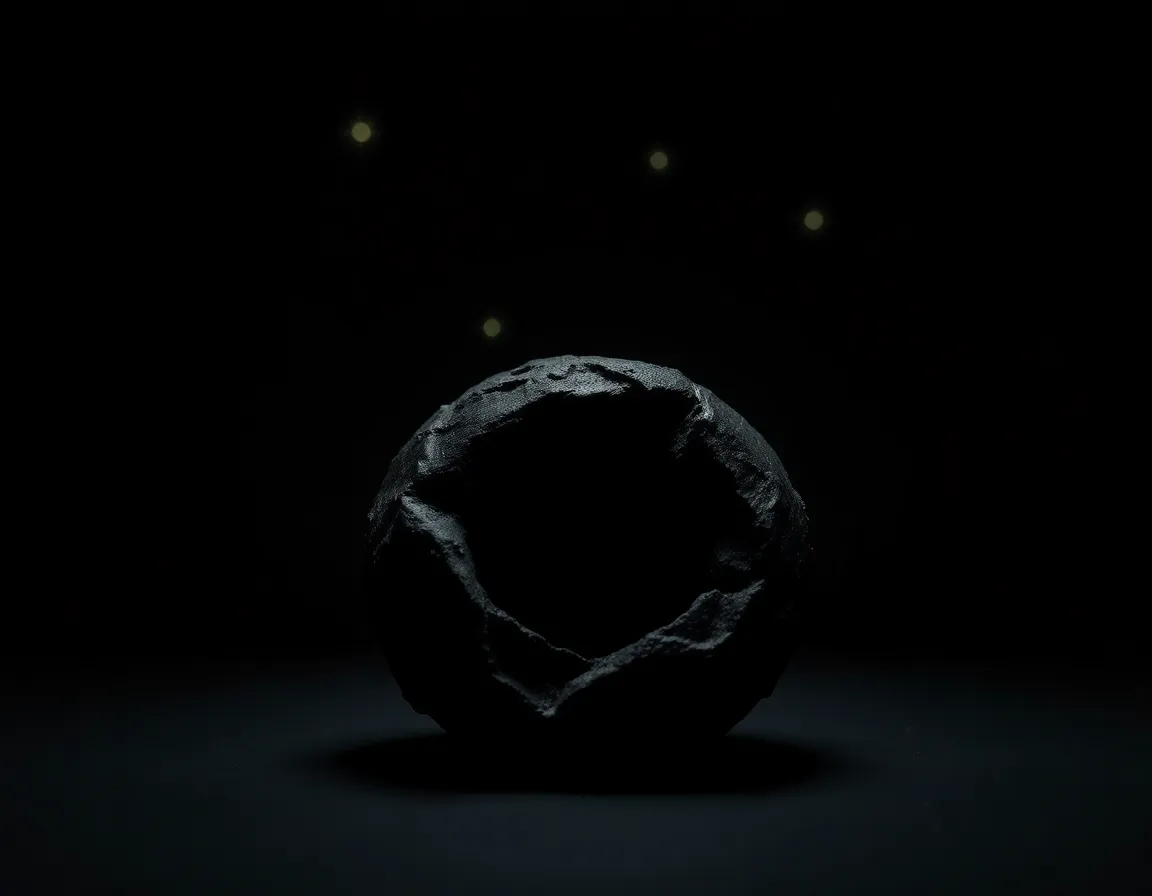
captured with Canon EOS R5, 24-70mm f/2.8L at 35mm, studio setup featuring a miniature black hole model with artificial LED lights mimicking stars shining on a dark background, butterfly lighting creates dramatic shadows on the surface of the black hole model, natural muted tones with desaturated earth colors emphasize the model's texture, centered symmetrical composition draws focus to the intricate details of the black hole, displaying surface details of the model.
4:3
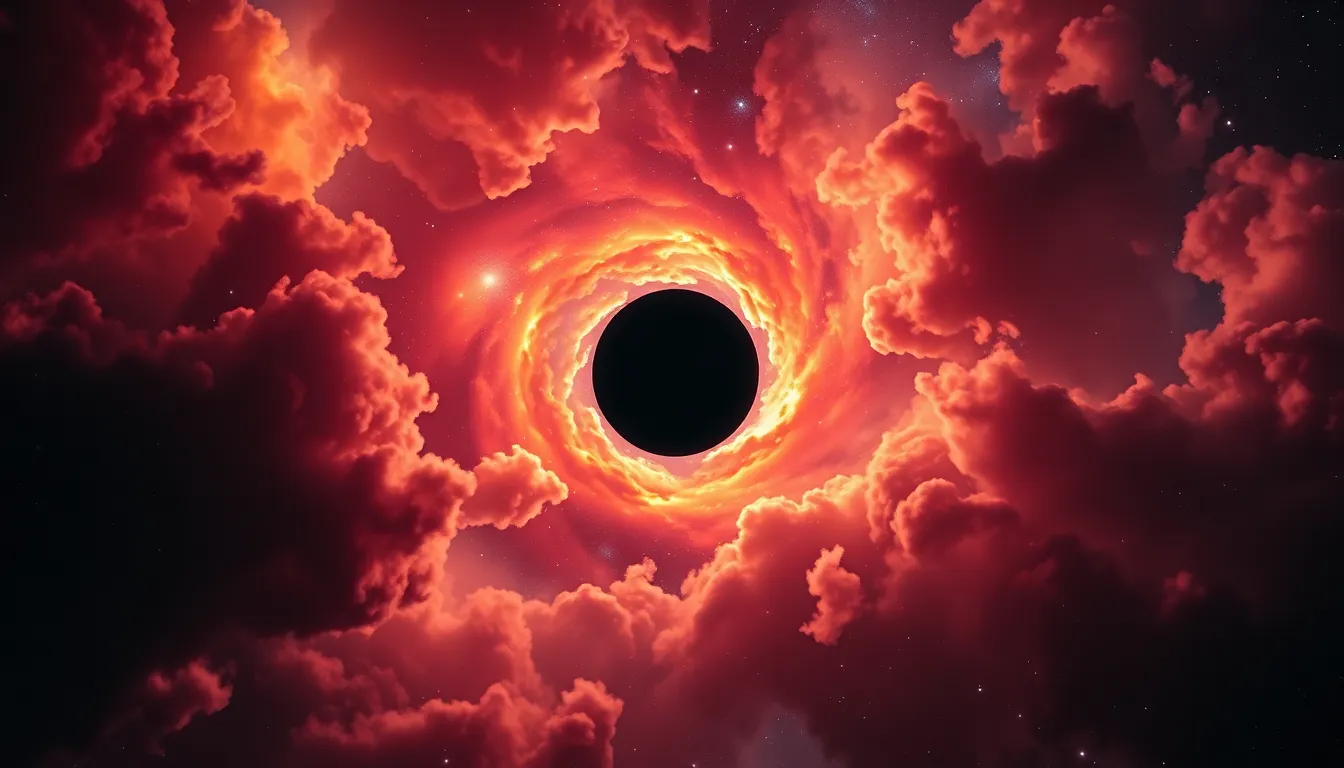
shot on Sony A7R V with 85mm f/1.4 GM lens, utilizing natural sunlight filtering through a nebula to illuminate a distant black hole, hyperfocal distance — everything from the glowing nebula to the black hole remains tack-sharp at f/8, Fujifilm Velvia-inspired saturated colors create a vibrant cosmic landscape, rule of thirds composition places the black hole at a power point, textures of the nebula with soft, wispy clouds juxtaposed against the stark darkness of the black hole.
16:9
captured with Nikon Z9, 70-200mm f/2.8 telephoto at 135mm, dramatic backlighting from a distant star creates a halo effect around a swirling black hole at its center, shallow depth of field at f/2.8 resulting in a soft bokeh of cosmic dust, cinematic teal and orange color grading enhances the mysterious atmosphere, centered symmetrical composition emphasizes the black hole's gravitational pull, rich textures of interstellar gas clouds swirling around the event horizon.
16:9
Shot on Hasselblad X2D 100C, 90mm f/2.5 medium format, this image presents a surreal interpretation of a black hole merging with a supernova explosion. The lighting is ambient, with bright colors radiating from the supernova against the dark background. Selective focus highlights the explosive event while the black hole remains subtly blurred, enhancing its mysterious presence. The color science is inspired by Fujifilm Velvia, showcasing vibrant reds, yellows, and a deep black contrast. The composition employs a Dutch angle to create a sense of dynamism and urgency, drawing the viewer into this cosmic clash.
16:9
Captured with Fujifilm GFX 100S, 110mm f/2 macro, this stunning image portrays a black hole at the center of a swirling cosmic void. The natural lighting from distant stars creates a contrasting bright aura around the black hole, which is surrounded by a halo of dust and cosmic debris. The hyperfocal distance ensures every detail from the closest star to the black hole remains in sharp focus. The color palette is rich and saturated, featuring deep blacks and luminous whites. The composition plays with negative space, allowing the black hole to command attention in the expansive universe.
16:9
Shot on Sony A7R V with 85mm f/1.4 GM lens, this image shows an artistic close-up of gravitational waves emanating from a black hole. Utilizing dramatic studio lighting with a strong key source creates sharp contrast against a dark backdrop. The depth of field is shallow at f/1.4, focusing intently on the intricate texture of the waves, which appear almost liquid in their movement. The color palette is inspired by Kodak Portra 400, with warm skin tones and rich blacks blending beautifully. The composition captures the forces at play, using leading lines to guide the eye toward the black hole.
16:9
Captured with Canon EOS R5, 24-70mm f/2.8L at 35mm, this image illustrates a science fiction interpretation of a black hole in a swirling nebula. The lighting is created by luminescent gases, reflecting soft hues of teal and orange, enhancing the ethereal quality of the scene. Using selective focus, the black hole is sharply detailed while the nebulous clouds of gas merge into a soft painterly bokeh behind it. The color grading is cinematic with saturated tones that evoke a sense of otherworldly beauty. The composition utilizes a centered symmetrical layout, enhancing the viewer's engagement with the core of the black hole.
16:9
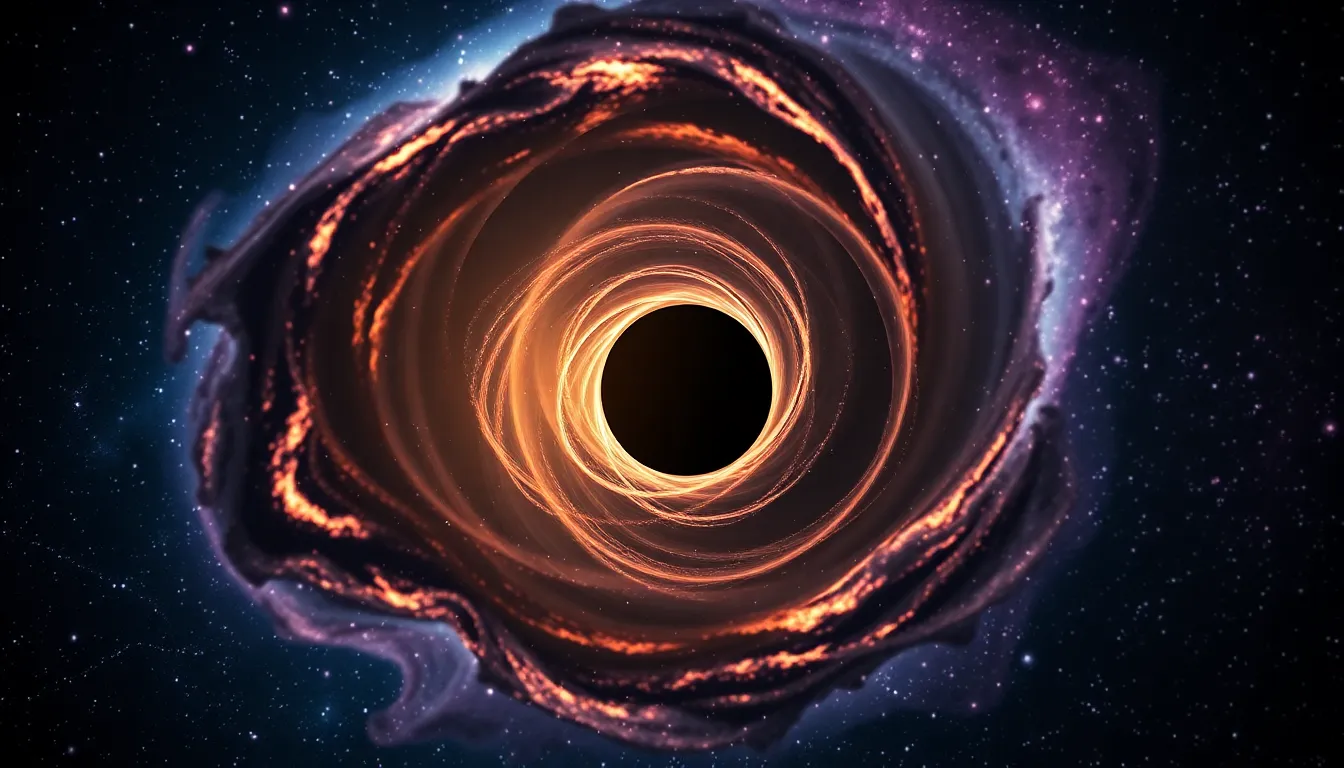
Shot on Nikon Z9, 70-200mm f/2.8 telephoto at 135mm, a stunning depiction of a swirling black hole is illuminated by the glow of surrounding stars in a vast galaxy. The lighting showcases the dynamic event horizon with a hint of jet streams emerging from it, creating a captivating spectacle. Depth of field is shallow at f/2.8, allowing the black hole to pop against a creamy bokeh of distant celestial bodies. The color palette features deep blacks contrasted with vibrant blues and purples of the galaxy. Composition follows the rule of thirds with the black hole positioned at a power point, showcasing the cosmic dance of light and shadow.
16:9
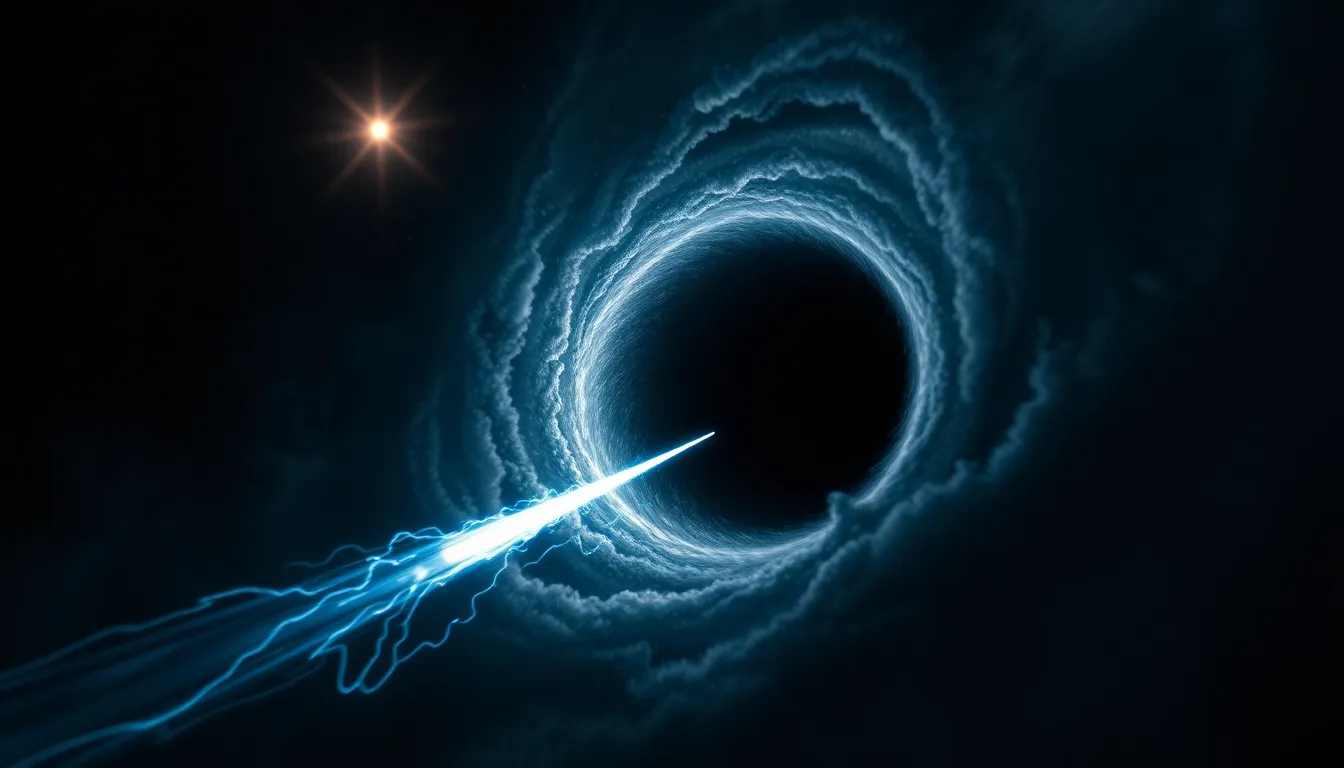
An awe-inspiring close-up of a black hole's event horizon with powerful jets of plasma shooting outward, surrounded by swirling cosmic dust. Captured with Leica Q3, 28mm f/1.7 Summilux, this photograph provides an intimate view of the black hole’s dynamics. The image features dramatic side lighting from a distant star, highlighting the bright jets contrasted against the dark backdrop. A shallow depth of field creates a creamy bokeh effect, allowing the focus to rest on the jets and the swirling dust, while the color palette of deep blacks, bright whites, and flashes of electric blue enhances the intensity. The composition is centered, emphasizing the power and chaos of the scene.
16:9
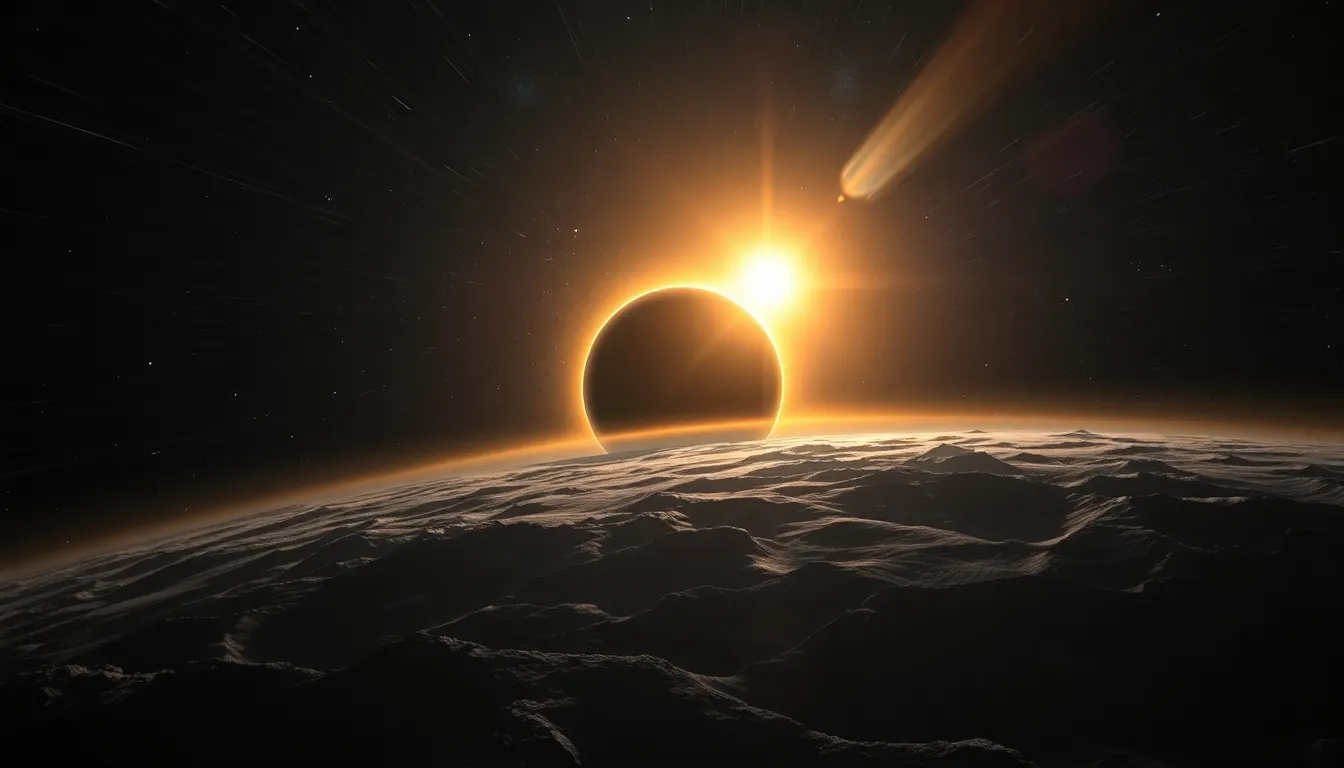
A breathtaking cosmic landscape showing the event horizon of a black hole towering above a nearby planet, captured during a light phenomenon. Shot on Hasselblad X2D 100C, 90mm f/2.5 medium format, the scene is bathed in the ethereal glow of a nearby star illuminating the event horizon. The lighting creates striking highlights and deep shadows, enhancing the drama of the black hole. A hyperfocal depth of field keeps all elements in focus, revealing intricate planetary textures contrasting with the dark void. The composition uses a leading line created by star trails curling toward the horizon, guiding the viewer's gaze.
16:9
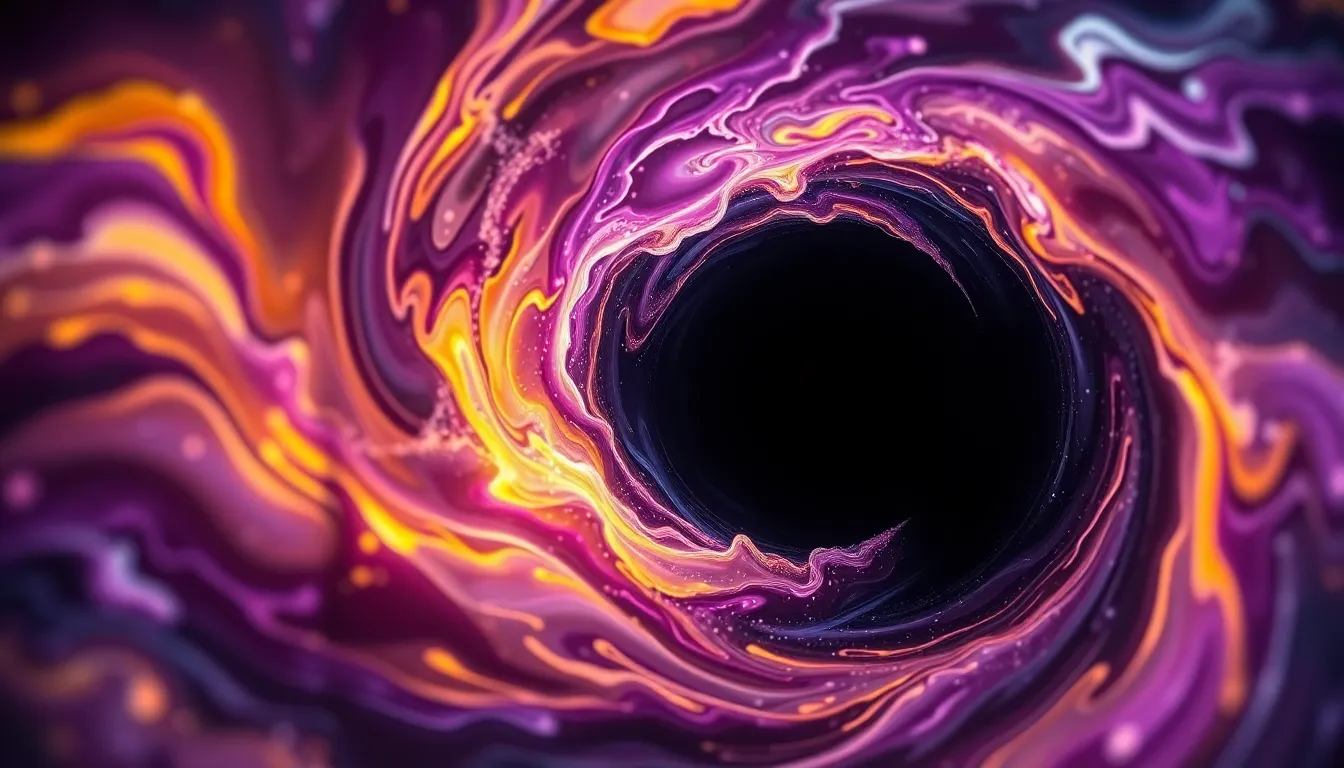
An abstract representation of a black hole capturing the imagination with swirling colors and forms resembling a cosmic whirlpool. Shot on Fujifilm GFX 100S, 110mm f/2 macro, this image focuses on the intricate details of the swirling gases and matter that spiral into the black hole. The lighting features a soft, diffused glow that enhances the texture of the gases, creating a dreamlike effect. Depth of field is shallow, with creamy bokeh emphasizing the vibrant colors of the swirling gases—rich purples, luminous yellows, and deep blacks. The composition is centered, allowing the viewer to feel immersed in this fantastical interpretation.
16:9
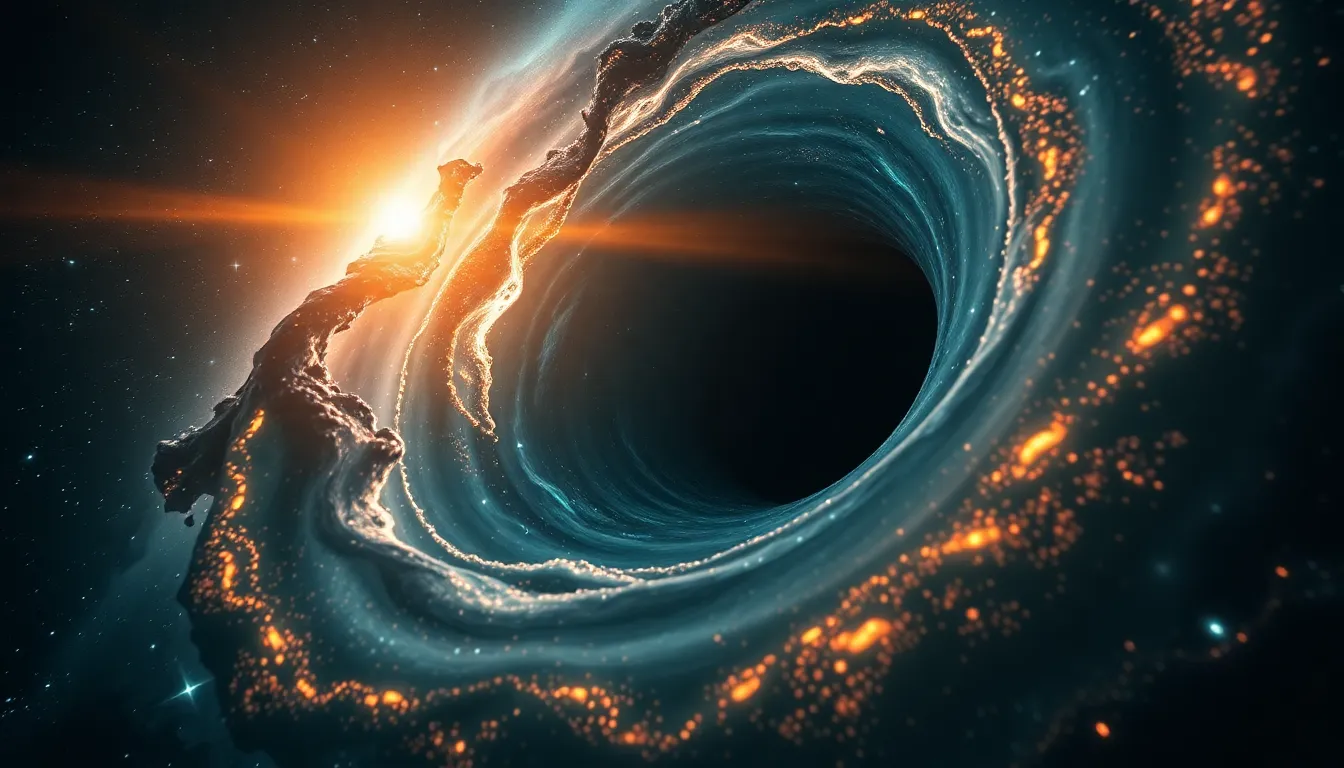
A stylized depiction of a black hole's gravitational pull shown through the distortion of nearby stars and galaxies. Captured with a Canon EOS R5, 24-70mm f/2.8L at 35mm, the scene features a wide-angle view, emphasizing the bending light from the black hole's immense gravity. The lighting is dramatic, coming from distant stars, creating a high-contrast environment with sharp shadows and bright highlights. A hyperfocal depth of field keeps textures sharp across the expansive view, with a cinematic color grading of teal and orange adding to the drama. The composition uses leading lines created by the galactic structures stretching towards the black hole.
16:9
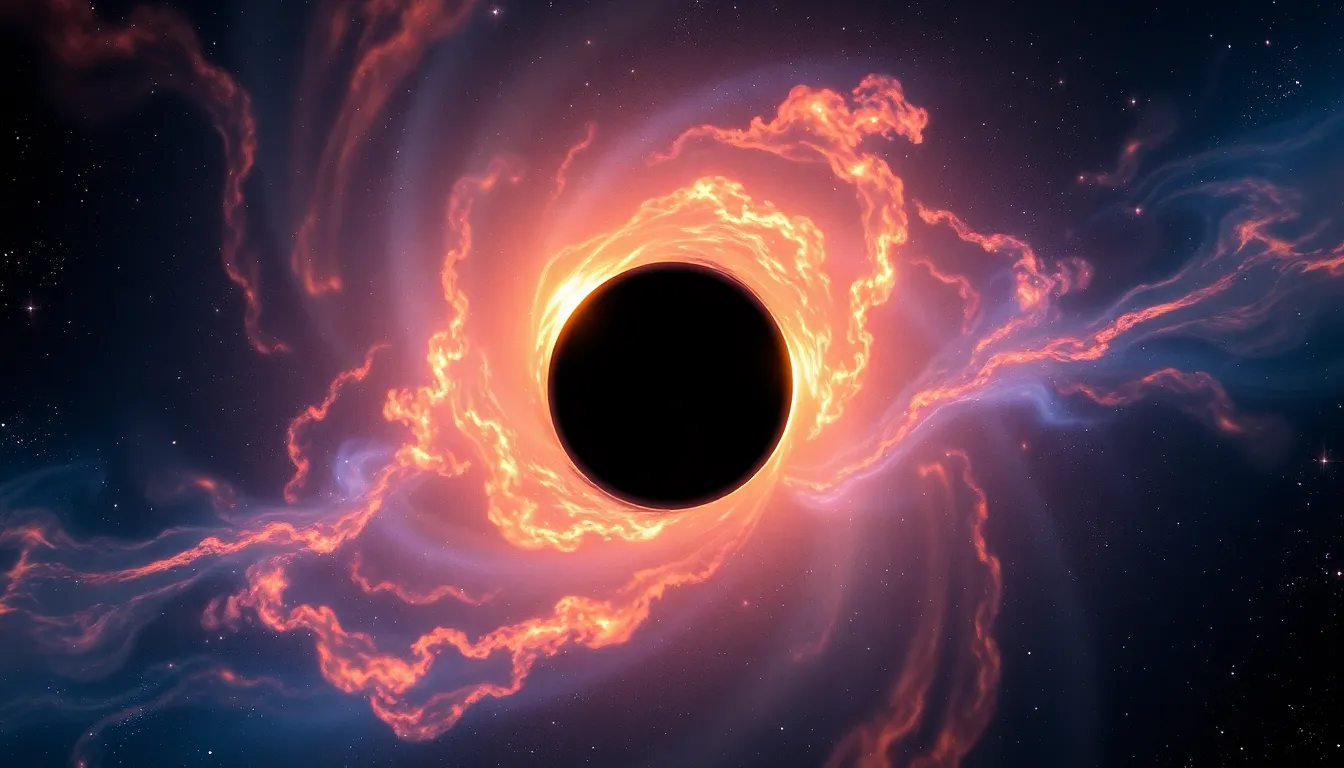
A breathtaking cosmic scene depicting a black hole at the center, surrounded by swirling accretion disks of bright, fiery plasma. Shot on Nikon Z9, 70-200mm f/2.8 telephoto at 135mm, the image captures the ethereal glow of the black hole against a backdrop of deep space with scattered stars. Lighting is provided by the intense luminosity of the accretion disk, creating a dramatic contrast with the darkness of space. The composition follows the rule of thirds, with the black hole off-center, emphasizing its enormity against the cosmic canvas. Subtle texture highlights in the plasma detail the turbulent motion, while a rich, cosmic color palette of deep blues, purples, and fiery oranges enhances the otherworldly ambiance.
16:9
shot on Hasselblad X2D 100C, 90mm f/2.5 medium format, capturing the breathtaking beauty of a black hole's accretion disk at dawn. The lighting is soft and warm, with the first light of the sun illuminating the edges of the accretion disk in brilliant gold and crimson tones. The hyperfocal distance at f/8 allows for a clear view of the black hole surrounded by the swirling plasma. The composition follows the rule of thirds, with the black hole positioned slightly off-center, enhancing the overall sense of depth and drama.
16:9
photographed with Fujifilm GFX 100S, 110mm f/2 macro, presenting an intricate close-up view of particles swirling around a black hole. The lighting features a cold blue hue contrasting with warm golden particles, creating a captivating glow around the event horizon. A shallow depth of field at f/2 blurs the edges of the image while keeping the particles crystal clear. The composition utilizes a centered symmetrical approach to emphasize the chaotic beauty of the swirling matter, and the textures highlight the individual particles’ unique characteristics.
16:9
captured with Canon EOS R5, 24-70mm f/2.8L at 35mm, illustrating a conceptual image of time distortion near a black hole. The lighting features dramatic shadows created by the bending of light, with the space surrounding the black hole appearing warped and surreal. A shallow depth of field at f/2.8 focuses on a nearby starship, its gleaming surfaces reflecting the bizarre light patterns. The color palette consists of dark blues and bright whites, with a dynamic composition using leading lines to emphasize the curvature of space-time around the black hole.
16:9
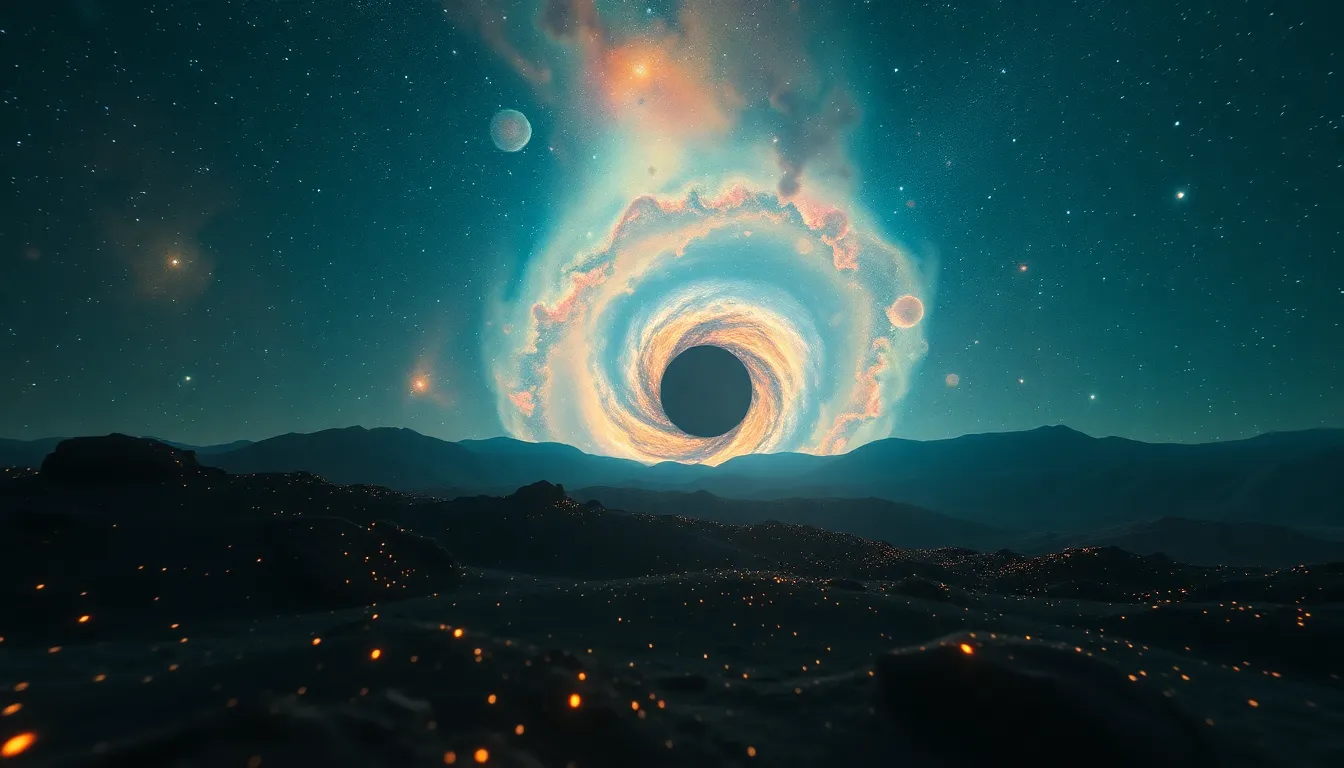
shot on Sony A7R V with 85mm f/1.4 GM lens, capturing a surreal landscape depicting a galaxy on the brink of being consumed by a black hole. The scene is illuminated by the soft glow of stars and the vibrant colors of nebulae, creating a mystical environment. A hyperfocal depth of field at f/8 ensures everything from twinkling stars in the foreground to the ominous black hole in the distance is in sharp focus. The cinematic teal and orange color grading enhances the otherworldly mood, with a balanced composition leading the eye from the stars to the black hole.
16:9
captured with Nikon Z9, 70-200mm f/2.8 telephoto at 135mm, featuring dramatic backlighting from a distant star, creating a silhouette effect around the event horizon of a black hole. The image utilizes a shallow depth of field at f/2.8 to emphasize the black hole at the center, with swirling accretion disk details illuminated in a mix of fiery oranges and deep purples. The composition centers the black hole, drawing the viewer's eye directly to its mysterious qualities, while fine cosmic dust textures are highlighted against the deep void.
16:9

captured with Fujifilm GFX 100S, 110mm f/2 macro, revealing close-up details of cosmic dust swirling around a black hole. The image is lit by soft ambient starlight, creating a gentle glow that highlights the crystal-like structures of dust. The depth of field is shallow at f/2, producing creamy bokeh that enhances the ethereal atmosphere. Natural muted tones with desaturated earth colors evoke a sense of calm within the chaos. The composition is centered, focusing on the intricate details of the dust particles swirling near the black hole.
16:9
shot on Hasselblad X2D 100C, 90mm f/2.5 medium format, featuring an ethereal view of a black hole surrounded by ethereal nebulae in deep space. The lighting is created using practical effects to mimic bioluminescent colors within the gases, while a shallow depth of field isolates the black hole against a richly textured cosmic backdrop. Cinematic teal and orange color grading highlights the striking contrast. The composition incorporates rule of thirds with the black hole elegantly positioned at a power point.
16:9
captured with Canon EOS R5, 24-70mm f/2.8L at 35mm, depicting a surreal interpretation of a black hole as a swirling vortex of colors. Executed in studio conditions with a three-point lighting setup, dramatic key light creates shadows that emphasize the swirling patterns. Hyperfocal distance ensures sharpness throughout the image while a Fujifilm Velvia-inspired saturated color palette enriches its vibrancy. The composition uses a centered symmetrical layout to enhance the vortex’s hypnotic allure.
16:9
shot on Sony A7R V with 85mm f/1.4 GM lens, showcasing a breathtaking cosmic lensing effect created by a supermassive black hole. Overcast diffused light provides a soft glow over the infinite stars in the background. Selective focus on the intricate gravitational waves radiating outward, with the surrounding stars softly blurring into painterly bokeh. The color palette is inspired by Kodak Portra 400, with warm tones and creamy highlights bringing life to the dark void of space.
16:9
captured with Nikon Z9, 70-200mm f/2.8 telephoto at 135mm, featuring dramatic backlighting from a distant star illuminating the swirling accretion disk of a black hole. Shallow depth of field at f/2.8, focusing on the vibrant colors of the gas clouds with a rich cinematic teal and orange color grading. The composition utilizes leading lines from the spiraling gases drawing the eye toward the center, while the texture details highlight the tumultuous surface of the accretion disk and the starry backdrop.
16:9
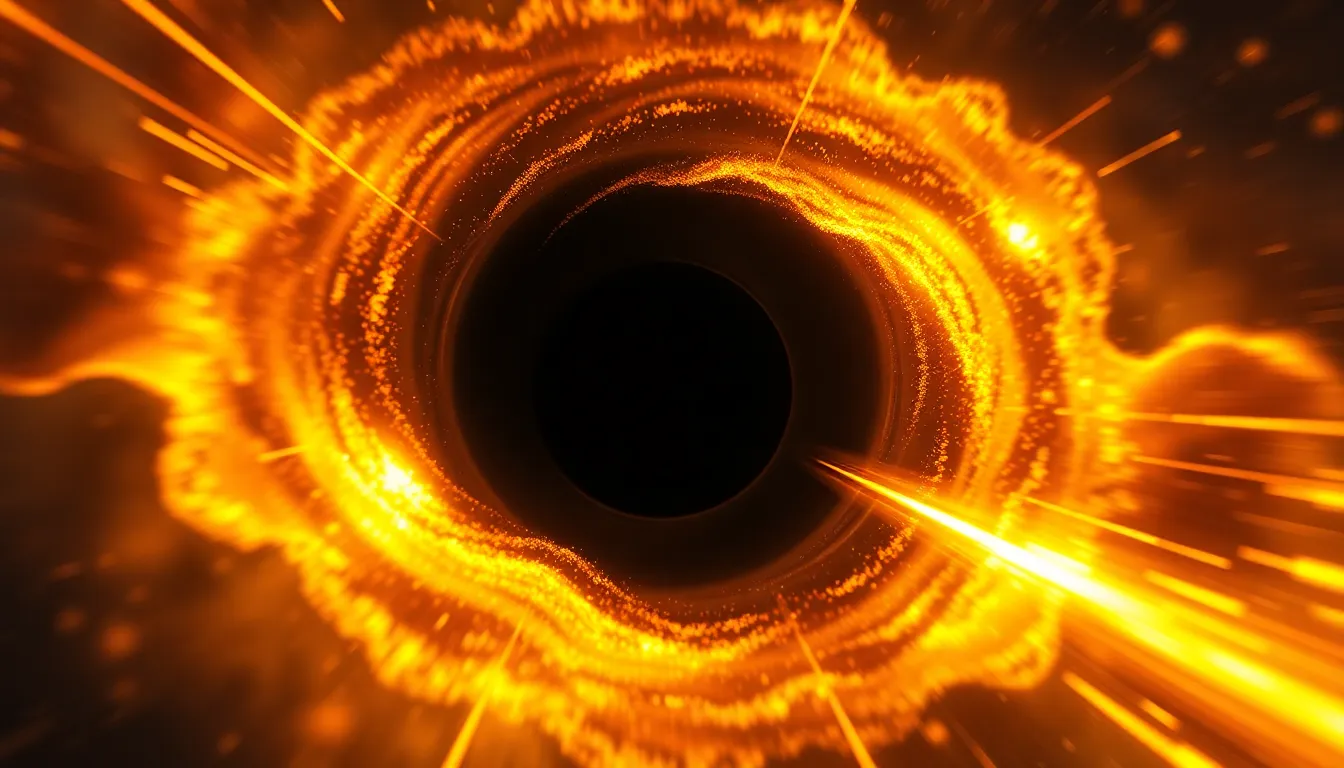
Shot with Fujifilm GFX 100S, 110mm f/2 macro lens. A detailed close-up of a black hole, visually represented with cosmic phenomena swirling around it, including vibrant plasma jets and radiation. Diffused lighting creates an ethereal glow, enhancing the visual impact of the dynamic elements. The selective focus highlights the black hole's event horizon, with the background softly blurring into an impressionistic space atmosphere. The color palette features bright yellows and deep blacks, signifying the extreme energies at play. Textures of the plasma jets visibly shimmer, adding realism to the cosmic depiction.
16:9
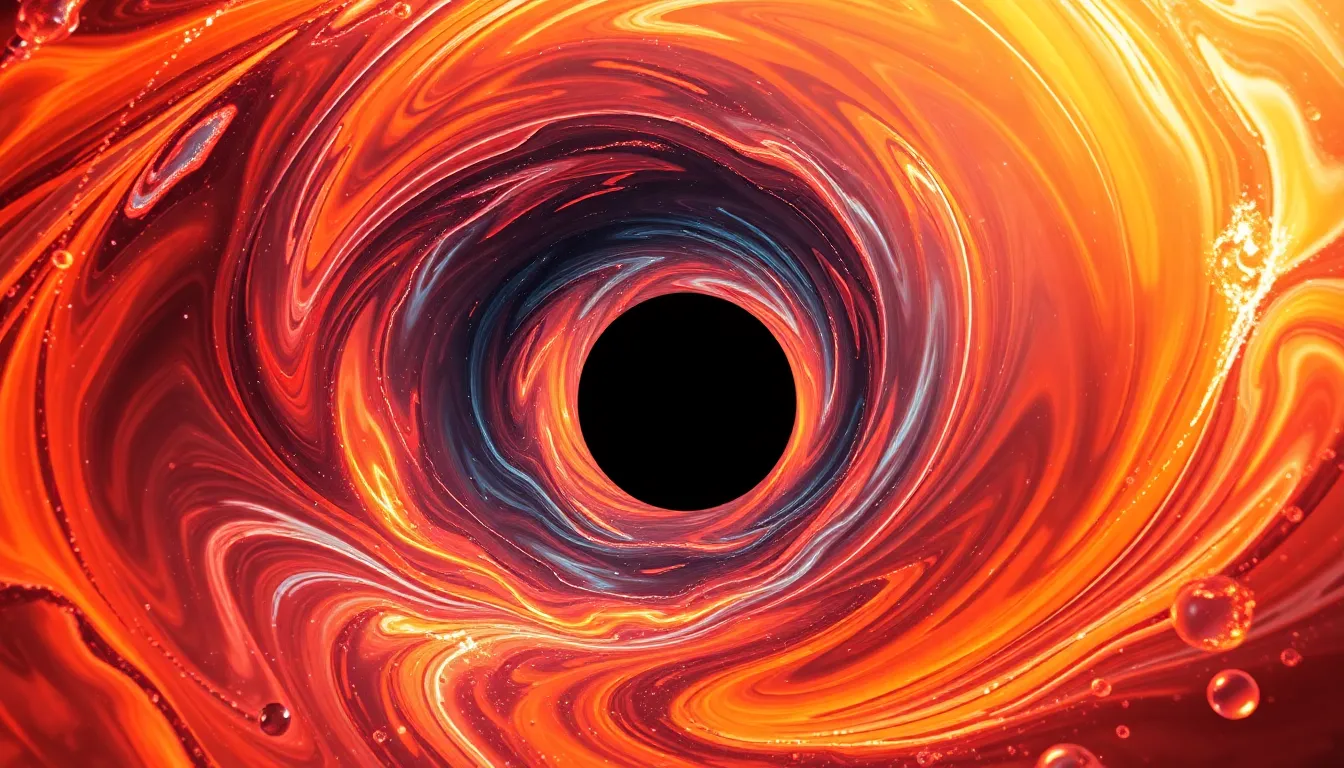
Photographed with Hasselblad X2D 100C, 90mm f/2.5 medium format. A dynamic image of a black hole illustrated through an artistic lens, featuring swirling colors that represent the gravitational pull. The warm, ambient lighting creates a captivating glow that enhances the swirling colors of the accretion disk. Using a tilted angle composition for dynamic tension, the image captures the essence of movement and energy within the scene. A rich blend of fiery oranges, deep blues, and bright whites fill the frame, illustrating the cosmic dance of matter around the black hole. Textures of the virtual materials are vivid, enhancing the artistic quality of the interpretation.
16:9
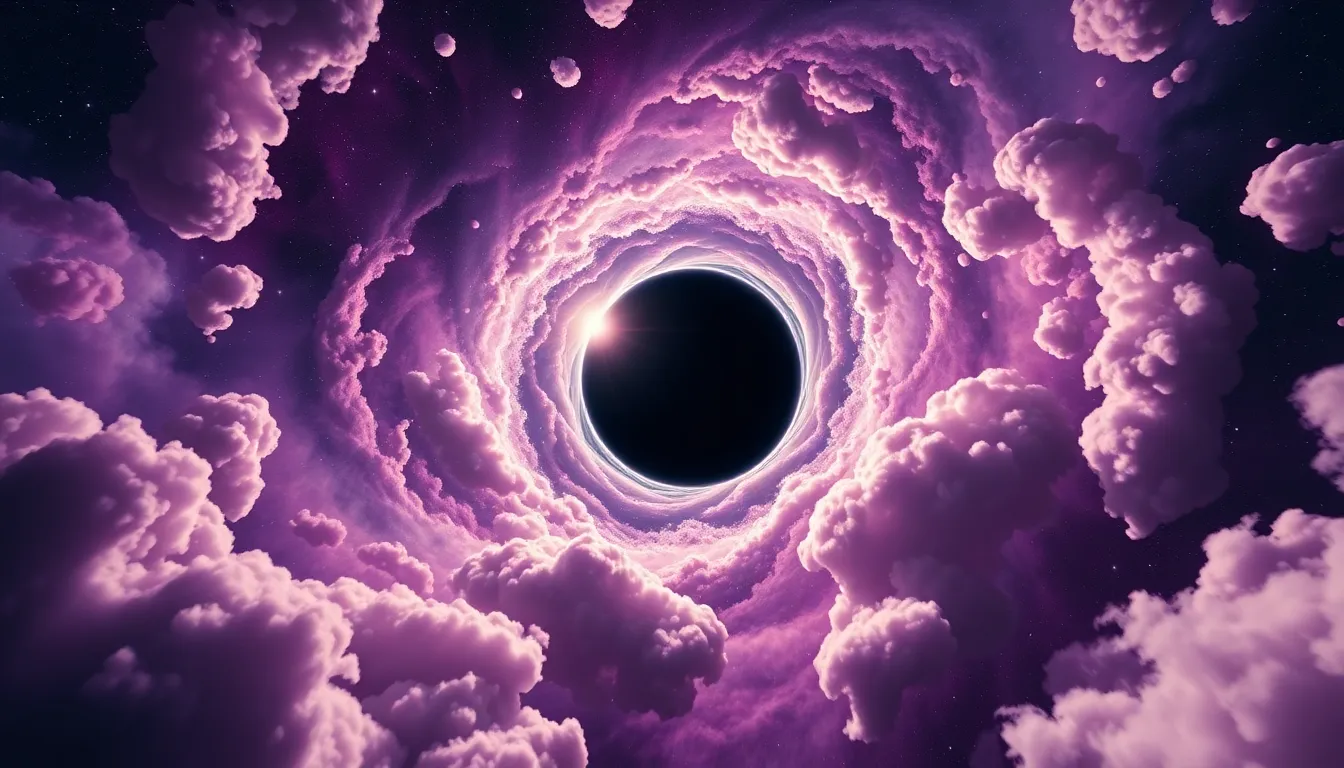
Captured with Canon EOS R5, 24-70mm f/2.8L at 35mm. A breathtaking wide shot of a space scene featuring a black hole at the center, surrounded by swirling clouds of gas and stars. The lighting is a mix of soft, ambient starlight and dramatic highlights from the accretion disk, casting a celestial glow. The composition utilizes the rule of thirds, placing the black hole slightly off-center while leading lines from the gas clouds draw the viewer’s eye towards it. The color palette consists of rich purples and bright whites interspersed with dark cosmic elements, creating an otherworldly ambiance. Fine textures of the gas clouds are visible, enhancing the realism and depth of the scene.
16:9
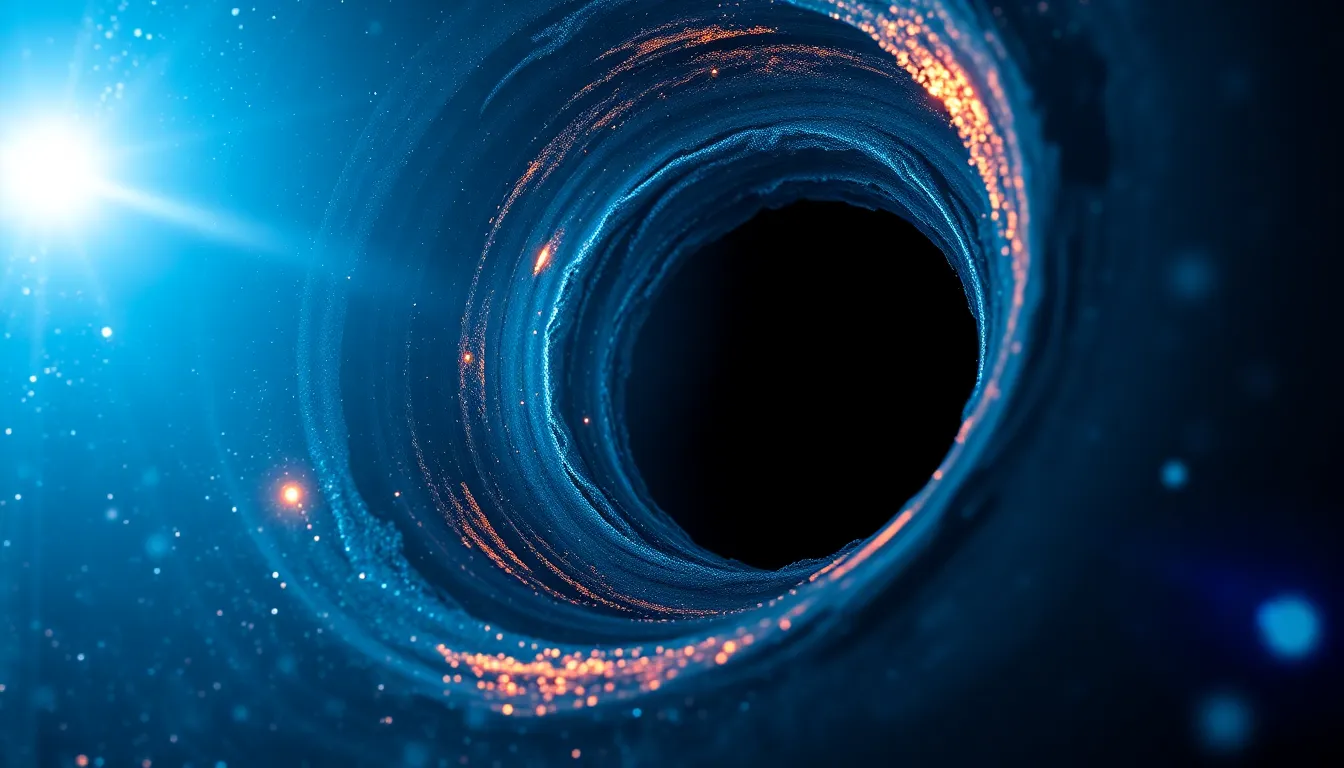
Shot on Sony A7R V with 85mm f/1.4 GM lens. A highly detailed close-up of a cosmic simulation depicting a black hole with gravitational lensing effects bending light from distant stars. The image is lit by a soft blue ambient glow that enhances its ethereal quality. Using a hyperfocal distance to keep everything sharp from foreground to infinity, the textures of the simulated space dust and glowing light are rendered with astonishing clarity. The color scheme uses cool tones with deep blacks, vibrant blues, and hints of white light, creating a stark contrast and a sense of depth. The composition centers the black hole, with swirling light creating a dynamic motion around it.
16:9
Captured with Nikon Z9, 70-200mm f/2.8 telephoto at 135mm. A stunning portrayal of a swirling black hole surrounded by vibrant accretion disk glowing in shades of deep red and orange. Illuminated by cosmic starlight, the scene highlights the intense gravitational pull distorting nearby stars into elongated shapes. Shallow depth of field at f/2.8 creates a dreamy bokeh effect of the surrounding space. The color palette features dark cosmic blues and fiery reds contrasted by bright starlight, creating a dramatic atmosphere with leading lines drawing the eye towards the black hole. The texture of the gaseous accretion disk appears wispy and ethereal, enhancing the surrealism of the scene.
16:9

A creative representation of a black hole warping light, photographed through a digital composite using a Sony A7R V with 85mm f/1.4 GM lens. The scene is illuminated by vibrant star fields that twist and bend around the black hole, creating a surreal effect. The depth of field is exceptionally shallow, focusing tightly on the black hole while the surrounding light trails blur beautifully into a mesmerizing swirl. The color palette highlights vibrant neons and deep blacks, enhancing the otherworldly feel. The composition features a dynamic Dutch angle, emphasizing the distortion of light around the black hole.
16:9
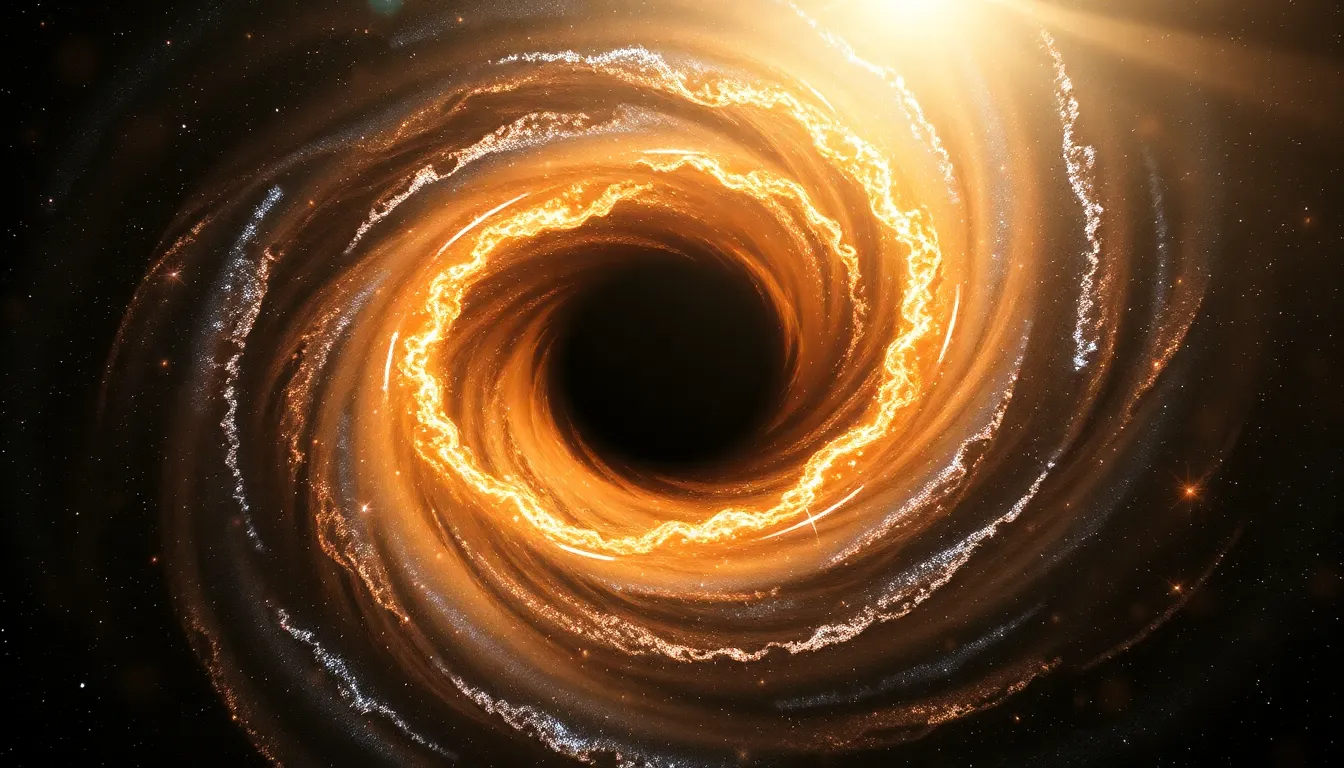
An expansive view of a black hole surrounded by a swirling galaxy, captured on a Fujifilm GFX 100S, 110mm f/2 macro. The scene is bathed in dappled sunlight filtering through cosmic dust, creating a mystical atmosphere. With a hyperfocal distance, all elements from the luminous galaxy spiraling outward to the central black hole are in sharp focus. The natural muted tones accentuate the richness of the galaxy, while the composition uses a centered symmetrical layout that draws the eye toward the black hole at the center of the frame.
16:9
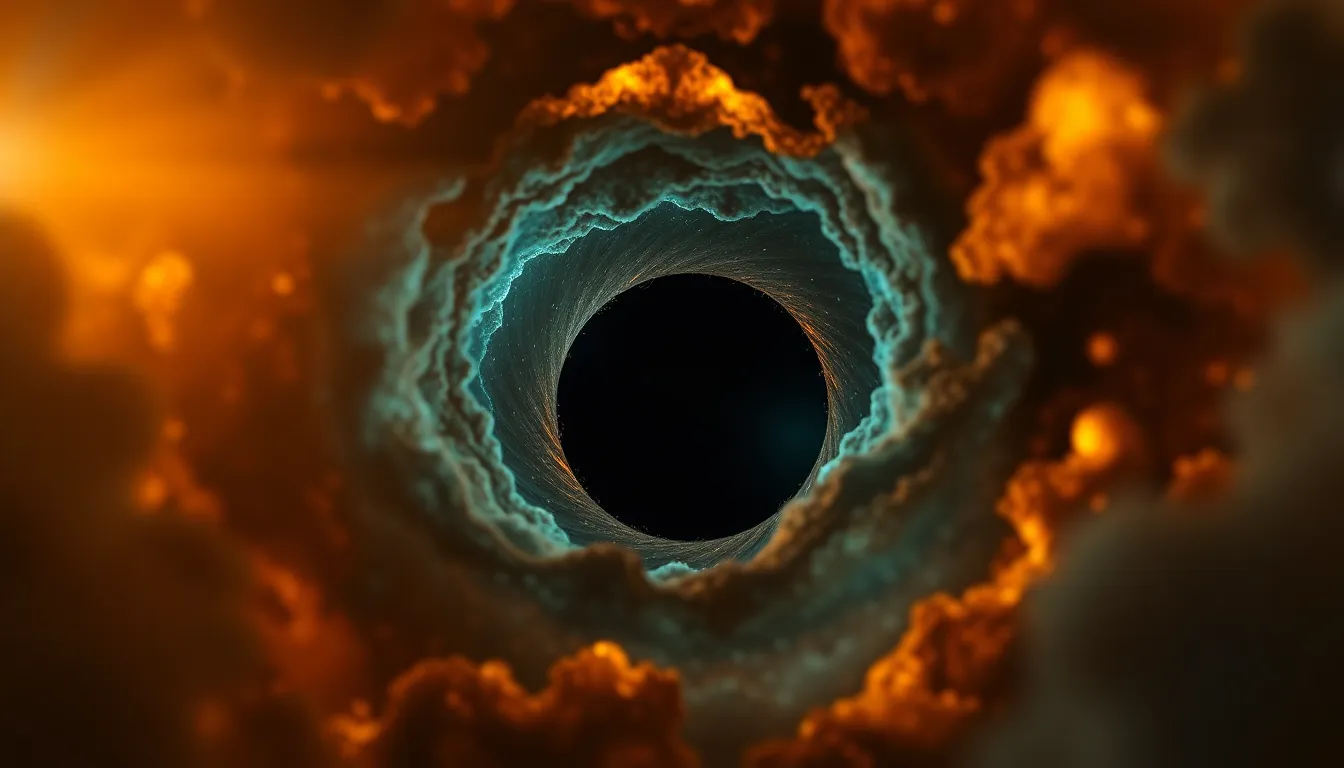
A dramatic close-up of a black hole consuming a nearby star, captured with a Hasselblad X2D 100C, 90mm f/2.5 medium format. The scene is illuminated by the intense light emitted from the star, enhancing the textures of the surrounding gaseous material. A shallow depth of field isolates the black hole while the glory of the star creates an ethereal backdrop. The color science follows a cinematic teal and orange grading, emphasizing the contrast between the dark elements and the bright star. The composition employs the rule of thirds, positioning the black hole at a compelling power point.
16:9
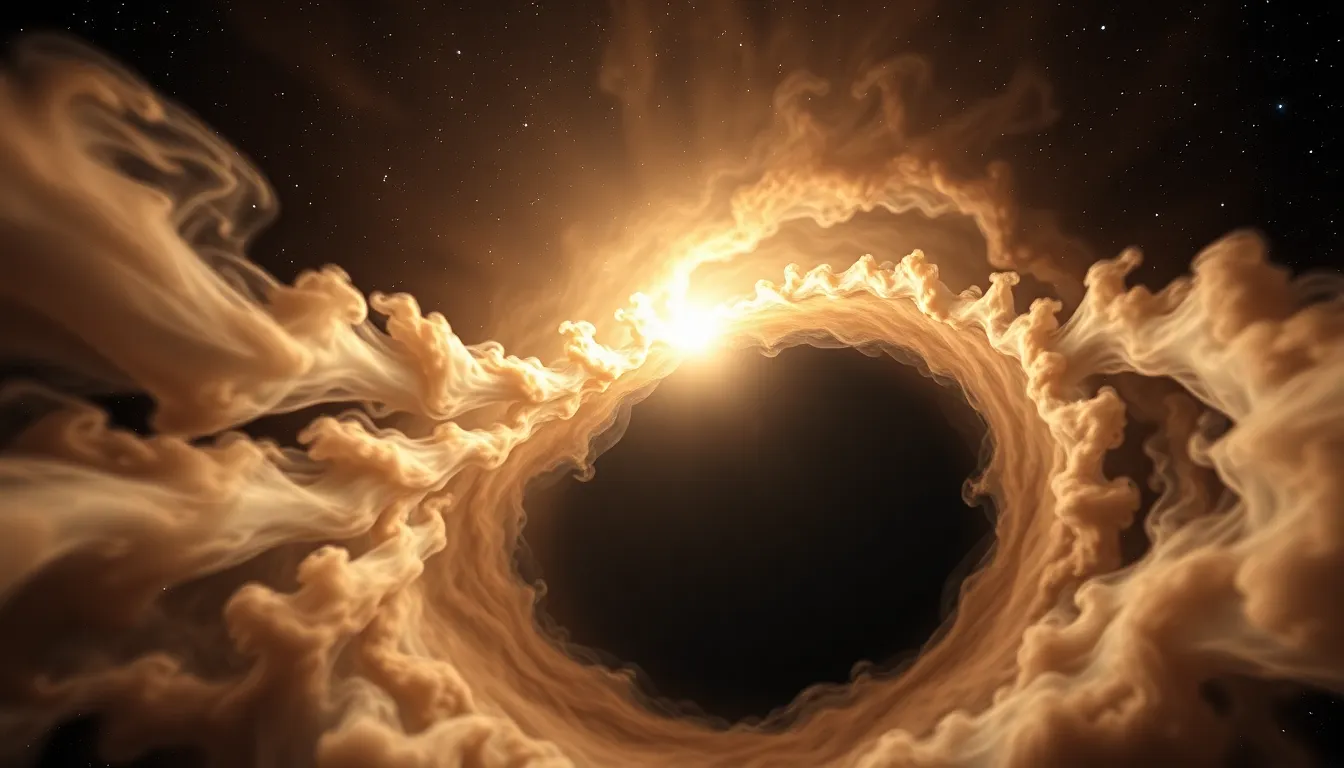
A stunning, artistic rendition of a black hole's event horizon, photographed using a Canon EOS R5, 24-70mm f/2.8L at 35mm. The lighting is a soft, diffused daylight filtering through space dust, creating ethereal highlights. With a hyperfocal distance, everything from the swirling gas to the distant stars is in sharp focus. The color palette features muted earth tones with desaturated hues to convey a sense of calmness. The composition employs leading lines from the gas streams drawing the eye toward the event horizon, enhancing the sense of depth and infinity.
16:9
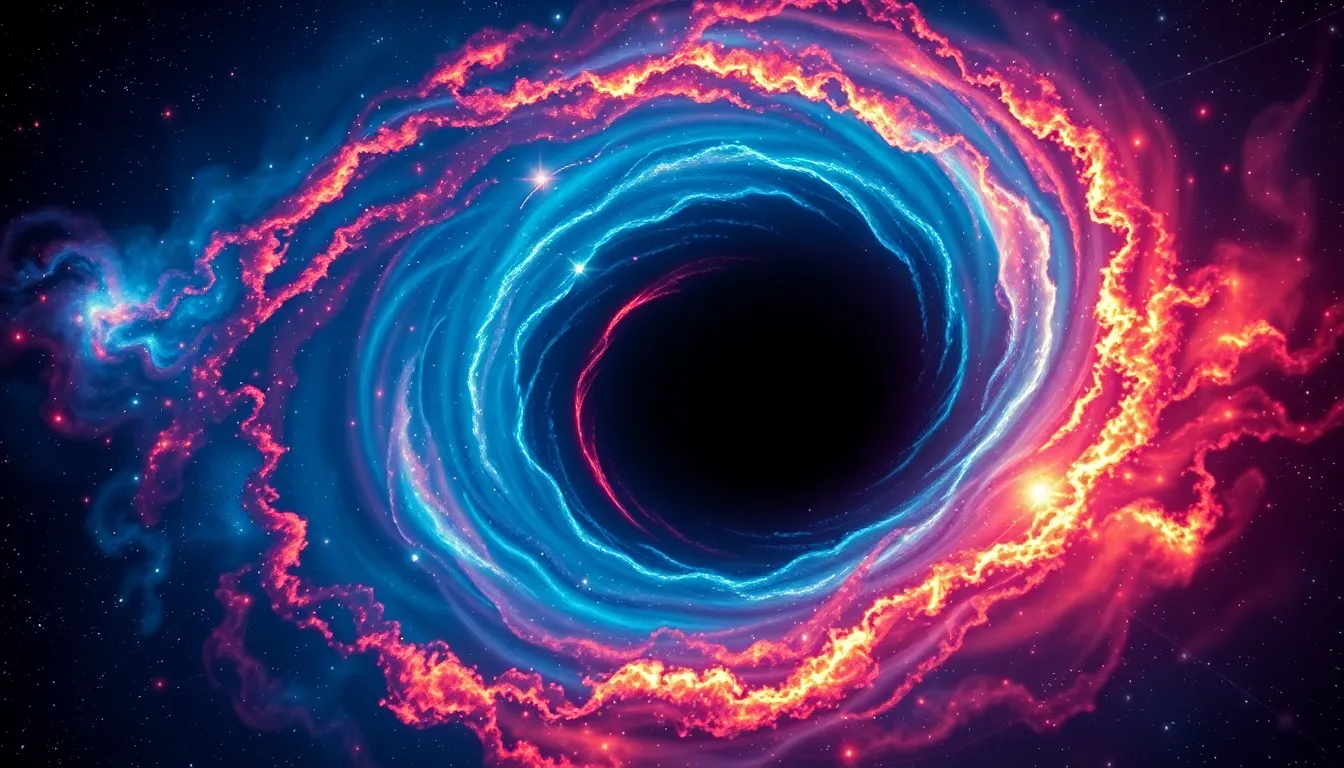
A swirling vortex of a black hole surrounded by vivid accretion disks, captured with a Nikon Z9, 70-200mm f/2.8 telephoto at 135mm. The scene is lit by the intense glow of the surrounding stars, creating a dramatic contrast against the dark void. The depth of field is shallow, isolating the black hole while the glowing gas clouds provide a heavenly ambiance. Utilizing a Fujifilm Velvia-inspired saturated colors palette, the image showcases deep blues and fiery reds. The composition is centered, with the black hole dominating the frame, creating an awe-inspiring cosmic spectacle.
16:9
captured with Hasselblad X2D 100C, 90mm f/2.5 medium format, against a backdrop of surreal nebulae illuminated by stellar explosions, hyperfocal distance ensuring all elements from the distant stars to the black hole are sharp, cinematic teal and orange color grading enhancing the drama of the cosmic landscape, leading lines formed by the jets of energy shooting from the black hole add dynamic movement to the composition, with rich textures of nebula gases visible.
16:9
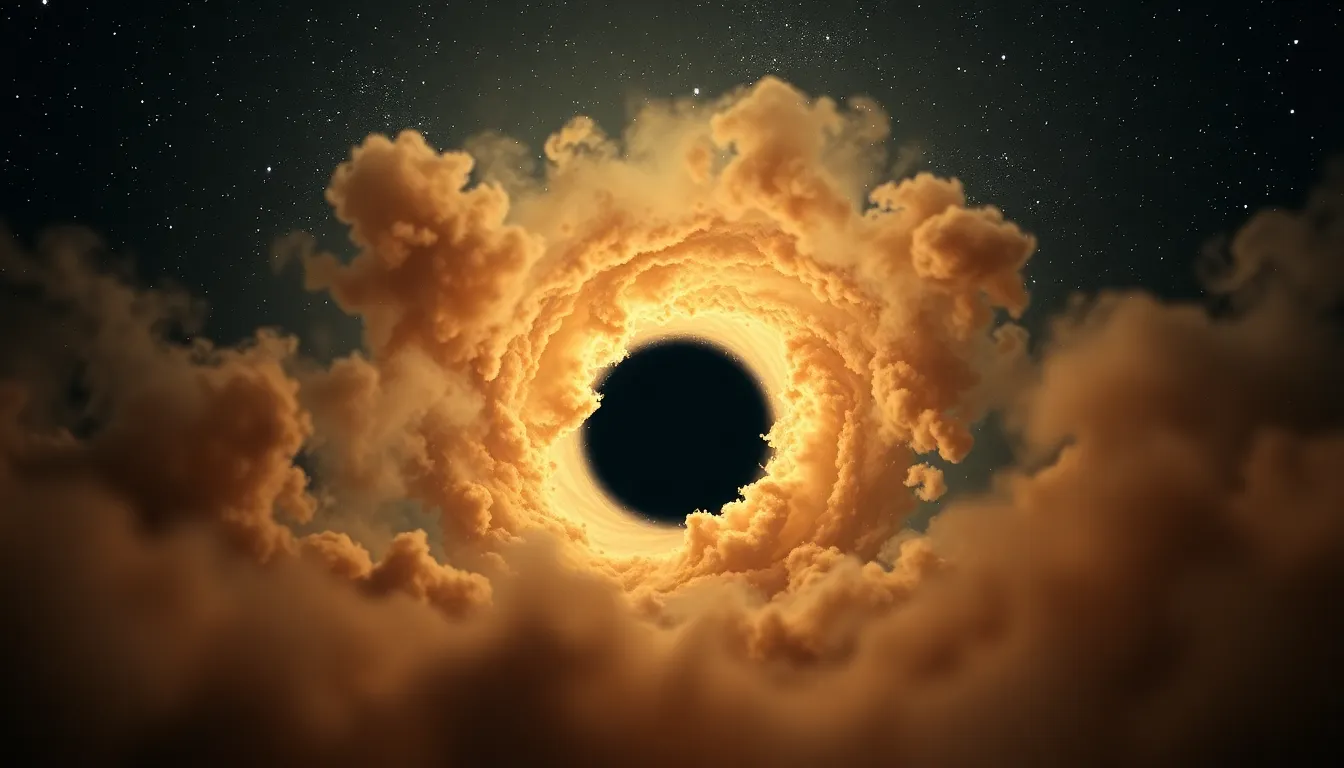
shot on Fujifilm GFX 100S, 110mm f/2 macro, under the soft glow of starlight, capturing the cosmic dust clouds surrounding a distant black hole, shallow depth of field at f/2 creating a dreamy background, natural muted tones with desaturated earth colors add a serene ambience, rule of thirds composition centering the black hole while framing it with intricate dust details and celestial colors in the foreground.
16:9
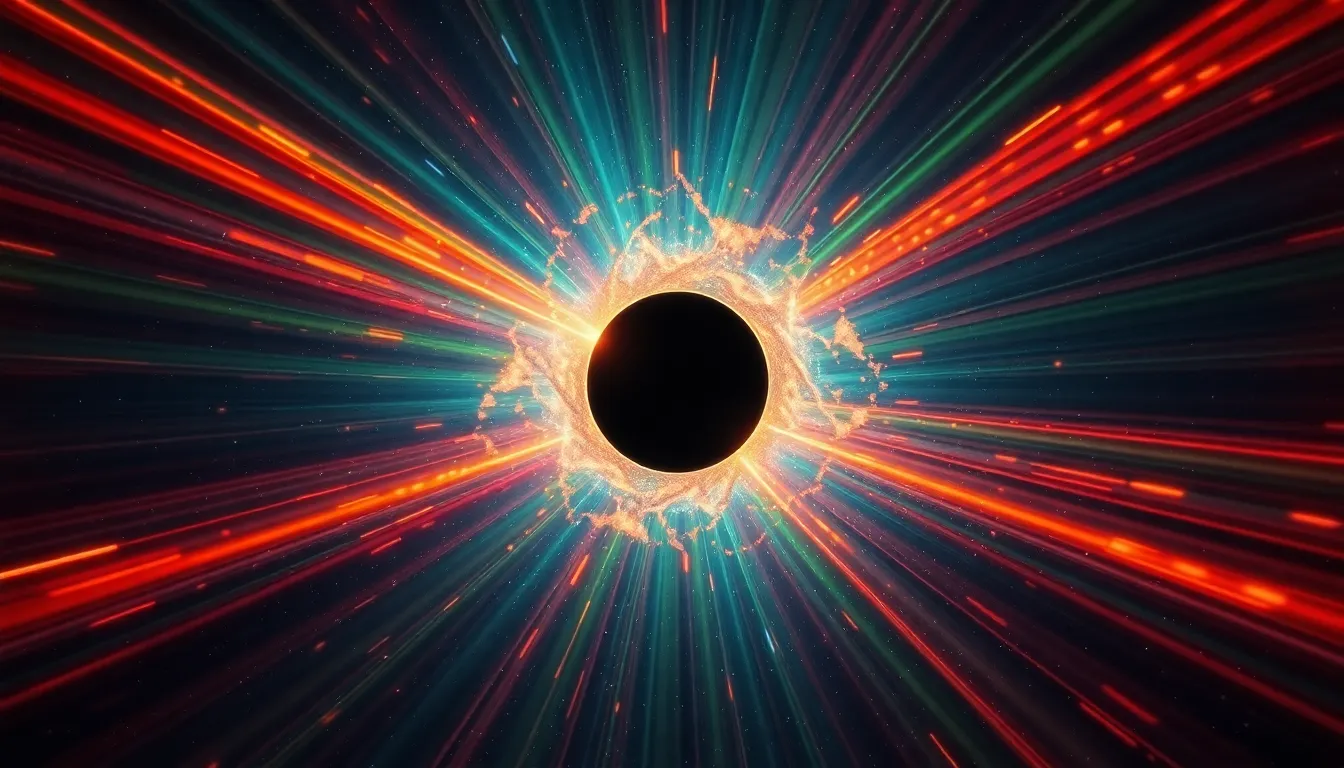
captured with Canon EOS R5, 24-70mm f/2.8L at 35mm, featuring intense infrared light refracting through gravitational lensing with surreal colors, hyperfocal distance resulting in sharp focus throughout the image, Fujifilm Velvia-inspired saturated colors illuminate the scene with deep blues and rich greens, centered symmetrical composition highlights the mesmerizing distortion of light around the black hole, showcasing the unique textures of gravitational waves.
16:9
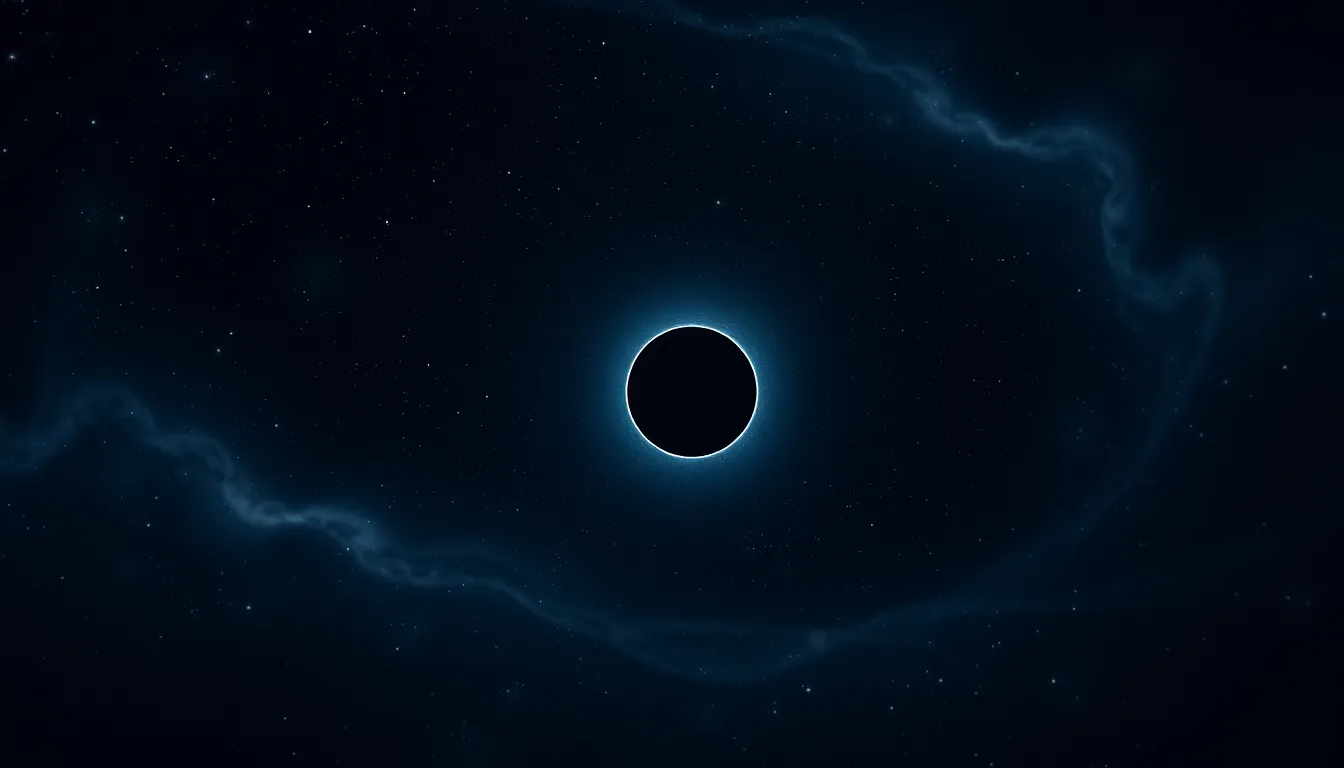
shot on Sony A7R V with 85mm f/1.4 GM lens, illuminated by ambient starlight filtering through cosmic dust, natural muted tones with desaturated earth colors conveying a sense of vast emptiness, selective focus on the event horizon with stars blurred into soft painterly bokeh, leading lines created by pulsating light trails moving toward the black hole, with detailed textures of the surrounding space and star fields visible.
16:9
captured with Nikon Z9, 70-200mm f/2.8 telephoto at 135mm, featuring vivid cosmic lighting with bright stars contrasting against the deep black void of space, shallow depth of field at f/2.8 focusing on a swirling accretion disk, cinematic teal and orange color grading highlights the energetic particles, rule of thirds composition placing the black hole off-center, showcasing the intricate textures of gas and dust swirling in its gravitational pull.
16:9
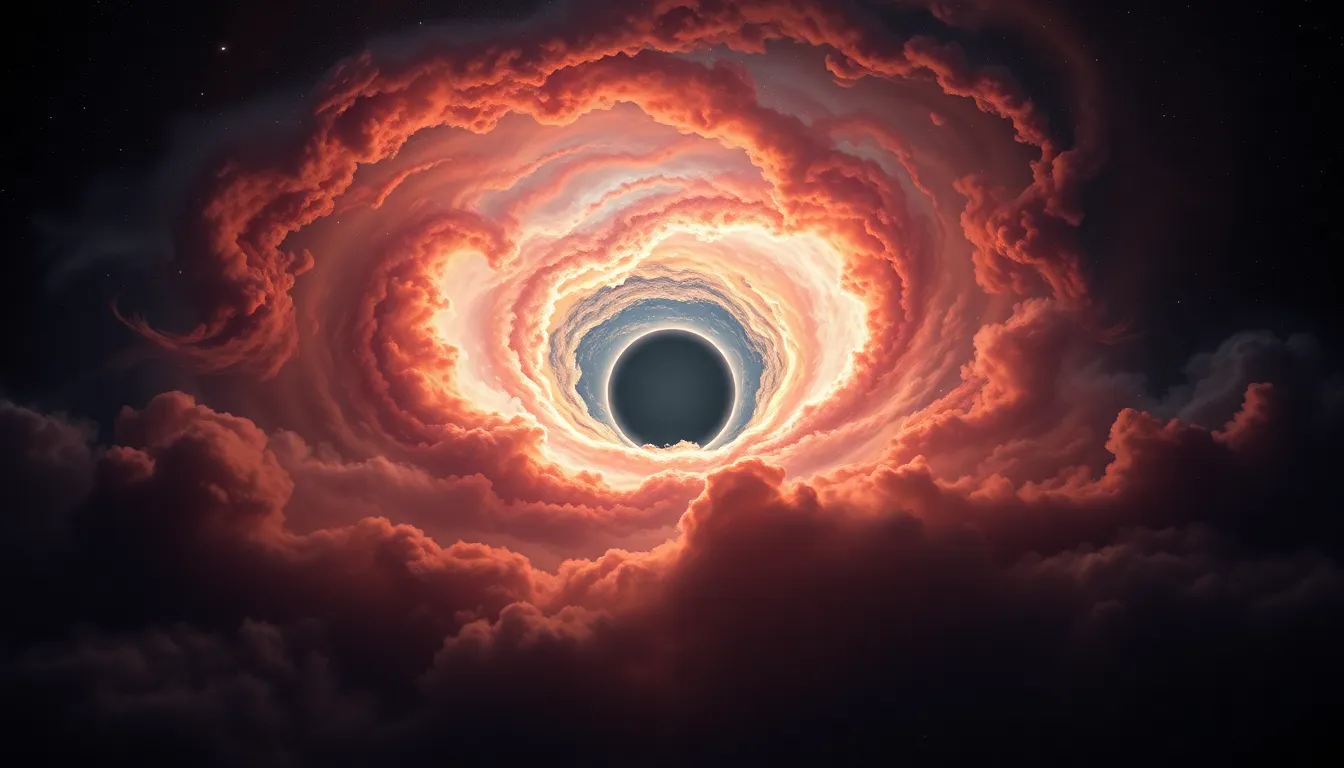
Hasselblad X2D 100C, 90mm f/2.5 medium format, capturing a breathtaking scene of a black hole surrounded by a vibrant, swirling cosmic cloud, resembling a galactic storm. The lighting is dramatic with contrasting shadows and highlights, creating depth and intrigue. The depth of field is set at f/5.6, providing a balance between sharp focus on the black hole and a slightly blurred cosmic cloud. The color palette is inspired by natural muted tones, emphasizing earthy colors contrasted with unexpected bursts of brightness from the cosmic storm. The composition follows the rule of thirds, placing the black hole at a power point, surrounded by the swirling colors of the storm, enhancing the dynamic nature of the scene.
16:9
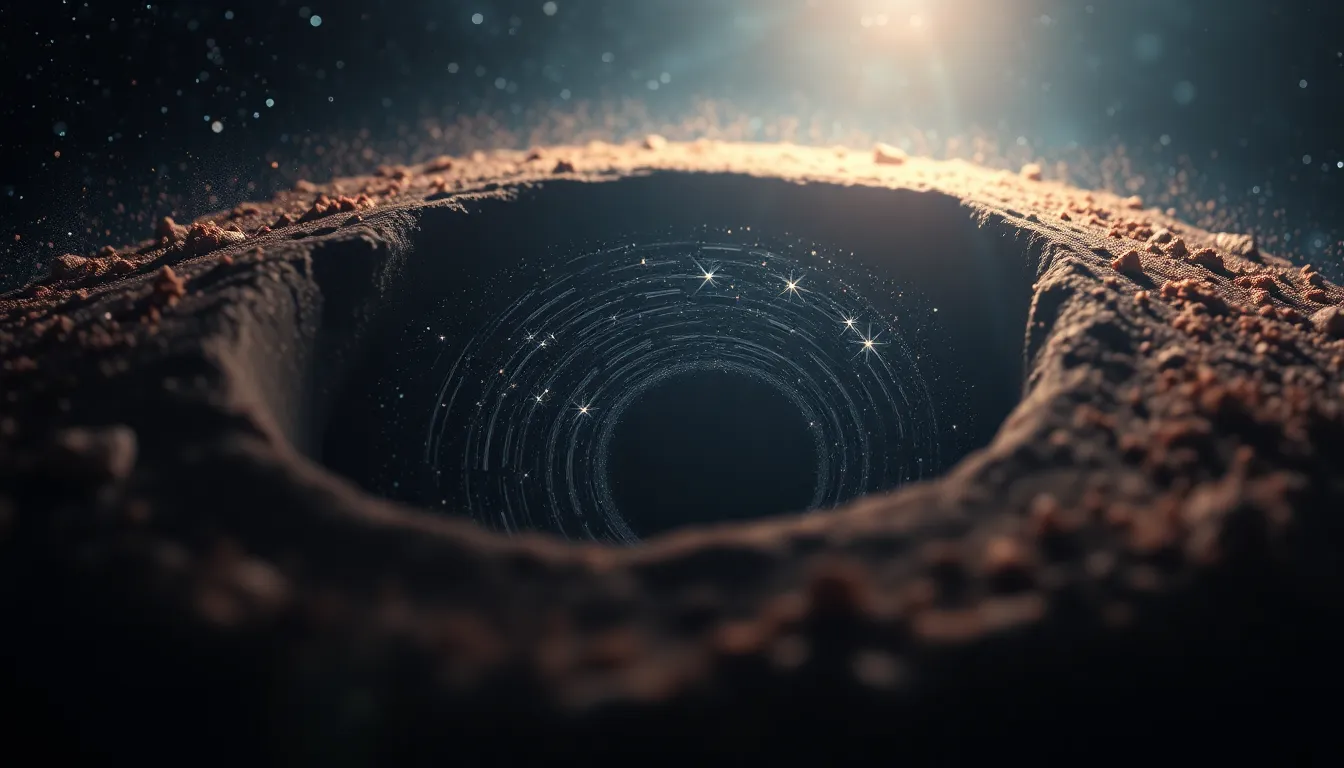
Fujifilm GFX 100S, 110mm f/2 macro, focusing on a detailed illustration of a black hole’s event horizon with intricate patterns of light and dark, surrounded by cosmic dust. The scene is illuminated by soft diffused starlight, creating an ethereal glow that highlights the textures of the cosmic materials. The depth of field is shallow at f/2, enabling the intricate details of the event horizon to pop while the cosmic dust softly blurs into the background. The color science reflects Fujifilm Velvia-inspired saturated colors, rich in deep blacks and brilliant whites. The composition employs close-up framing to emphasize the unique textures of the event horizon, drawing the viewer into the heart of the black hole.
16:9
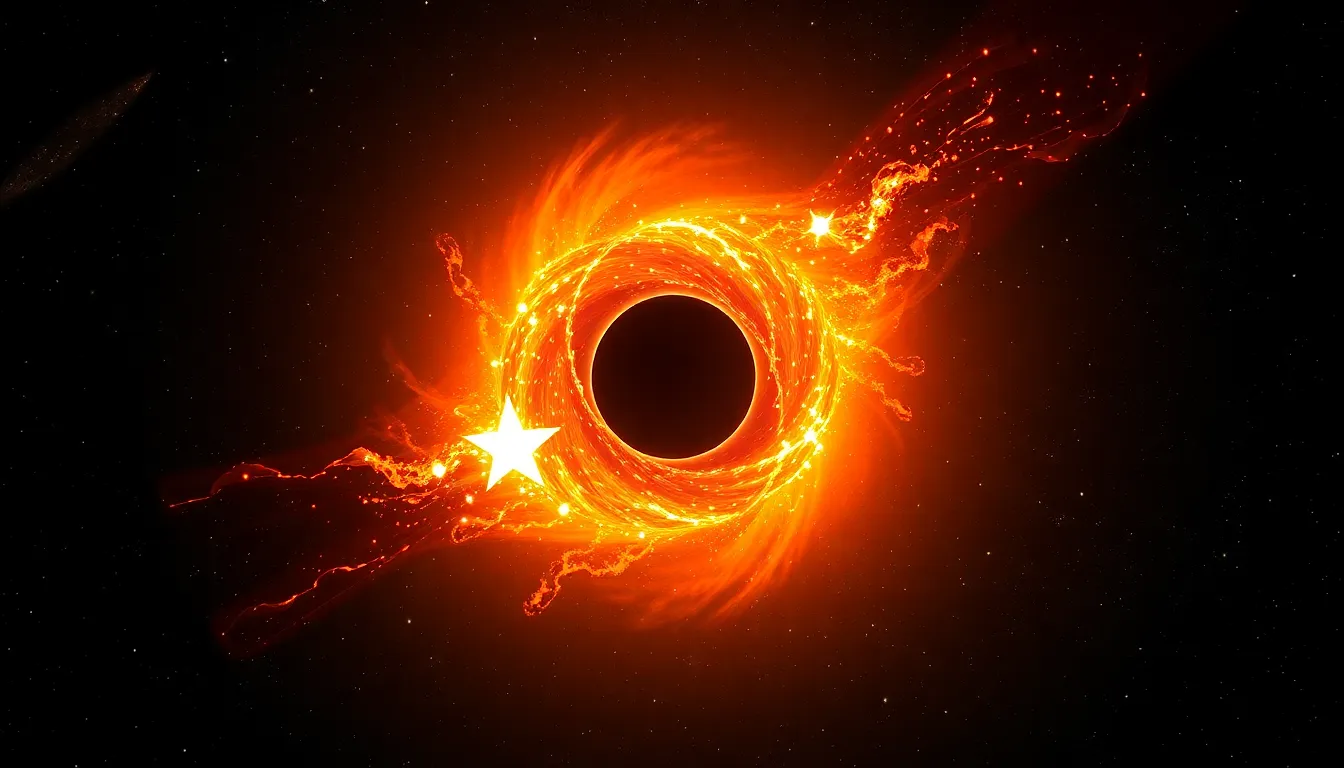
Nikon Z9, 70-200mm f/2.8 telephoto at 135mm, illustrating a dramatic visualization of a black hole consuming a nearby star, set against a backdrop of deep space with scattered stars and galaxies. The scene is lit by the warm, eerie glow of the star being pulled into the black hole, creating a haunting yet beautiful atmosphere. The depth of field is shallow at f/2.8, ensuring that the focus is solely on the black hole and the star's fiery remnants, while the background fades softly into bokeh. The color palette utilizes natural muted tones, highlighting the contrast between the bright star and the darkness surrounding it. The composition captures the powerful event with the black hole centered, reinforcing its gravitational dominance.
16:9
shot on Sony A7R V with 85mm f/1.4 GM lens, showcasing a dynamic digital artwork of a black hole warping light around it, set against a nebula filled with vibrant colors. The lighting depicts an ethereal glow emanating from the event horizon, creating a surreal and captivating atmosphere. Utilizing a hyperfocal distance at f/8, every detail from the swirling gases to distant stars is in sharp focus. The color palette features vivid blues and purples with hints of bright yellows, evoking a sense of cosmic wonder. The composition follows a centered symmetrical layout, emphasizing the powerful gravitational pull of the black hole.
16:9
captured with Canon EOS R5, 24-70mm f/2.8L at 35mm, featuring a dramatic cosmic landscape of a swirling black hole surrounded by luminous accretion disks. The scene is illuminated by the intense glow of the surrounding stars, contrasted against deep blacks of space. The depth of field is shallow at f/2.8, making the black hole the primary focus while creating a soft bokeh effect with distant stars. The color palette is inspired by cinematic teal and orange grading, enhancing the otherworldly feel. The composition utilizes a dynamic leading line formed by the accretion disk, drawing the viewer's eye toward the black hole itself, with a textured star field in the background.
16:9